 Save to Pinterest
 There was this rainy Tuesday last November when I'd completely forgotten to plan a side dish for dinner guests arriving in an hour. I rummaged through my crisper drawer and found an odd assortment of root vegetables looking somewhat sad and abandoned. Something about roasting them felt like giving these humble ingredients a second chance at greatness. The kitchen filled with such incredible aromas that my guests actually asked what was burning before they realized it was just caramelized vegetables achieving their full potential.
My grandmother used to say that root vegetables were the buried treasure of the vegetable world. She'd roast them every Sunday morning while the rest of the house slept and the smell would wake everyone up gently. Now whenever I make this recipe I understand why she cherished those quiet moments in the kitchen. The way these vegetables emerge from the oven with those crispy golden edges still makes me feel like I've discovered something magical.
Ingredients
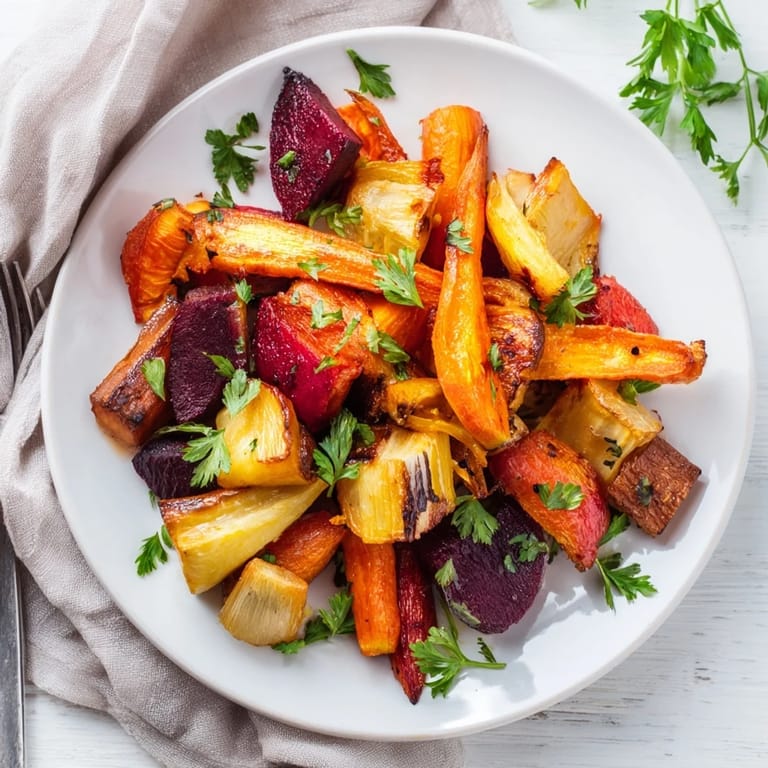
- 2 medium carrots: These bring natural sweetness and become beautifully tender when roasted at high heat
- 2 medium parsnips: Their slight peppery bite balances the sweetness of other vegetables perfectly
- 1 medium sweet potato: The creamy texture and orange color make the whole dish feel more vibrant
- 1 medium red beet: This adds stunning color and an earthy depth that ties everything together
- 1 small rutabaga or turnip: Their slightly bitter note prevents the dish from becoming too sweet
- 3 tbsp olive oil: This helps the vegetables achieve those irresistible crispy edges
- 1 ½ tsp kosher salt: Proper seasoning is absolutely essential for bringing out natural flavors
- ½ tsp freshly ground black pepper: Adds just enough subtle heat to keep things interesting
- 1 tsp dried thyme: Earthy and floral notes complement the root vegetables perfectly
- 1 tsp dried rosemary: Pine undertones cut through the sweetness beautifully
- 3 cloves garlic (optional): If you love garlic like I do this adds a wonderful aromatic base
- 2 tbsp fresh parsley (for garnish): Fresh herb brightness at the end makes everything pop
Tired of Takeout? 🥡
Get 10 meals you can make faster than delivery arrives. Seriously.
One email. No spam. Unsubscribe anytime.
Instructions
- Preheat your oven:
- Set the temperature to 425°F and line your largest baking sheet with parchment paper for easy cleanup
- Combine your vegetables:
- Place all the prepared root vegetables in a large bowl where you will have plenty of room to toss them
- Add the seasonings:
- Drizzle generously with olive oil then sprinkle with salt pepper and your herbs
- Toss everything together:
- Use your hands to mix ensuring every single piece gets coated in that beautiful oil and herb mixture
- Arrange for roasting:
- Spread the vegetables in a single layer on your baking sheet giving each piece enough space to caramelize properly
- Roast to perfection:
- Cook for 35 to 40 minutes and remember to stir halfway through so everything browns evenly
- Finish and serve:
- Remove from oven transfer to your prettiest serving dish and scatter fresh parsley over the top
 Save to Pinterest
 Last winter my neighbor tasted this dish at my potluck and actually called me the next day demanding the recipe. She said her teenagers who usually refuse anything with the word vegetable in it devoured it without hesitation. There is something magical about how roasting makes even the most vegetable resistant people suddenly interested.
Choosing Your Vegetables
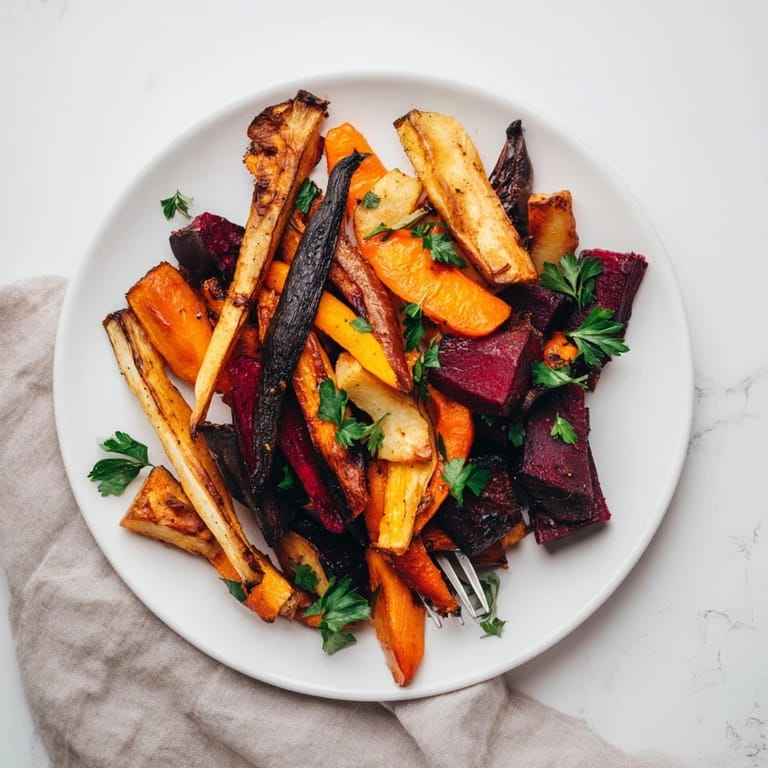
I have learned that roughly equal sized pieces are the secret to everything finishing cooking at the same time. Some vegetables cook faster than others so cutting stubborn ones like rutabaga slightly smaller helps everything synchronize perfectly in the oven. The beauty of this recipe is how forgiving it is when you need to use whatever is hiding in your crisper drawer.
Seasoning Variations
Sometimes I skip the dried herbs entirely and toss the vegetables with a tablespoon of balsamic vinegar before roasting. The acid helps the vegetables caramelize even more deeply and creates this incredible sticky glaze that everyone fights over. A splash of maple syrup works beautifully too if you are serving this alongside something savory that needs a sweet contrast.
Make Ahead Tips
You can cut all the vegetables up to two days ahead and store them in cold water in the refrigerator. Just pat them completely dry before tossing with oil or they will steam instead of roast. I often prepare everything the night before and then just pop them in the oven when guests arrive.
- Cut stubborn vegetables slightly smaller than tender ones
- Do not skip the parchment paper or you will regret the cleanup
- Let the vegetables rest for 5 minutes before serving to develop flavor
 Save to Pinterest
 This dish has become my go to for bringing comfort to any table regardless of the season or occasion. There is something deeply satisfying about transforming such humble ingredients into something truly extraordinary.
Recipe FAQs
- → What vegetables work best in this medley?
Carrots, parsnips, sweet potatoes, beets, and rutabaga create a perfect balance of flavors and textures. You can also substitute potatoes, celeriac, or sunchokes based on availability and preference.
- → Why roast at 425°F?
High heat promotes caramelization, creating golden edges and concentrated sweetness while keeping interiors tender. This temperature ensures even cooking without drying out the vegetables.
- → Can I prepare these ahead of time?
Yes, cut and season the vegetables up to a day in advance. Store them in an airtight container in the refrigerator, then roast when ready to serve for optimal texture and flavor.
- → How do I prevent uneven cooking?
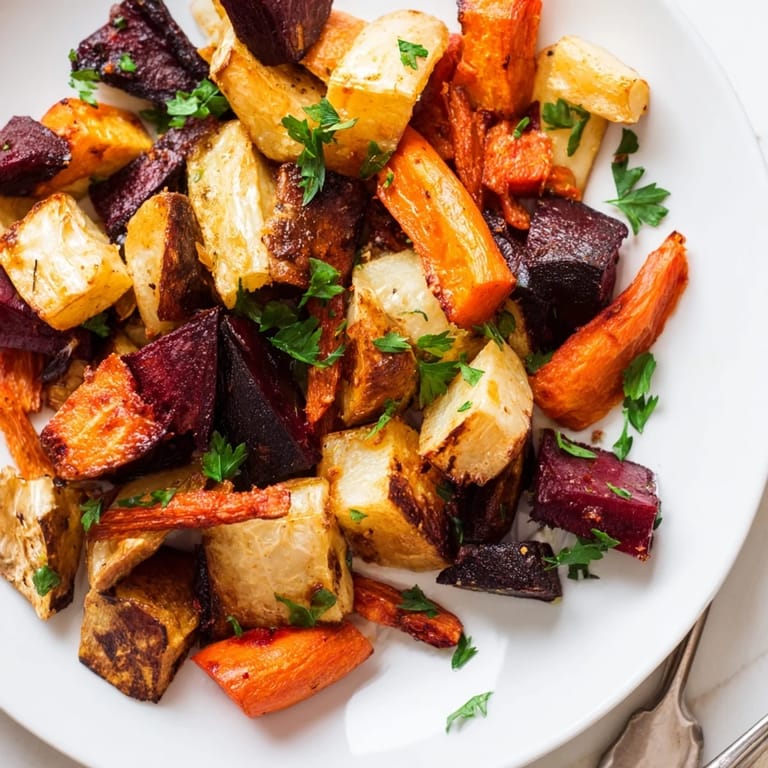
Cut all vegetables into uniform 1-inch pieces to ensure even roasting. Arrange them in a single layer without overcrowding the pan, and stir halfway through cooking for consistent browning.
- → What herbs complement roasted root vegetables?
Thyme and rosemary are classic pairings that enhance the earthy sweetness. Fresh sage, oregano, or marjoram also work beautifully. Add delicate herbs like parsley after roasting as a garnish.
- → How can I add more flavor?
A splash of balsamic vinegar before roasting adds depth and subtle acidity. You can also incorporate garlic cloves, sprinkle with nutritional yeast, or finish with lemon zest and fresh herbs.