 Save to Pinterest
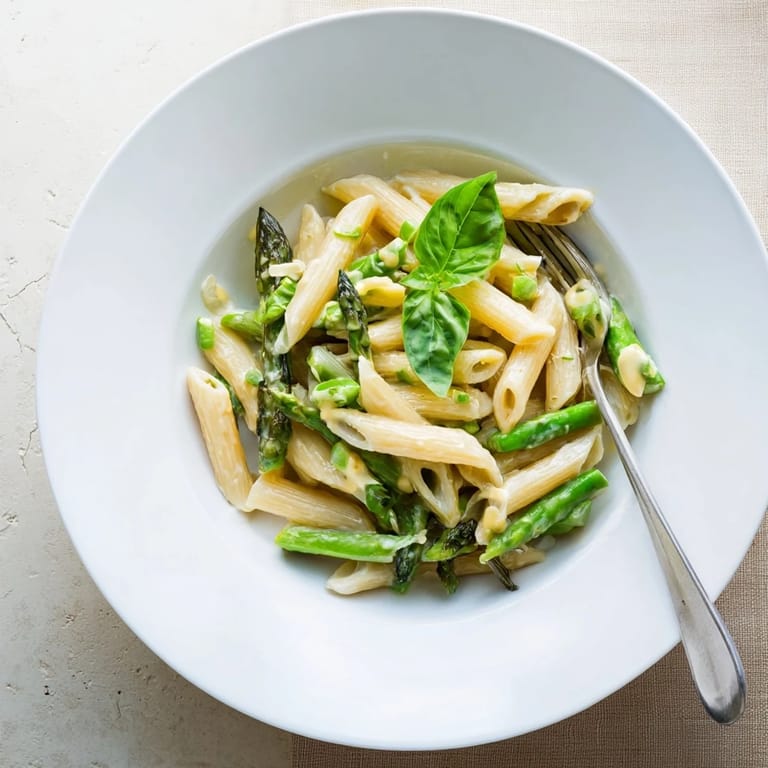
 The first time I made this pasta, I'd just come back from the farmers market with a bag full of spring vegetables I couldn't resist. My kitchen counter was covered in bright green asparagus, sugar snap peas, and fresh herbs, and I knew I needed something that would let all that freshness shine without overpowering it. This sauce became the answer—just enough creaminess to bring everything together while still feeling light and vibrant.
Last spring my sister came over for dinner and we sat at the counter eating this straight from the skillet, talking way too long about everything and nothing. She kept saying she couldn't believe something this fresh and green could feel so comforting and rich. That's exactly what I love about it—it's the bridge between heavy winter pasta and light summer salads.
Ingredients
- Penne pasta (350 g / 12 oz): The ridges catch the sauce perfectly and the shape holds up well when tossed with vegetables
- Asparagus (200 g / 7 oz): Cut into bite sized pieces so every forkful gets some without having to saw through longer spears
- Fresh or frozen peas (150 g / 1 cup): Even frozen peas work beautifully here and add the sweetest pop of brightness
- Green beans (150 g / 1 cup): Trim and cut them the same size as the asparagus so everything cooks evenly
- Olive oil (2 tbsp): A fruity extra virgin oil makes a difference since it's not being cooked at high heat
- Garlic (3 cloves): Finely mince it so it melts into the sauce rather than leaving chunks behind
- Vegetable broth (60 ml / 1/4 cup): This deglazes the pan and adds depth without making the sauce too thin
- Heavy cream (120 ml / 1/2 cup): Just enough creaminess to coat everything without feeling heavy or overwhelming the vegetables
- Freshly grated Parmesan (60 g / 2/3 cup): Pre grated cheese has anti caking agents that prevent proper melting
- Lemon (zest and juice of 1): Both the zest and juice are essential for cutting through the richness
Tired of Takeout? 🥡
Get 10 meals you can make faster than delivery arrives. Seriously.
One email. No spam. Unsubscribe anytime.
Instructions
- Get your pasta water going:
- Bring a large pot of salted water to boil and cook penne until al dente, saving that starchy pasta water before draining
- Start the aromatic base:
- Heat olive oil in a large skillet over medium heat and sauté minced garlic for just one minute until you can smell it
- Add the spring vegetables:
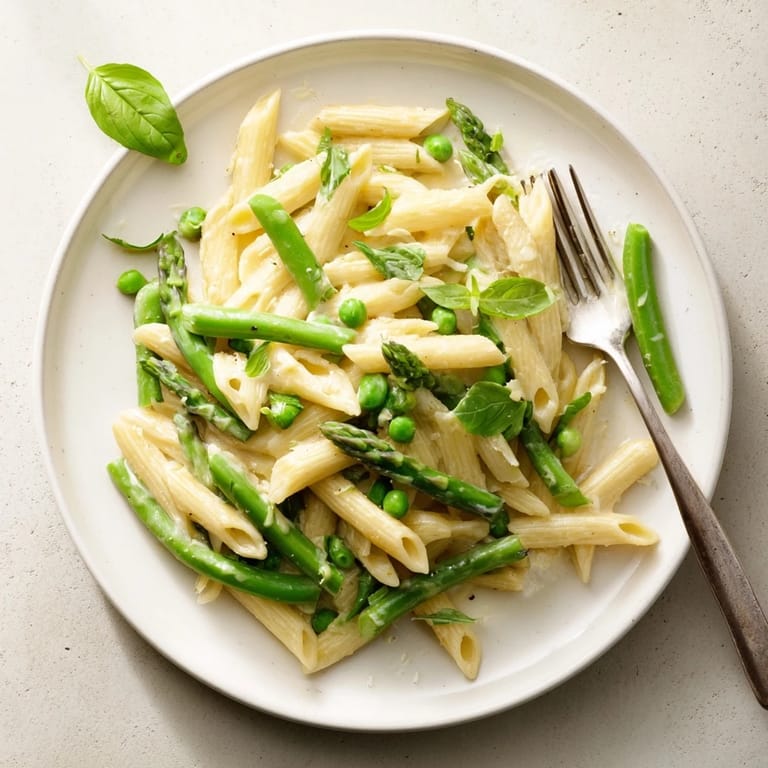
- Toss in asparagus, green beans, and peas, sautéing for 3 to 4 minutes until they're tender but still bright green
- Build the creamy sauce:
- Pour in vegetable broth, let it reduce for two minutes, then lower the heat and stir in cream and Parmesan until smooth
- Bring it all together:
- Add cooked penne to the skillet, tossing everything together and using reserved pasta water if the sauce needs loosening
- Finish with brightness:
- Season with pepper, salt, lemon zest, and juice, then serve immediately with extra Parmesan and fresh herbs
 Save to Pinterest
 This has become my go to for friends who say they don't like vegetables but still want something comforting. Watching someone realize they've just happily eaten a whole bowl of asparagus and green beans never gets old.
Making It Your Own
Sometimes I'll add fresh spinach or arugula right at the end, letting it wilt slightly in the warm pasta. The peppery bite from arugula plays so nicely against the creamy sauce and sweet vegetables. Other times I'll throw in some cherry tomatoes if they're in season—they burst and create little pockets of brightness throughout the dish.
What I've Learned About Spring Vegetables
Not all asparagus is created equal. Thin spears cook much faster than thick ones, so I'll cut thicker stalks slightly smaller to keep everything on the same timeline. The same goes for green beans—if they're particularly mature, I'll give them an extra minute in the pan before adding the more delicate peas.
Serving Ideas and Storage
A simple green salad with vinaigrette is all you need on the side, maybe some crusty bread if you want to soak up every drop of sauce. This pasta travels well for potlucks and keeps beautifully in the refrigerator for up to three days. Reheat it gently with a splash of water to bring the sauce back to life.
- Grate some extra lemon zest over each bowl right before serving
- Try adding toasted pine nuts or walnuts for crunch
- A glass of crisp white wine makes this feel like a proper celebration
 Save to Pinterest
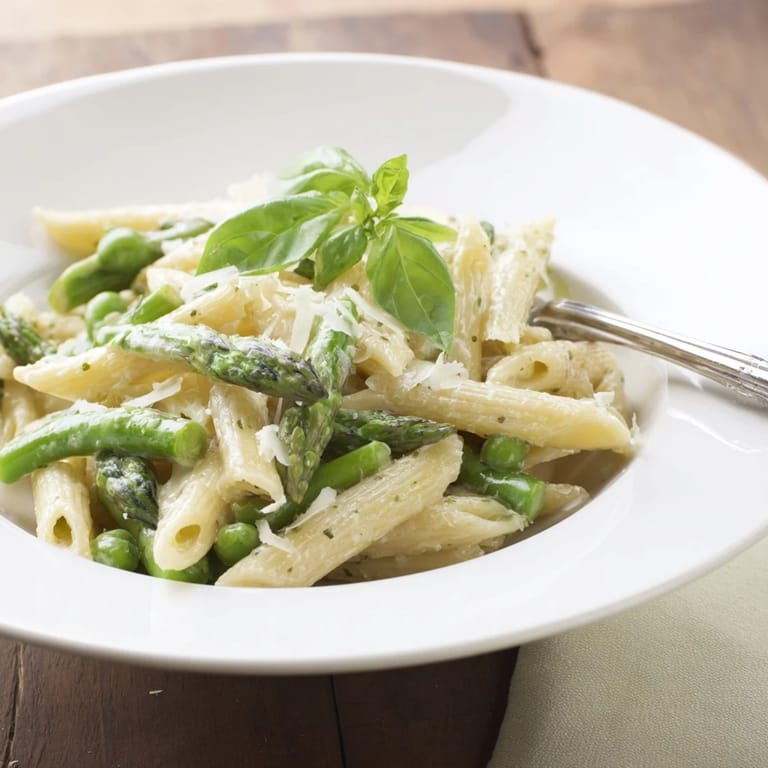
 There's something about this pasta that feels like hope on a plate, like winter is finally over and good things are growing again.
Recipe FAQs
- → Can I prepare this dish ahead of time?
Yes, you can prepare the vegetables and sauce components separately up to 24 hours in advance. Cook the pasta fresh just before serving and combine everything for the best texture and flavor.
- → What's the best way to achieve an al dente texture?
Follow your pasta package timing precisely and taste a minute before the suggested time. The pasta continues cooking slightly when tossed with the warm sauce, so slightly undercook if needed.
- → How do I prevent the sauce from becoming too thick?
Reserve pasta water while draining—this starchy liquid adds silkiness to the sauce. Add it gradually while tossing the pasta until you reach your desired consistency.
- → Are there substitutions for heavy cream?
Half-and-half, crème fraîche, or Greek yogurt work well for lighter versions. For dairy-free, use plant-based cream alternatives like oat or cashew-based options.
- → Can I add protein to this dish?
Absolutely. Grilled chicken, pan-seared shrimp, or white fish pair beautifully. Add protein in the final steps to heat through without overcooking.
- → How should I store leftovers?
Keep in an airtight container in the refrigerator for up to 3 days. Reheat gently over low heat with a splash of broth or cream to restore the sauce's silky texture.