 Save to Pinterest
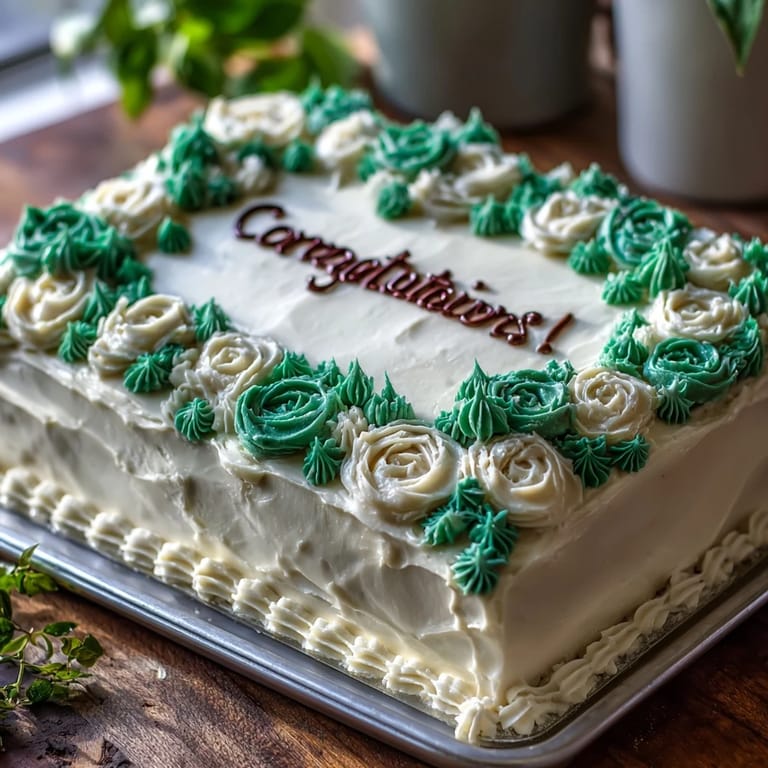
 There's something about baking a cake that makes you feel like you're in on a secret celebration before it even happens. I was standing in my kitchen on a humid June afternoon, flour dust catching the light through the window, when my neighbor asked if I could bake something special for her daughter's graduation party. That's when this cake came into my life—not from a fancy bakery, but from the simple realization that homemade buttercream roses could transform a sheet cake into something that looks like it took all day but actually doesn't. The moment those first piped petals took shape, I knew I'd found the perfect way to mark big moments with something warm and genuine.
I'll never forget watching the graduate's face light up when she saw the cake for the first time, how her friends immediately started taking photos before anyone even cut into it. That's when I realized this wasn't just about the recipe—it was about creating a centerpiece for joy, something people could gather around and remember. The buttercream held up perfectly through the afternoon heat, the roses stayed in place, and somehow a simple vanilla cake became the thing everyone kept talking about long after the party ended.
Ingredients
- All-purpose flour: The foundation of a tender crumb; make sure it's not packed when measuring, or use a kitchen scale for precision.
- Baking powder and baking soda: Together they create that perfect lift and lightness; don't skip the soda, it adds a subtle tang that brightens the vanilla.
- Unsalted butter: Room temperature is non-negotiable here because cold butter won't cream properly and you'll end up with a dense cake instead of fluffy.
- Granulated sugar: Creamed with butter, it aerates the batter and creates that tender crumb structure.
- Eggs at room temperature: They blend in smoothly and help create a stable, moist cake; cold eggs can cause lumps and uneven mixing.
- Vanilla extract: Pure vanilla tastes like warmth and comfort, so don't reach for imitation here.
- Whole milk at room temperature: The alternating method with flour keeps the batter balanced and prevents overmixing that would make the cake tough.
- Buttercream butter: Use quality unsalted butter that's been softened to nearly melting for the smoothest, most luxurious frosting.
- Powdered sugar: Sift it before mixing to avoid lumps that ruin the texture of your buttercream roses.
- Gel food coloring: It won't water down your buttercream like liquid coloring will, keeping your roses vibrant and stable.
Tired of Takeout? 🥡
Get 10 meals you can make faster than delivery arrives. Seriously.
One email. No spam. Unsubscribe anytime.
Instructions
- Get your oven and pan ready:
- Preheat to 350°F and grease that 12x18-inch pan thoroughly, then line it with parchment paper so your cake slides out easily after cooling. This step feels small but it's the difference between a beautiful release and frustration.
- Combine your dry ingredients:
- Whisk the flour, baking powder, baking soda, and salt together in a medium bowl, making sure the leavening agents are evenly distributed throughout. This prevents lumps and ensures your cake rises evenly.
- Cream butter and sugar into fluffy clouds:
- Beat them together for 3-4 minutes until the mixture is pale, light, and looks almost mousse-like. You'll know it's right when you run a finger through it and it leaves a trail that slowly fills back in.
- Add eggs one at a time with intention:
- Drop each egg in individually and beat until fully incorporated before the next one goes in, then add your vanilla. Rushing this step means lumpy batter and uneven texture in the final cake.
- Alternate flour and milk gently:
- Start with flour, then milk, then flour again, ending with flour; this keeps the batter balanced and prevents overdevelopment of gluten that would make it tough. Mix just until you don't see any white streaks of flour.
- Bake with patience and trust:
- Spread the batter evenly in your pan and bake for 30-35 minutes until a toothpick comes out clean or with just a few moist crumbs clinging to it. The smell will tell you when you're close—that sweet, vanilla-forward aroma means you're almost there.
- Cool completely before frosting:
- Leave it in the pan on a wire rack until it's completely room temperature; this prevents the buttercream from melting into puddles. This is the hardest part because you'll want to frost it immediately, but patience pays off.
- Make buttercream that's silky and stable:
- Beat softened butter until it's pale and creamy, then gradually add sifted powdered sugar, milk, and vanilla, beating for about 5 minutes total. You want it thick enough to hold piped shapes but soft enough to work with.
- Divide and tint your buttercream:
- Split it into bowls and add gel food coloring drop by drop, stirring until you reach the shade you want. Mix thoroughly so there are no streaks, and leave some white for the base layer.
- Spread the foundation layer:
- Use an offset spatula to apply a thin, even layer of white buttercream across the entire cooled cake, smoothing it as you go. This base makes everything else look polished.
- Pipe roses with confidence:
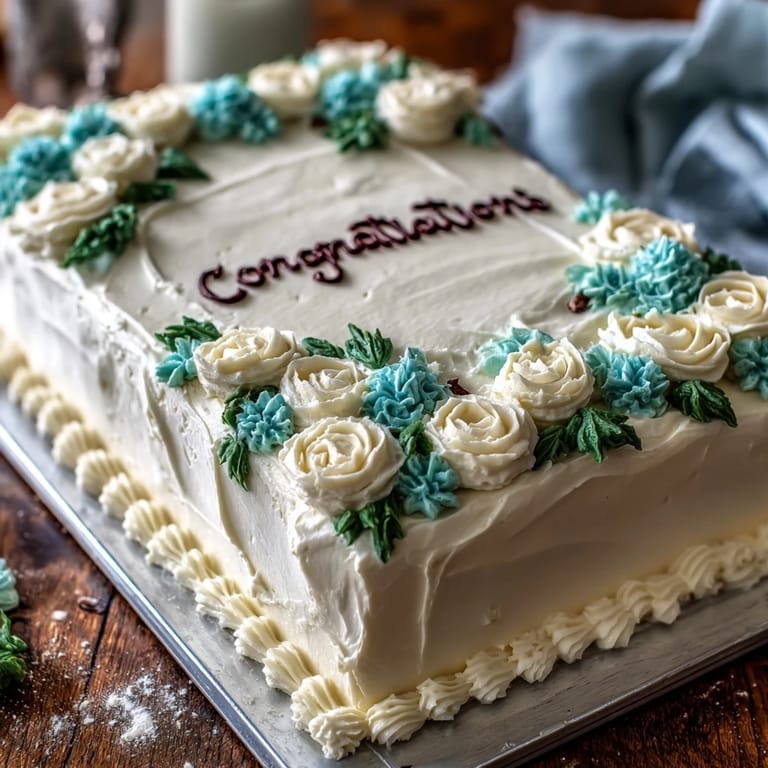
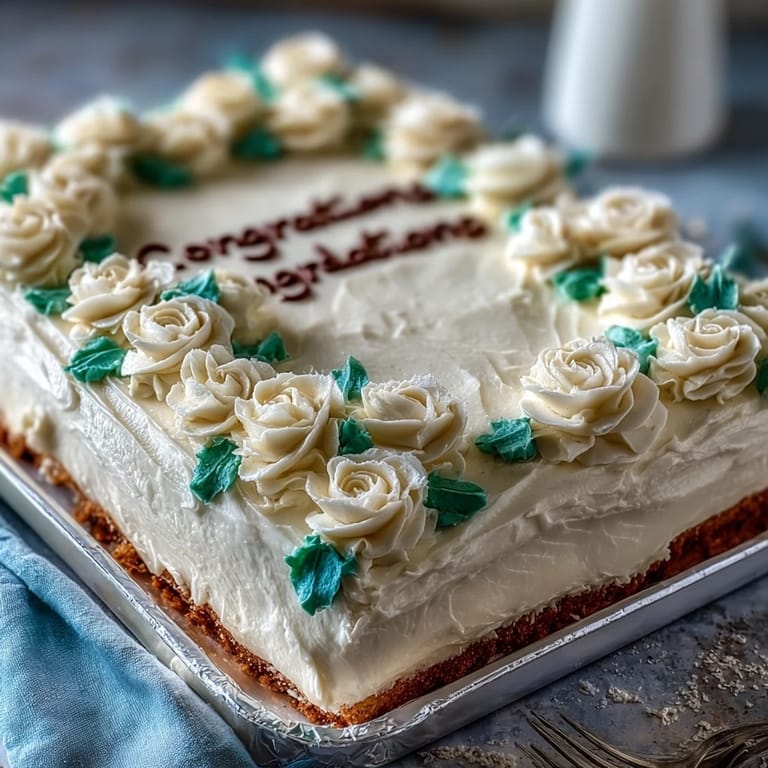
- Fit piping bags with petal tips and pipe roses by holding the bag at a 45-degree angle, squeezing while moving your hand in small circles. Start from the center and spiral outward; they don't have to be perfect—slightly imperfect roses look more natural and charming.
- Add greenery and finishing touches:
- Use a leaf tip with green buttercream to pipe leaves between the roses, then switch to a small round tip and add your personalized message. Step back and admire your work—you've just created something worth celebrating.
 Save to Pinterest
 There's a quiet magic in watching someone frost a cake for the first time and realizing they've created something beautiful entirely with their own hands. That moment when the first rose actually looks like a rose, when the person next to you gasps a little, that's when this cake stops being about the recipe and becomes about confidence.
The Secret to Perfect Roses
Piping roses intimidates people, but here's what I've learned: they're forgiving because no two flowers in nature are identical anyway. The key is keeping your piping bag at a consistent angle and moving confidently; hesitation shows in the results more than imperfection does. Practice on parchment paper first if you're nervous, but honestly, your first attempts on the actual cake will teach you more than anything else can.
Storing and Serving This Celebration Cake
This cake is sturdy enough to hold up through an afternoon celebration, but it tastes even better the next day when the flavors have settled and the buttercream has firmed up slightly. If you're making it ahead, frost it the morning of your event and keep it covered at room temperature; the buttercream will stay smooth and the cake will stay moist. Refrigeration works too, but let it sit out for 15 minutes before serving so the buttercream softens just right.
Making It Your Own
The beauty of a sheet cake is how endlessly customizable it is without being complicated. You can swap vanilla for almond extract for a different flavor profile, or add a tablespoon of espresso powder to the batter for subtle depth. For a chocolate version, replace three-quarters of a cup of flour with three-quarters cup of unsweetened cocoa powder and increase the milk slightly since cocoa absorbs more liquid.
- Pair it with sparkling lemonade or champagne to really celebrate the moment.
- If you're nervous about piping, focus on a few gorgeous roses and fill the rest of the cake with simple swirls that still look intentional.
- Make this cake a day ahead and frost it the morning of your event for the easiest celebration prep imaginable.
 Save to Pinterest
 This cake has become my go-to for every big moment worth marking—graduations, celebrations, gatherings where you want people to know you went the extra mile without actually spending all day in the kitchen. Make it once and you'll understand why it's worth every ounce of effort.
Recipe FAQs
- → How do I achieve smooth buttercream for piping?
Use softened unsalted butter and sifted powdered sugar. Beat them together until light and fluffy, gradually adding milk and vanilla to reach a creamy, smooth consistency ideal for detailed piping.
- → What is the best way to prevent cake dryness?
Ensure not to overbake by checking with a toothpick inserted in the center; remove when it comes out clean. Also, incorporating whole milk helps maintain moisture within the crumb.
- → Can I prepare the cake decorations in advance?
Yes, you can pipe the buttercream roses a day ahead and store them covered in the refrigerator to maintain shape and freshness before assembling.
- → How do I get vibrant colors in the buttercream flowers?
Use gel food coloring as it provides brighter hues without altering the buttercream consistency or making it runny.
- → What piping tips are recommended for the roses and leaves?
A petal tip works best for creating rose petals, while a leaf tip is ideal for crafting the green foliage accents that complement the floral design.
- → Is this cake suitable for vegetarian diets?
Yes, it contains no animal-derived gelatin or meat products, fitting vegetarian dietary preferences.