 Save to Pinterest
 Last Tuesday, I was staring into my nearly empty fridge when I spotted a forgotten container of roasted chickpeas from meal prep, a half bag of quinoa, and an embarrassing amount of vegetables that needed rescuing. Instead of ordering takeout, I decided to build something intentional, something that would taste like I'd actually planned it. That bowl changed how I think about putting meals together—it showed me that the best dishes aren't always about following a blueprint, they're about knowing how to make a plate feel whole.
My partner took one bite and asked if I'd finally figured out how to make leftovers taste exciting instead of sad—that was the moment I knew this recipe deserved to stick around. Now I make it almost every Sunday, and somehow each bowl feels different depending on whatever vegetables caught my eye at the market that week.
Ingredients
- Quinoa, brown rice, or farro (1 cup): Choose what calls to you—quinoa is fastest and fluffiest, rice is most forgiving, farro has a chewy bite that makes everything taste more substantial.
- Water or vegetable broth (2 cups): Broth adds warmth and flavor without any extra work, but water works just fine if that's what you've got.
- Salt (1/2 tsp): This tiny amount prevents the grains from tasting flat and forgotten.
- Cooked chickpeas (1 cup): Canned is honest and saves time—just rinse them well to cut through that metallic taste.
- Cooked lentils (1 cup): Green or brown lentils hold their shape better than red ones, which tend to turn into mush.
- Red bell pepper, diced (1): The sweetness plays beautifully against the earthiness of the legumes and grains.
- Zucchini, sliced (1): It roasts into something tender and almost caramelized if you don't crowd the pan.
- Red onion, cut into wedges (1 small): The raw bite mellows into something sweet and charred when it hits the heat.
- Cherry tomatoes, halved (1 cup): They burst slightly while roasting, creating little pockets of concentrated flavor.
- Broccoli florets (2 cups): The edges get crispy and almost nutty, which most people don't expect from broccoli.
- Olive oil (2 tbsp): Don't skimp here—it's what makes the vegetables actually taste like something special.
- Smoked paprika (1 tsp): This spice does the heavy lifting, adding depth without heat.
- Ground cumin (1/2 tsp): A whisper of warm spice that ties everything together.
- Fresh parsley, chopped (1/4 cup): Fresh herbs wake up the whole bowl at the very end.
- Avocado, sliced (1): Slice it just before serving or it'll turn into something sad and brown.
- Toasted pumpkin seeds (2 tbsp): These add crunch and a subtle nuttiness that surprises people.
- Lemon wedges: A squeeze of bright acid right before eating changes everything about how the bowl tastes.
- Tahini (2 tbsp): This is the secret that makes people think you actually know what you're doing in the kitchen.
- Lemon juice (1 tbsp): Cuts through the richness of the tahini and keeps the dressing from feeling heavy.
- Water for dressing (1 tbsp, plus more): You're thinning the tahini to something you can actually drizzle, so start with a little and add more as you go.
- Garlic clove, minced (1 small): Raw garlic in the dressing adds a living quality that cooked garlic never quite achieves.
Tired of Takeout? 🥡
Get 10 meals you can make faster than delivery arrives. Seriously.
One email. No spam. Unsubscribe anytime.
Instructions
- Heat your oven to 425°F:
- While it preheats, you're building momentum—this is the moment that turns a collection of ingredients into an actual meal plan.
- Start your grains:
- Bring water or broth to a rolling boil with salt, then add your grain of choice and let it simmer under a lid until it's tender and the liquid has disappeared. Quinoa will be done in about 15 minutes, rice needs closer to 40, and farro sits somewhere in between at 25 minutes. Fluff it gently with a fork when it's ready—this tiny gesture keeps it from compacting into cement.
- Toss your vegetables for the oven:
- In a large bowl, coat the bell pepper, zucchini, onion, tomatoes, and broccoli with olive oil, smoked paprika, cumin, salt, and pepper. The spices should cling to everything—this is where flavor actually lives.
- Spread and roast:
- Arrange everything on a baking sheet in a single layer so nothing steams itself and becomes bitter. Roast for 20 to 25 minutes, stirring halfway through, until the edges are charred and the vegetables have softened. You'll know it's right when the kitchen smells like toasted spices and caramelized vegetables.
- Warm your legumes if you want:
- Heat the chickpeas and lentils in a small pan with a splash of olive oil, salt, and pepper for 2 to 3 minutes. This step is optional but it makes them taste less like something that came from a can and more like something intentional.
- Make your dressing:
- Whisk tahini, lemon juice, minced garlic, salt, and pepper together, then add water a splash at a time until you have something that drizzles like a loose cream. Taste it and adjust—you're looking for balance between nutty, bright, and balanced.
- Build your bowls:
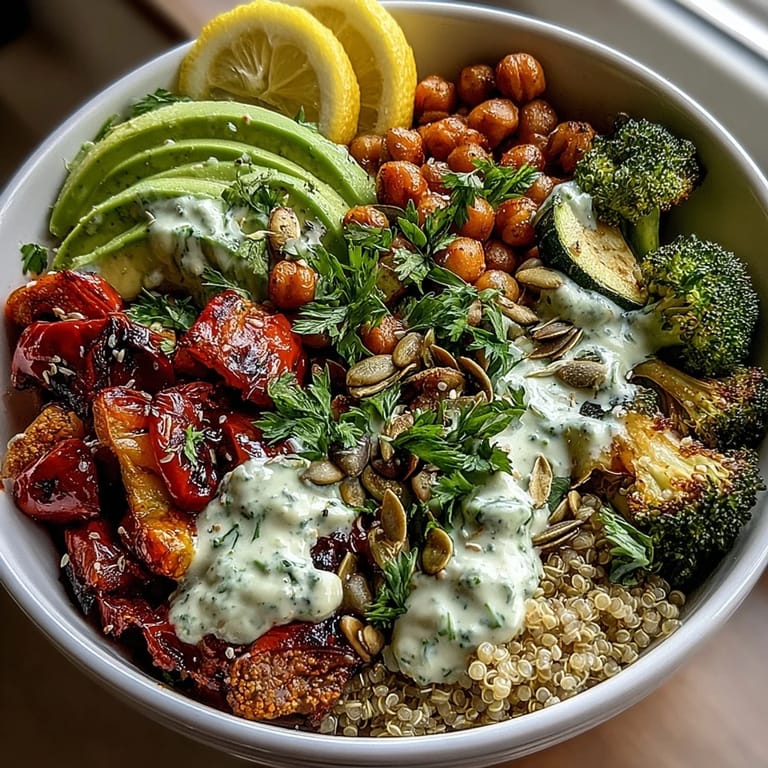
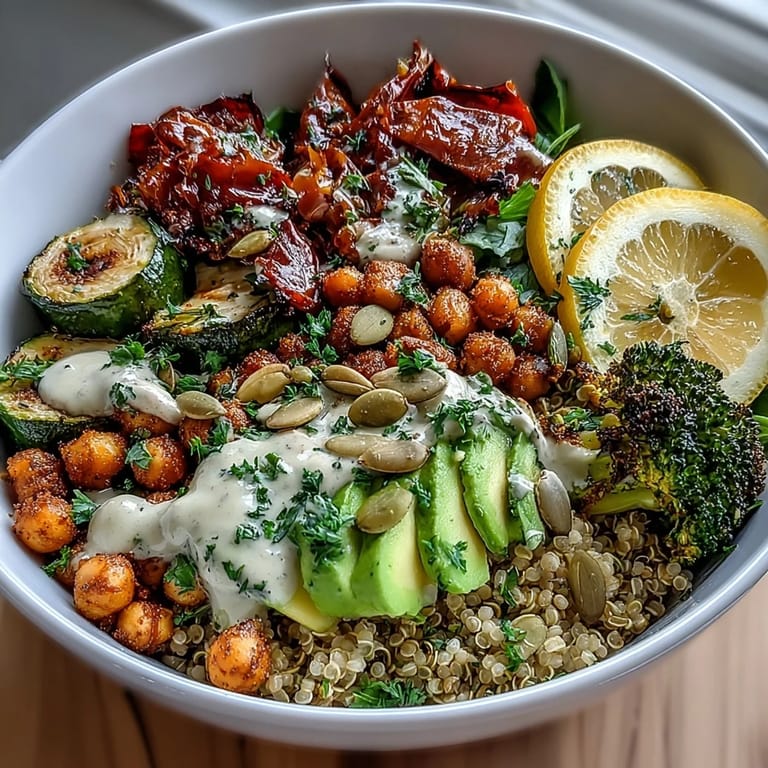
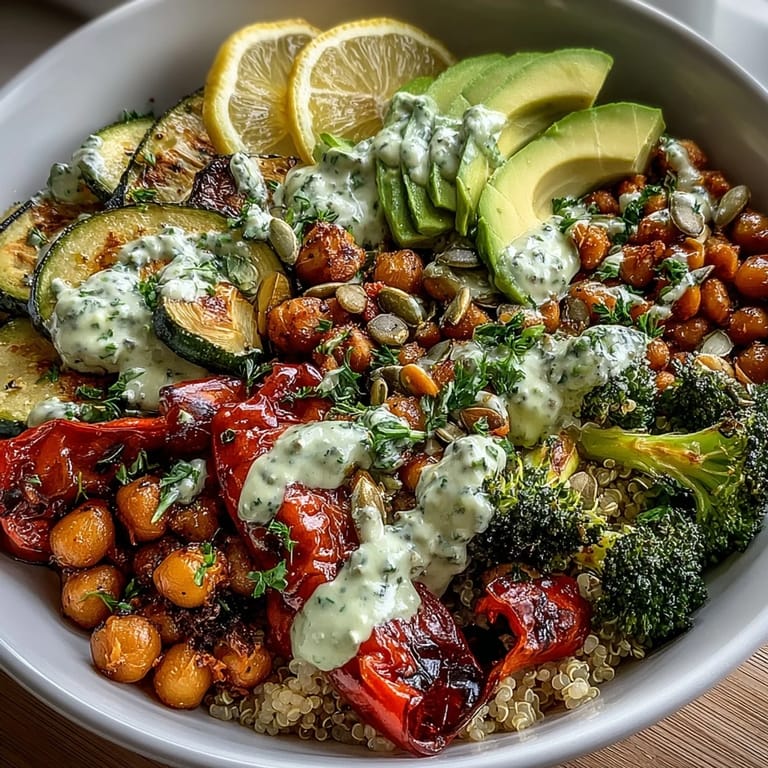
- Divide the cooked grain among four bowls, then distribute the roasted vegetables and legumes on top. Drizzle the tahini dressing over everything in those lazy patterns you see in magazines.
- Finish with the good stuff:
- Top with fresh parsley, avocado slices, and pumpkin seeds, then serve with lemon wedges on the side so people can squeeze brightness wherever they want it.
 Save to Pinterest
 There's something about watching someone build their own bowl, choosing what goes where, that makes even a simple plate feel like a small act of control and care. This recipe taught me that nourishment doesn't have to feel like sacrifice if you actually enjoy what you're putting on your plate.
The Magic of Roasted Vegetables
Heat does something profound to vegetables—it concentrates their flavors, caramelizes their edges, and transforms what might have felt boring into something that tastes intentional. The moment your oven is hot enough, those vegetables stop being raw ingredients and start becoming the actual soul of this bowl. I learned this the hard way after years of steaming things into pallid submission, thinking the point was just to make them soft.
Why Tahini Is the Equalizer
Tahini feels fancy in a way that belies how simple it actually is—it's just ground sesame seeds, but it brings a richness and nuttiness that ties every element of the bowl together. The acid from the lemon juice keeps it from feeling heavy, the garlic gives it backbone, and water turns it into something you can actually pour. This dressing is proof that sometimes the difference between a good meal and a memorable one is knowing which ingredient to lean on.
Building Your Own Bowl Combinations
The beauty of this recipe is that it's less a strict formula and more a framework for working with whatever you have on hand. Season heavily, taste as you go, and don't apologize for making substitutions—that's where the real cooking happens. Once you understand the basic structure, you can build infinite versions depending on what's in season, what you're craving, and what your budget allows.
- Swap sweet potato or cauliflower in for zucchini if you want something with more depth or character.
- Use whatever grain calls to you, whether that's couscous, barley, or even a bed of sautéed greens if you're feeling lighter.
- Add a squeeze of tahini mixed with hot water if you want the dressing thinner, or keep it thick for dipping.
 Save to Pinterest
 This bowl is what happens when you stop thinking of meals as obligations and start thinking of them as opportunities to take care of yourself. Make one today and you'll understand why it keeps getting made.
Recipe FAQs
- → Can I make this bowl ahead of time?
Absolutely. The roasted vegetables and cooked grains keep well in the refrigerator for 4-5 days. Store the dressing separately and add fresh garnishes like avocado and parsley when serving.
- → What other grains work well in this bowl?
Farro, barley, couscous, or millet are excellent alternatives. Just adjust cooking times accordingly—farro takes about 25 minutes, while couscous cooks in just 5 minutes.
- → Can I use different vegetables?
Yes, this bowl is highly adaptable. Try sweet potato cubes, cauliflower florets, carrots, or Brussels sprouts. Root vegetables may need a few extra minutes in the oven.
- → How do I make the tahini dressing creamier?
Whisk in additional water, one tablespoon at a time, until you reach your desired consistency. For extra richness, add a teaspoon of olive oil or maple syrup.
- → Is this bowl freezer-friendly?
The cooked grains and roasted vegetables freeze well for up to 3 months. Thaw overnight in the refrigerator, though fresh garnishes and dressing are best added just before serving.