 Save to Pinterest
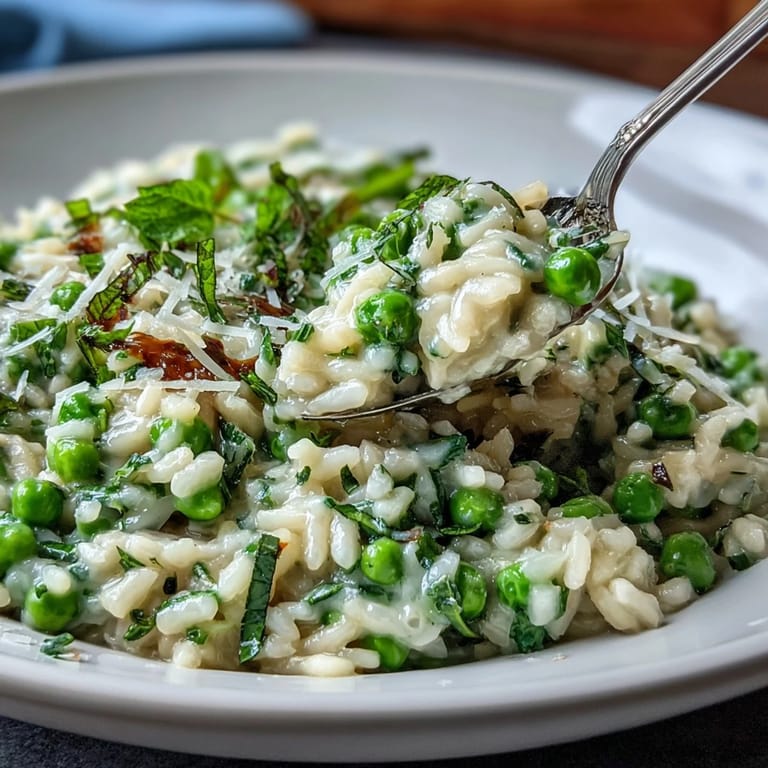
 The first time I stood by the stove stirring risotto, I was struck by the swirl of spring aromas wafting through the kitchen—sweet peas snapping open, zesty lemon curling into the steam, and the faint, grassy hint of mint. There’s something hypnotic about watching creamy Arborio rice plump up as you nurture it with patient ladlefuls of broth. I still remember the sizzle of shallots and garlic when they hit the olive oil, a sure sign that you’re about to create something comforting. This Spring Pea Risotto gives me that warm, kitchen-humming feeling every time. No matter the day, it always feels like a quiet celebration of the season.
One chilly April evening, I made this risotto for a couple of friends who had just finished helping me clear out the garden beds. The peas had only just shown up at the farmers’ market, and we found ourselves laughing over how many times I’d nearly let the rice stick while gabbing. Watching everyone go quiet for that first spoonful—a little sunshine and earthiness in every bite—made all the prior stirring absolutely worth it.
Ingredients
- Spring peas (1 1/2 cups): Use the freshest peas you can find—frozen works too, but nothing beats shelling your own. Whenever I do, I snack on a few just to get that burst of sweetness.
- Medium shallot (1): Shallots melt almost invisibly into the risotto, building the flavor with a gentle bite—dice them as finely as your patience allows.
- Garlic cloves (2): Mincing garlic right before cooking keeps their boldness intact without bitterness sneaking in.
- Fresh mint leaves (2 tbsp): Chop these up at the very end—if you do it too early, their punchy freshness softens in the air.
- Lemon zest (from 1 lemon): Only grab the yellow part, as the white pith can make things weirdly bitter (learned that the hard way).
- Arborio rice (1 1/2 cups): Arborio is the star here, and I’ve learned not to rinse it—the excess starch is risotto magic.
- Low-sodium vegetable broth (4 cups): Keep it on a low simmer so you don’t stall the risotto with cold broth.
- Dry white wine (1 cup): The wine wakes up all the flavors—go for something you wouldn’t mind sipping while you stir.
- Olive oil (2 tbsp): A good-quality olive oil gives a fruity base, and the aroma as it warms will catch you right in the appetite.
- Unsalted butter (3 tbsp): Stirred in at the end, butter makes every bite silky (and somehow feels indulgent without being heavy).
- Aged Parmesan cheese (3/4 cup): Use a microplane for the lightest, fluffiest grate—you want it almost to melt instantly.
- Kosher salt (1/2 tsp, plus more): Salt gently, and taste along the way—Parmesan brings salty depth too.
- Freshly ground black pepper (1/4 tsp): A little black pepper gives gentle heat—grind it right in at serving for the fullest flavor.
Tired of Takeout? 🥡
Get 10 meals you can make faster than delivery arrives. Seriously.
One email. No spam. Unsubscribe anytime.
Instructions
- Prep your broth:
- Pour the vegetable broth into a saucepan and keep it gently simmering—adding warm broth makes the risotto luxuriously creamy.
- Sweat the aromatics:
- Heat olive oil in your biggest skillet or Dutch oven, then add the finely chopped shallot and garlic, stirring until the kitchen is filled with the promise of something delicious (about two minutes).
- Toast the rice:
- Tip in the Arborio rice, stirring so each grain glistens—listen for the soft hiss and watch for a faint translucence along the edges.
- Deglaze with wine:
- Pour in the white wine and stir constantly, breathing in as the alcohol simmers off and the rice drinks up the flavor.
- Stir, stir, stir:
- Ladle in warm broth a bit at a time, stirring as the rice absorbs it—in about 15 minutes, the rice will plump and the mixture will look creamy but not soupy.
- Add the spring peas:
- Stir in your peas and keep cooking, adding broth and stirring until the rice is tender but has a toothsome bite—taste as you go, as it should take about 20-25 minutes total.
- Finish with flavor:
- Take the pan off the heat, then stir in butter, Parmesan, fresh mint, and lemon zest—season with salt and pepper, stir, and let everything rest a minute to meld.
- Serve and enjoy:
- Spoon immediately into bowls, topping with even more Parmesan and a few mint leaves if you’re feeling fancy.
 Save to Pinterest
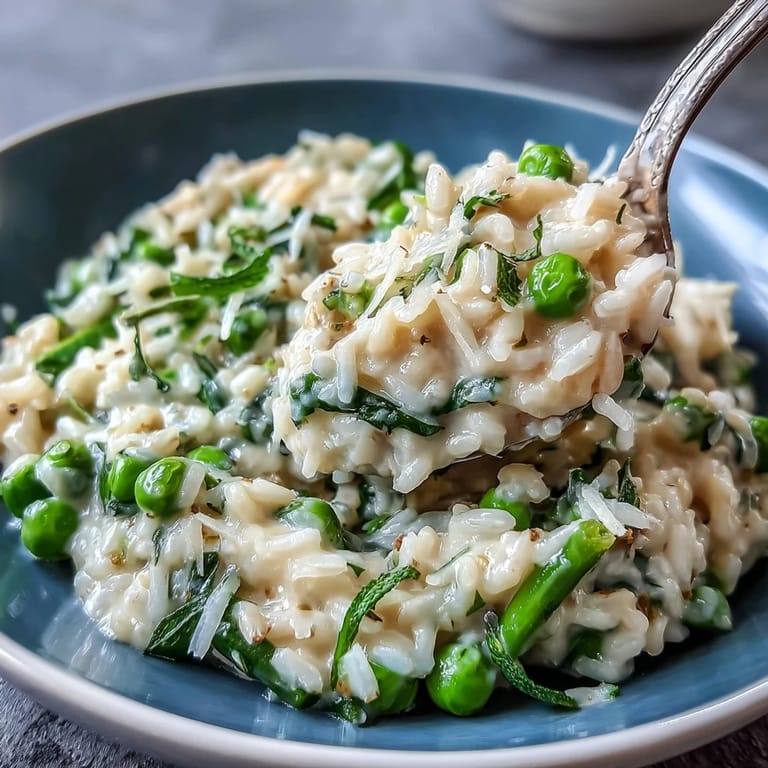
 There was a spring evening when my partner and I had grand plans to set the table outside, only for a pop-up shower to drench everything. We carried our bowls inside, sat on the steps, and ate right from our laps—steam curling up and laughter filling the air. It was one of those rare meals where the simplest dish made even their damp socks feel worth it.
How to Serve Spring Pea Risotto
I love to serve this risotto with a sharp extra crack of black pepper and a flurry of fresh Parmesan right before it hits the table. Sometimes, I scatter edible flowers on top if I have them, or just some extra mint for color—it always looks and tastes so lively.
Ingredient Swaps and Add-Ins
When fresh peas or mint aren’t available, frozen peas and basil work beautifully (or even a handful of chopped spinach for color and goodness). Sometimes I’ll fold in a splash of cream at the end for sheer richness or use pecorino instead of Parmesan when I want a bit more tang.
Troubleshooting Tips for Perfect Risotto
If your risotto looks dry, don’t panic—just add a touch more warm broth and stir gently off the heat. Thick and stodgy? Loosen it with a splash of wine or extra broth and let it sit covered for a minute. The rewards are always worth the attention.
- Keep a towel nearby—risotto occasionally leaps from the pan if stirred too vigorously.
- If you forget to zest your lemon ahead of time, do it right before serving—it wakes everything up.
- Leftovers make surprisingly good risotto cakes the next day.
 Save to Pinterest
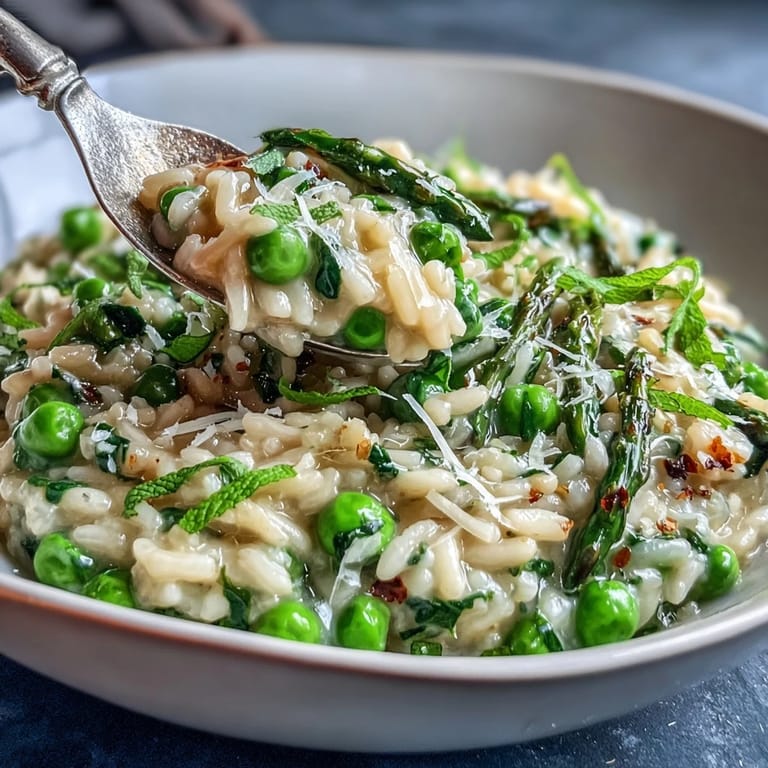
 Spring Pea Risotto is the kind of dinner that turns an ordinary evening into a small celebration. I hope you find as many excuses as I have to share it with good company.
Recipe FAQs
- → How do I keep the rice creamy without overcooking?
Use warm broth and add it one ladle at a time, stirring frequently so each addition is absorbed. Remove from heat when the grains are al dente; carryover will finish them.
- → Can I use frozen peas instead of fresh?
Yes. Add frozen peas toward the last 5 minutes of cooking so they thaw and retain their bright color and texture without becoming mushy.
- → What can replace the white wine if I omit alcohol?
Substitute an equal amount of warm vegetable broth with a splash of lemon juice or a teaspoon of white wine vinegar to maintain acidity and balance.
- → How can I make the risotto extra silky?
Finish with an extra knob of cold butter and vigorous stirring off the heat to emulsify. A splash of cream can also add richness if desired.
- → Which cheeses work well if I don’t have Parmesan?
Pecorino Romano or aged Asiago are good alternatives; use a bit less if the cheese is saltier, and grate finely for even melting.
- → What’s the best way to reheat leftovers without drying them out?
Gently rewarm over low heat with a splash of warm broth, stirring to restore the creamy consistency. Avoid high heat to prevent sticking.