 Save to Pinterest
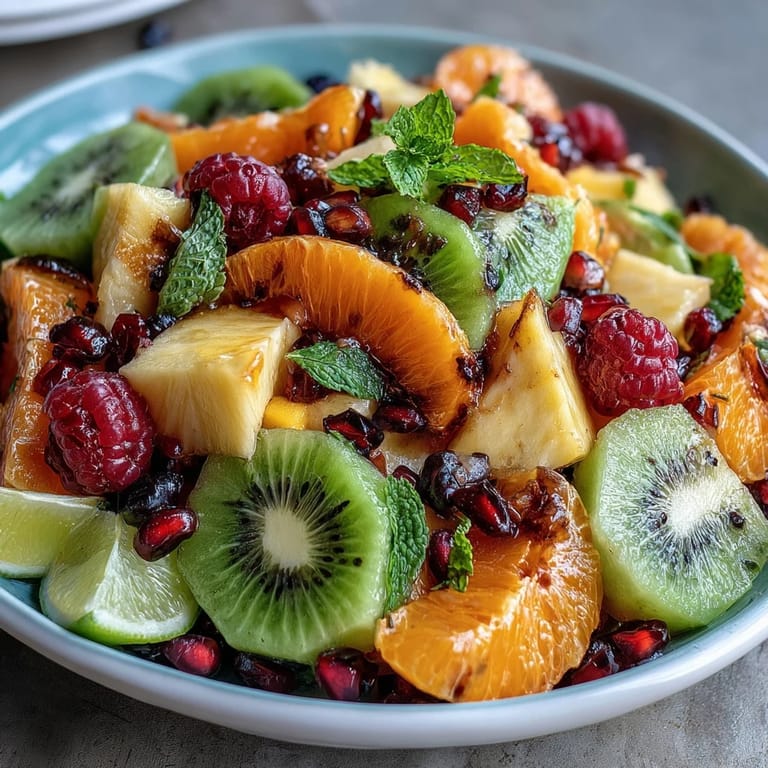
 My neighbor threw a summer garden party on the hottest day of July, and I volunteered to bring something that wouldn't wilt in the heat. I'd spent the morning at the farmer's market, drawn to a pyramid of golden mangoes and a pineapple so fragrant it practically announced itself from across the produce section. That's when it clicked—why not build an entire edible centerpiece that was as much about color and texture as it was about taste? The result was this tropical fruit display, and honestly, it became the thing people actually gathered around instead of the appetizer table.
I'll never forget watching my friend's three-year-old daughter point at each color and name them like she was narrating a nature documentary. That moment, with her sticky fingers reaching for a perfectly ripe mango slice and her genuine wonder, reminded me that sometimes the simplest food makes the biggest impression. The adults weren't far behind her—everyone lingered around that platter far longer than anyone expected, just grazing and talking and enjoying the fact that something so beautiful could also taste this good.
Ingredients
- Ripe mangoes (2): Choose ones that yield slightly to pressure and smell sweet at the stem—unripe mangoes won't have that honeyed flavor that makes this display sing.
- Large pineapple (1): Look for a golden-yellow one with leaves that pull out easily; the sweet fragrance is your signal it's ready.
- Kiwis (2): Their bright green color provides contrast that makes the whole platter pop visually.
- Papaya (1): The soft peachy flesh creates a creamy textural bridge between firmer fruits.
- Dragon fruit (1): This one's pure showmanship—those speckled black seeds against hot pink are unforgettable.
- Seedless red grapes (1 cup): They add jewel-like pops of color and a refreshing burst of sweetness.
- Fresh strawberries (1 cup): Halved just before serving so they stay plump and don't weep juice onto neighboring fruits.
- Blueberries (1 cup): These tiny spheres fill gaps and add depth to the color story of your display.
- Fresh mint leaves (1/4 cup): Tear them gently just before arranging so the oils stay alive and aromatic.
- Lime (1): Cut into wedges for both visual pop and a citrus brightness that wakes up your palate.
- Vanilla Greek yogurt or coconut yogurt (1 cup): For the optional dipping sauce, a creamy anchor that balances the fruit's natural sweetness.
- Honey or agave syrup (1 tablespoon): Just enough to deepen the sauce without overpowering the delicate fruit flavors.
- Lime zest (from 1 lime): The aromatic oils in zest add sophistication that regular juice can't quite match.
Tired of Takeout? 🥡
Get 10 meals you can make faster than delivery arrives. Seriously.
One email. No spam. Unsubscribe anytime.
Instructions
- Prep Your Fruits with Care:
- Start with a sharp knife and a steady cutting board—dull knives bruise delicate fruit and make sloppy cuts. Work through each fruit methodically, peeling mangoes by slicing around the flat pit, halving the pineapple lengthwise then cutting out the core, and simply peeling back dragon fruit's thin skin to reveal that stunning interior.
- Build Your Centerpiece:
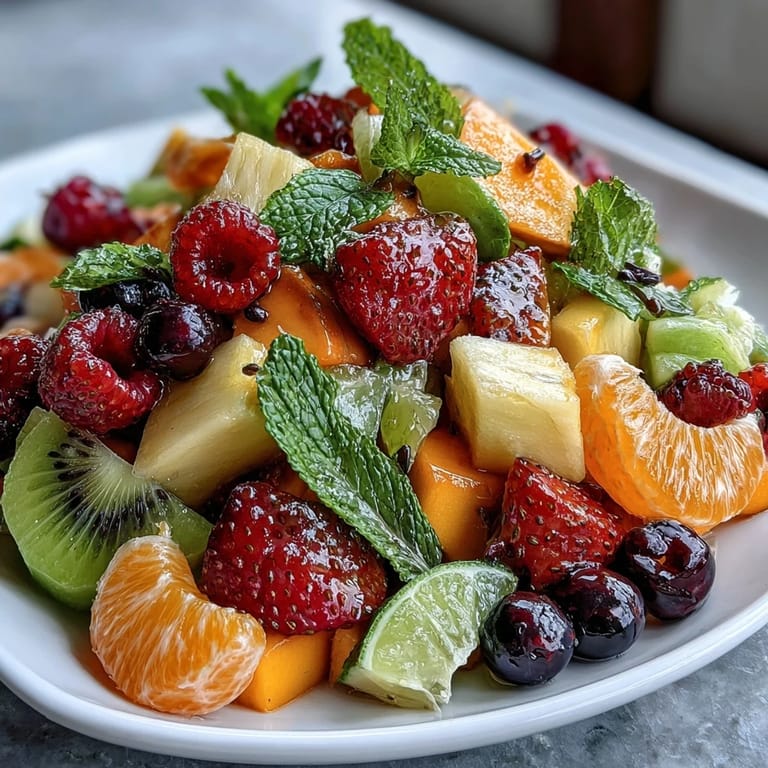
- Arrange mango and pineapple as your anchors, either fanned out or standing upright in the center of your platter. Think of yourself as an artist—alternate colors, layer different shapes, and let the jewel tones of berries fill any gaps, building height and dimension as you go.
- Add the Finishing Touches:
- Scatter mint leaves across the arrangement just before serving so they stay fresh and fragrant, and nestle lime wedges into pockets of empty space. The greenery and citrus aren't just decorative; they signal to your guests that this is a finished, thoughtful presentation.
- Make Your Optional Sauce:
- Whisk together yogurt, honey, and lime zest in a small bowl, tasting as you go because lime zest can be assertive. Set it alongside the fruit, letting people dip if they want a creamy complement or dive straight into the naked fruit if they prefer.
- Chill Until Showtime:
- Keep everything cold until the moment you're ready to serve—this isn't just about food safety, it's about making sure that first bite is as refreshing as possible on a warm day.
 Save to Pinterest
 There's something about a table laden with this much color that changes the energy of a gathering. It says you've paid attention, you've cared enough to make something beautiful, and you trust your guests to enjoy it without pretense or fuss.
Choosing Fruit That's Actually Ripe
The difference between a mediocre tropical platter and one that people actually remember comes down to one thing: ripeness. I learned this the hard way after arranging a gorgeous spread of underripe mangoes that had the texture of sad rubber. Now I give everything the gentle squeeze test a day before I plan to assemble, buying slightly soft fruit and keeping it room temperature overnight if needed. A pineapple that smells like nothing is a pineapple that will taste like nothing, so trust your nose—that fragrance is nature's guarantee of sweetness.
The Art of Arrangement
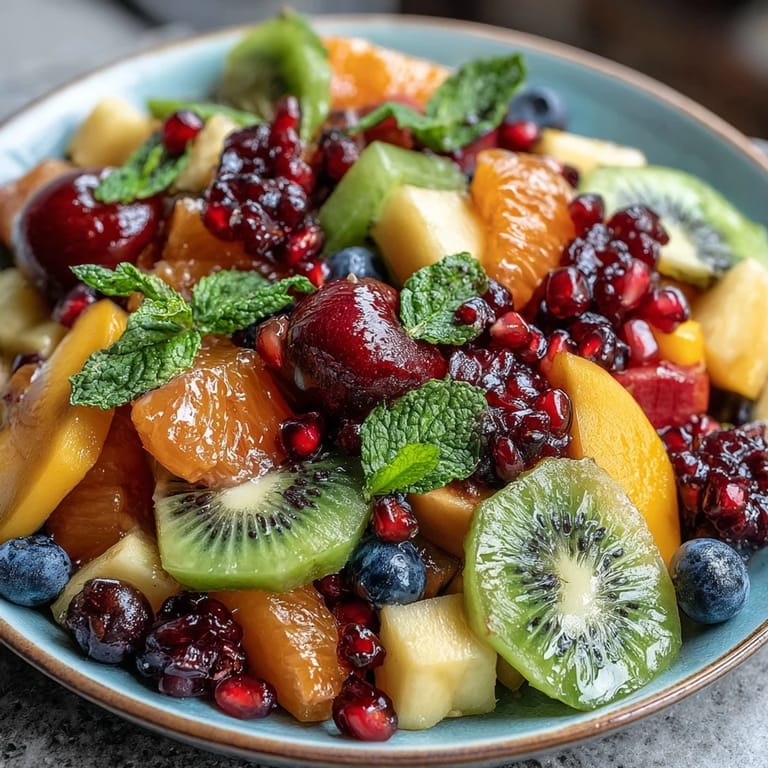
You don't need to be a professional food stylist to make this look stunning; you just need to think in terms of contrast and flow. Start with your largest pieces as anchors, then let smaller items create rhythm and fill spaces. I've found that if you group similar colors together rather than scattering them, the platter reads more intentional and gallery-like. Odd numbers work better than even—three mango slices in a cluster feels more composed than four, and psychologically our eyes find asymmetry more pleasing.
Timing and Temperature
This is a dish that rewards last-minute decisions and flexible timing. The beauty of a fruit platter is that most of the work can happen hours ahead, but the final garnish of mint and strategic lime wedge placement should happen just before guests arrive. Cold fruit is absolutely essential—I keep my platter on a bed of ice under the table, just slightly out of view, which keeps everything at peak refreshment without looking like you've made an effort. Some friends dip pieces in the yogurt sauce, others squeeze lime over everything, and a few just eat the fruit naked straight from the board, and honestly, every approach is the right one.
- If you're serving outdoors on a hot day, keep the fruit platter in the shade and refresh the ice underneath every thirty minutes.
- Cut fruit just firm enough that pieces hold their shape when picked up, which usually means stopping just before the fruit reaches that deep-soft stage.
- The dipping sauce can be made a full day ahead and actually tastes better after the lime zest has had time to infuse.
 Save to Pinterest
 There's something genuinely joyful about watching people slow down and actually taste their food when it's arranged with this much thought. This platter has a way of turning a casual gathering into something people talk about long afterward.
Recipe FAQs
- → How should the fruits be prepared for the display?
Peel, pit, and slice the mangoes and pineapple, then arrange them artistically with other fruits like kiwi, papaya, and dragon fruit for a vibrant presentation.
- → Can the garnish be customized?
Yes, fresh mint leaves and lime wedges provide color and aroma, but edible flowers or toasted coconut flakes can be added for extra flair.
- → Is the dipping sauce necessary?
The dipping sauce is optional but adds a creamy, sweet touch when made with vanilla or coconut yogurt, honey, and lime zest.
- → What occasions suit this tropical fruit display?
Its vibrant and refreshing nature makes it perfect for parties, brunches, summer gatherings, or any casual entertaining.
- → Are substitutions allowed for the fruits used?
Yes, seasonal or preferred fruits like passion fruit, star fruit, or melon can replace or supplement the main fruits.