 Save to Pinterest
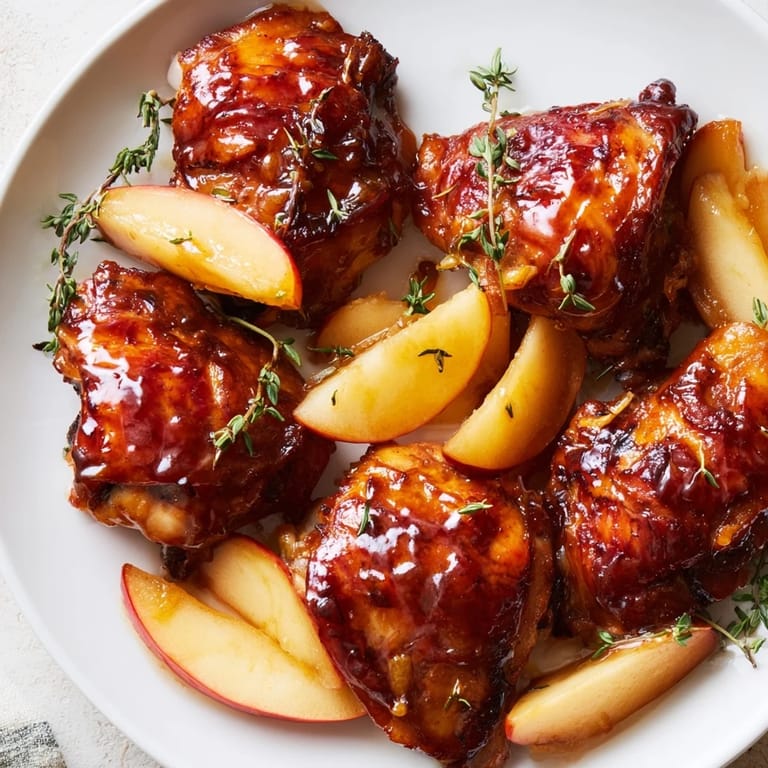
 There's something about the way maple syrup catches the light in a hot oven that makes you feel like you've got a restaurant-quality dish happening at home. I stumbled onto this combination on a random Tuesday when I had chicken thighs and half a bottle of apple cider sitting in the fridge, and I thought, why not? The sweet maple mixed with that sharp vinegar brightness, the apples nestled around golden skin—it became the kind of meal that makes people linger at the table.
I made this for my neighbor last fall when she'd just moved in, and she brought me flowers the next day. She said it was the first time she'd had chicken thighs that didn't seem intimidating, and that the apples made her think of her grandmother's kitchen. That's when I realized this dish has a quiet comfort to it—it's not trying to impress, but somehow it does.
Ingredients
- Bone-in, skin-on chicken thighs: The bones release flavor and keep the meat tender while the skin gets crackling and sticky under the glaze.
- Pure maple syrup: Real maple syrup will give you that rich, complex sweetness; the cheap stuff won't have the same depth.
- Apple cider or unsweetened apple juice: This keeps the glaze from becoming candy-sweet and adds a subtle tartness that balances everything.
- Apple cider vinegar: A small amount cuts through the richness and keeps the palate from feeling heavy.
- Dijon mustard: It seems odd, but it adds a savory edge and helps emulsify the glaze so it clings to the chicken.
- Olive oil: Helps the glaze coat evenly and prevents it from becoming too sticky to work with.
- Garlic and thyme: Fresh is always better if you have it, but dried thyme works just fine in a pinch.
- Smoked paprika: Gives a subtle depth without making anything taste like a barbecue.
- Apples: Honeycrisp or Gala work best because they hold their shape and have enough tartness to stand up to the maple.
Tired of Takeout? 🥡
Get 10 meals you can make faster than delivery arrives. Seriously.
One email. No spam. Unsubscribe anytime.
Instructions
- Get your oven ready and prep the dish:
- Preheat to 400°F and line your baking dish with parchment paper so cleanup is easier and nothing sticks. This simple step saves you a lot of scrubbing later.
- Dry the chicken properly:
- Use paper towels to pat the chicken completely dry—moisture is the enemy of crispy skin. Even five extra seconds of patting makes a noticeable difference.
- Make the glaze:
- Whisk everything together in a bowl until it's smooth and smells incredible—that's when you know the balance is right. The garlic and thyme should be evenly distributed.
- Arrange and coat:
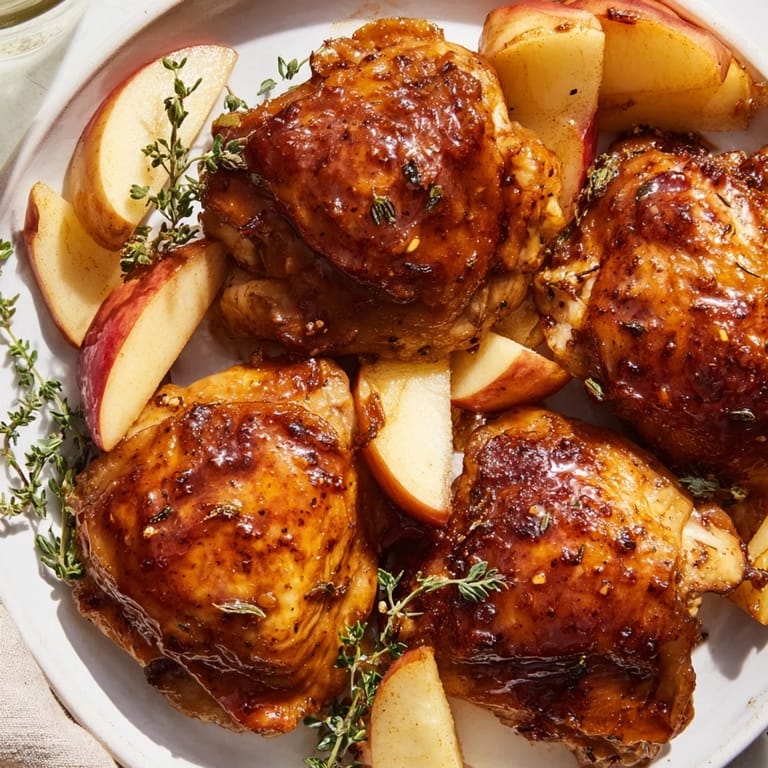
- Place chicken skin-side up in the dish, arrange apple wedges around it like you're setting a stage, then pour the glaze over everything, making sure to turn the chicken once so both sides get coated.
- Bake with attention:
- Slide it into the oven for 30–35 minutes, basting once or twice with the pan juices to keep building that sticky, caramelized exterior. You'll know it's done when the skin is golden and the internal temperature hits 165°F.
- Optional final touch:
- If you want extra caramelization, broil for 2–3 minutes at the end, but keep your eye on it because things can go from golden to burnt in seconds.
- Let it rest:
- Five minutes might seem short, but it lets the juices redistribute so every bite stays tender. Garnish with fresh thyme if you're feeling fancy.
 Save to Pinterest
 I watched my 10-year-old actually eat the apples from this dish without being asked, and that's when I knew I'd made something real. There's magic in the way the fruit softens and gets infused with maple and thyme, becoming less like a side and more like part of the whole story.
Why Chicken Thighs Win Here
Chicken breasts would dry out under a glaze this rich, but thighs have enough fat to stay forgiving. I learned this the hard way by overcooking breasts for years before switching, and suddenly chicken at home became something I actually looked forward to. The darker meat also takes on flavor differently—it drinks it in instead of just coating the surface.
Making It Your Own
The base of this recipe is strong enough that you can play with it without breaking anything. I've added a pinch of chipotle powder on nights when I wanted smokiness, or swapped the apples for pears when that's what I had. A friend added star anise once and it created this unexpected warm spice that worked beautifully.
Serving and Storage
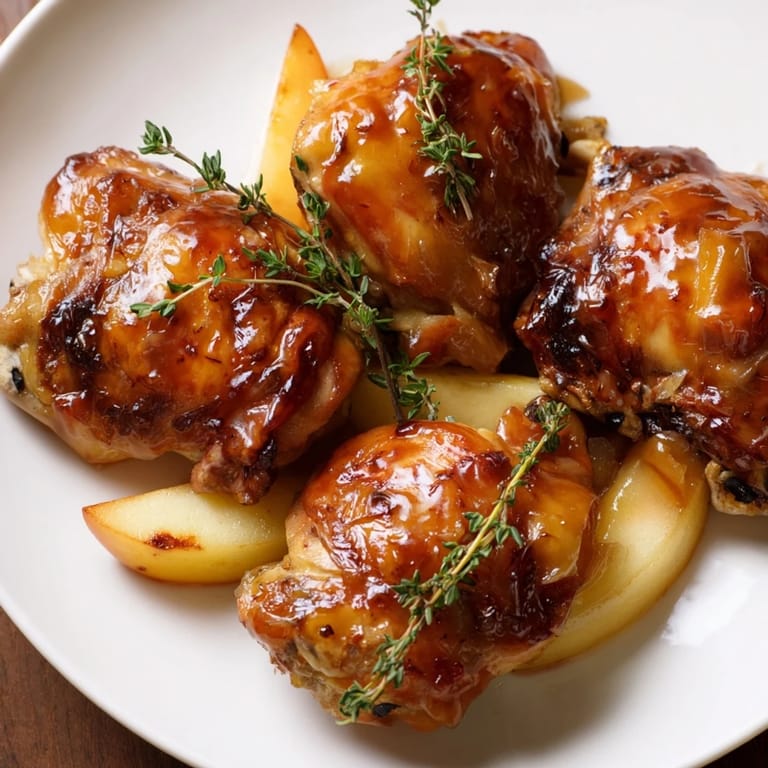
This dish is best served warm right from the oven, but it's equally good the next day at room temperature or reheated gently. The glaze actually deepens in flavor as it sits, and sometimes the leftovers are better than the original meal. The apples soften more, the chicken gets even more tender, and everything melds together in that way that only happens overnight.
- Serve alongside roasted vegetables, mashed potatoes, or rice to soak up every drop of glaze.
- Pair with a crisp apple cider or a dry Riesling if you're drinking wine.
- Store leftovers in an airtight container in the fridge for up to three days, and reheat gently in a 300°F oven.
 Save to Pinterest
 This is the kind of recipe that proves you don't need complicated techniques or rare ingredients to cook something that feels special. It's become one of those meals I make when I want the kitchen to smell like home.
Recipe FAQs
- → What type of chicken works best?
Bone-in, skin-on chicken thighs provide the juiciest and most flavorful results, but boneless skinless thighs can be used with reduced cooking time.
- → Can I substitute the apples?
Yes, varieties like Honeycrisp or Gala work well for sweetness and texture in the glaze and garnish.
- → How do I achieve a sticky glaze?
Basting the chicken with the maple-apple syrup during baking and finishing under the broiler helps caramelize the glaze to a sticky finish.
- → Is it possible to add extra smoky flavor?
Adding a pinch of chipotle powder to the glaze imparts a subtle smoky warmth without overpowering the dish.
- → What sides pair well with this dish?
Roasted vegetables, mashed potatoes, or rice complement the rich flavors and balance the sweetness of the glaze.
- → Can this be prepared ahead of time?
Yes, prepping the glaze and seasoning the chicken in advance allows flavors to meld before baking.