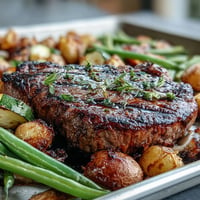
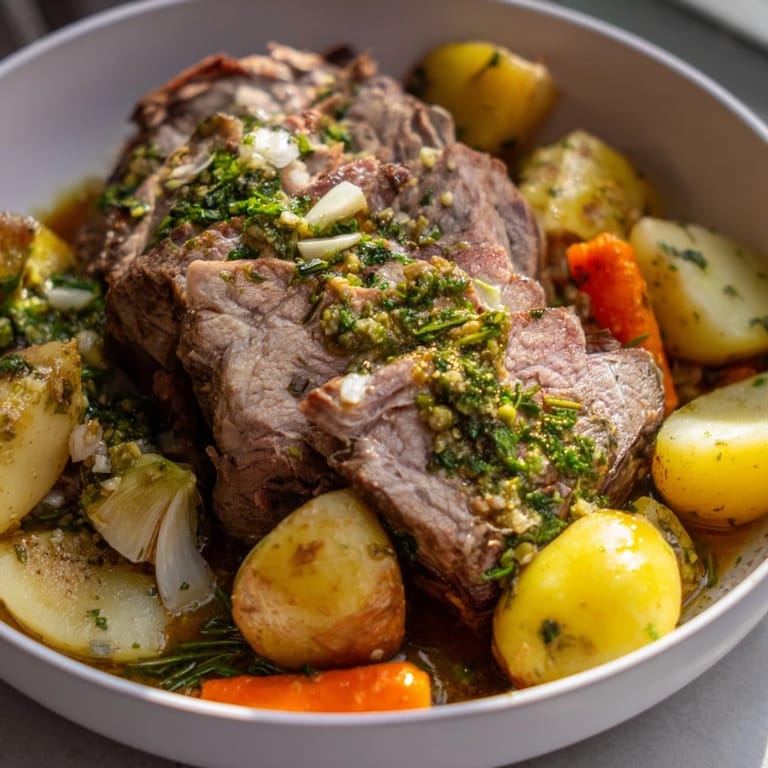
 Save to Pinterest
 One Sunday in late November, I pulled a pot roast from the oven and the whole house smelled like a grandmother's kitchen, even though I'd never made one before. The beef had gone tender enough to pull apart with a spoon, and the vegetables had soaked up all that dark, savory liquid. My husband walked in from the garage, stopped mid-step, and said it smelled like home. That's when I knew this recipe wasn't just dinner, it was the kind of thing you make when you want people to stay awhile.
I made this the first time my in-laws came over after we moved into our new place. I was nervous because my mother-in-law is one of those effortless cooks who never measures anything, but when she had seconds and asked for the recipe, I felt like I'd finally arrived. We ate at the table for two hours that night, passing around crusty bread to mop up the juices. It wasn't fancy, but it was exactly right.
Ingredients
- Boneless beef chuck roast: This cut has enough marbling to stay juicy during the long roast, and it shreds beautifully once it's done.
- Kosher salt and black pepper: Simple seasoning lets the beef's flavor shine through without masking it.
- Carrots, parsnips, onions, potatoes, celery: These root vegetables hold their shape and turn buttery soft, creating layers of sweetness that balance the richness of the meat.
- Garlic: Smashed cloves mellow out as they roast, adding warmth without sharpness.
- Tomato paste: A small spoonful deepens the color and adds subtle umami that ties everything together.
- Beef broth: The backbone of the braising liquid, it should be good quality since it becomes your sauce.
- Dry red wine: It deglazes the pan and adds complexity, but you can skip it and use more broth if you prefer.
- Worcestershire sauce: Just a couple tablespoons bring a hint of tang and depth you can't quite name but definitely notice.
- Fresh thyme, rosemary, and bay leaves: These herbs perfume the pot as it roasts, and you'll smell them the second you lift the lid.
- Olive oil: For searing the beef and getting that golden crust that locks in flavor.
Tired of Takeout? 🥡
Get 10 meals you can make faster than delivery arrives. Seriously.
One email. No spam. Unsubscribe anytime.
Instructions
- Preheat and Prep:
- Set your oven to 300°F and give the beef a good pat with paper towels so it sears instead of steams. Season it generously all over with salt and pepper.
- Sear the Beef:
- Heat olive oil in your Dutch oven over medium-high until it shimmers, then sear the roast on every side until it's deeply browned and crusty, about 3 to 4 minutes per side. Don't rush this step, the caramelization is where all the flavor starts.
- Sauté the Vegetables:
- Toss in the onions, carrots, parsnips, potatoes, and celery, stirring them around in the beef drippings for about 5 minutes. Add the garlic and tomato paste and cook for another minute until everything smells toasty and sweet.
- Deglaze:
- Pour in the red wine and use a wooden spoon to scrape up all those dark, flavorful bits stuck to the bottom. Let it bubble for a couple minutes.
- Build the Braise:
- Nestle the beef back into the pot and add the broth, Worcestershire, thyme, rosemary, and bay leaves. The liquid should come about halfway up the beef, just enough to keep it moist as it cooks.
- Roast Low and Slow:
- Bring everything to a gentle simmer, cover tightly with the lid, and slide it into the oven. Let it roast undisturbed for 3 to 3 and a half hours until the beef is fork-tender and the vegetables are soft.
- Rest and Serve:
- Pull the pot from the oven, fish out the herb stems and bay leaves, and let the beef rest for 10 minutes before slicing or shredding. Serve it with the vegetables and spoon those rich pan juices over everything.
 Save to Pinterest
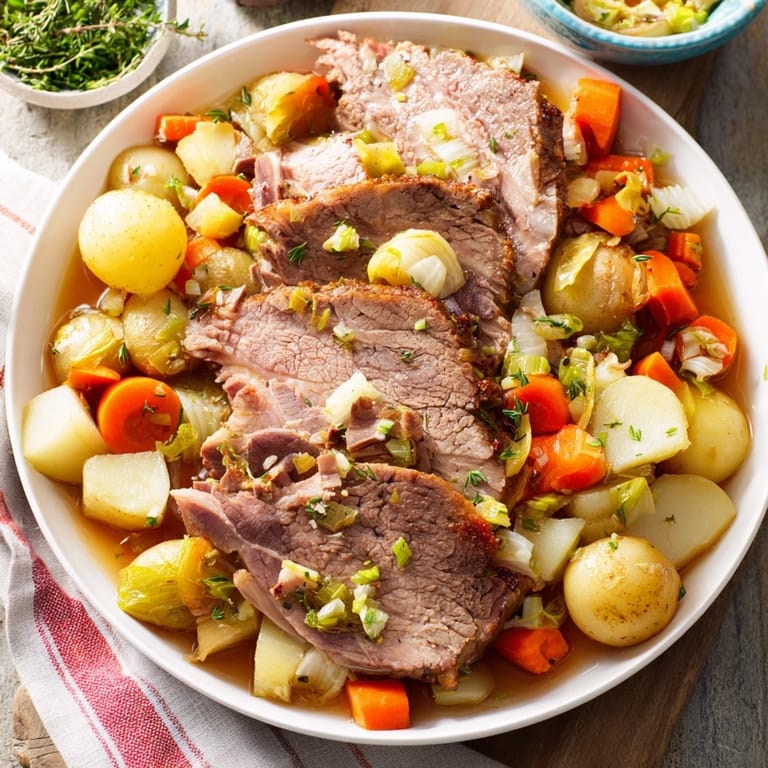
 The second time I made this, it was during a snowstorm and we'd lost power for a few hours. When the lights came back on, I threw this together with what I had in the fridge and let the oven do the work while we played cards by the fire. By the time we sat down to eat, the windows were fogged up and the world outside felt a million miles away. That night, this pot roast became more than a recipe, it became the thing we make when we want to slow down and be together.
How to Get the Best Sear
Make sure the beef is completely dry before it hits the pan, moisture is the enemy of a good crust. Heat your oil until it's almost smoking, and resist the urge to move the meat around. Let it sit undisturbed for a full 3 to 4 minutes per side so it develops that deep mahogany color. If the beef sticks at first, it's not ready to flip yet, it'll release naturally when it's properly seared.
Making the Sauce Richer
Once the beef and vegetables are done, you can pull them out and set them aside while you simmer the pan juices on the stovetop until they reduce by half. If you want it thicker, whisk together a tablespoon of cornstarch with two tablespoons of cold water and stir it in, simmering until the sauce coats the back of a spoon. I've done this when serving guests, but honestly, the juices are so flavorful on their own that I usually just ladle them over as-is.
Storage and Leftovers
This pot roast tastes even better the next day after the flavors have had time to settle in together. Store everything in an airtight container in the fridge for up to 4 days, and reheat gently on the stove with a splash of broth to loosen things up. The shredded beef makes incredible sandwiches on toasted rolls with a little horseradish, and I've stirred leftovers into egg noodles for a quick weeknight dinner that feels like I spent hours cooking.
- Freeze portions in freezer bags for up to 3 months, just thaw overnight in the fridge before reheating.
- If the sauce separates after refrigeration, a quick stir over low heat will bring it back together.
- Leftover vegetables can be mashed with a little butter and cream for an easy side dish the next night.
 Save to Pinterest
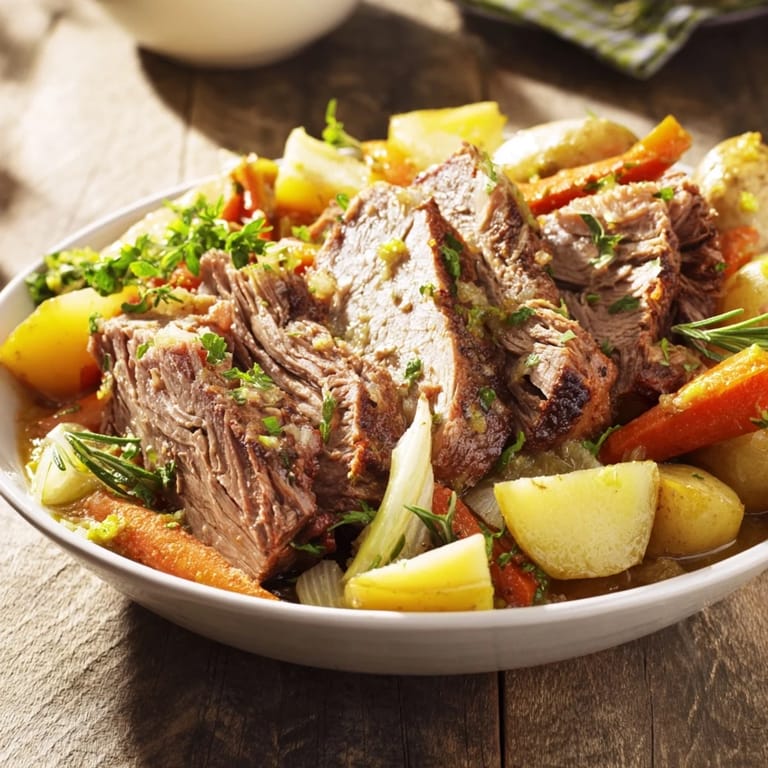
 Every time I make this, someone asks for the recipe, and I always tell them the same thing: just be patient and let the oven do the work. This pot roast has never let me down, and I think it'll become one of those recipes you turn to when you want your house to feel like a home.
Recipe FAQs
- → What cut of beef works best for slow roasting?
Boneless beef chuck roast is ideal as it becomes tender and flavorful when slow-cooked over several hours.
- → Can I substitute parsnips with other vegetables?
Yes, turnips are a great alternative or you can omit parsnips if unavailable without impacting overall taste significantly.
- → How do I achieve a thicker pan sauce from the cooking juices?
Remove the beef and vegetables, then simmer the juices on the stove, reducing by half or stirring in a cornstarch slurry to thicken.
- → Is adding red wine necessary for this dish?
Red wine adds depth and acidity but can be omitted or replaced with more broth if preferred.
- → How long should the beef rest before slicing?
Allow the beef to rest for about 10 minutes after roasting to let the juices redistribute for a juicier texture.