 Save to Pinterest
 I was standing at the fish counter on a rainy Tuesday, staring at the salmon, when the woman beside me said she always ruined it. Too dry, she said. I told her about brushing mustard under herbs, and she looked at me like I'd shared a state secret. That night I made this for my sister, who hates asparagus, and she ate every spear without realizing. Sometimes the simplest things surprise you most.
The first time I made this, I was trying to convince my nephew that fish could taste good. He was seven and suspicious of anything green. I let him press the herbs onto the salmon, and suddenly he was invested. He still asks for the fish he helped make, and I never correct him that he mostly just made a mess.
Ingredients
- Salmon fillets (skinless): Look for bright, firm flesh without any fishy smell, wild-caught has deeper flavor but farmed works beautifully too.
- Olive oil: Use something you would happily dip bread into, because it carries all the herb flavor onto the fish.
- Dijon mustard: This is the glue that holds the crust on and adds a subtle tang, do not skip it even if you think you do not like mustard.
- Fresh parsley: Flat-leaf has more flavor than curly, and it should smell bright and grassy when you chop it.
- Fresh dill: The feathery fronds add a gentle anise note that loves salmon, dried dill will not give you the same freshness.
- Fresh chives: They bring a mild onion sweetness without overpowering, snip them with scissors for the easiest prep.
- Garlic: One clove minced fine distributes flavor without leaving anyone with garlic breath.
- Lemon zest: Just the yellow part, the white pith tastes bitter and will ruin the delicate balance.
- Asparagus: Choose spears that snap when you bend them, the woody ends should break off naturally where the tender part begins.
- Kosher salt and black pepper: Season in layers, a little on the asparagus and a little in the herb mix, it builds flavor instead of hitting you all at once.
Tired of Takeout? 🥡
Get 10 meals you can make faster than delivery arrives. Seriously.
One email. No spam. Unsubscribe anytime.
Instructions
- Preheat and prep your pan:
- Set your oven to 400°F and line a baking sheet with parchment paper. This is the moment to clear your counter and take a breath, because once you start, it moves fast.
- Mix the herb crust:
- Combine the parsley, dill, chives, garlic, lemon zest, salt, and pepper in a small bowl. It should smell like spring in your hands.
- Prepare the salmon:
- Lay the fillets on the baking sheet and brush each one with olive oil, then a thin layer of Dijon. The mustard will look pale and glossy, almost like paint.
- Press on the herbs:
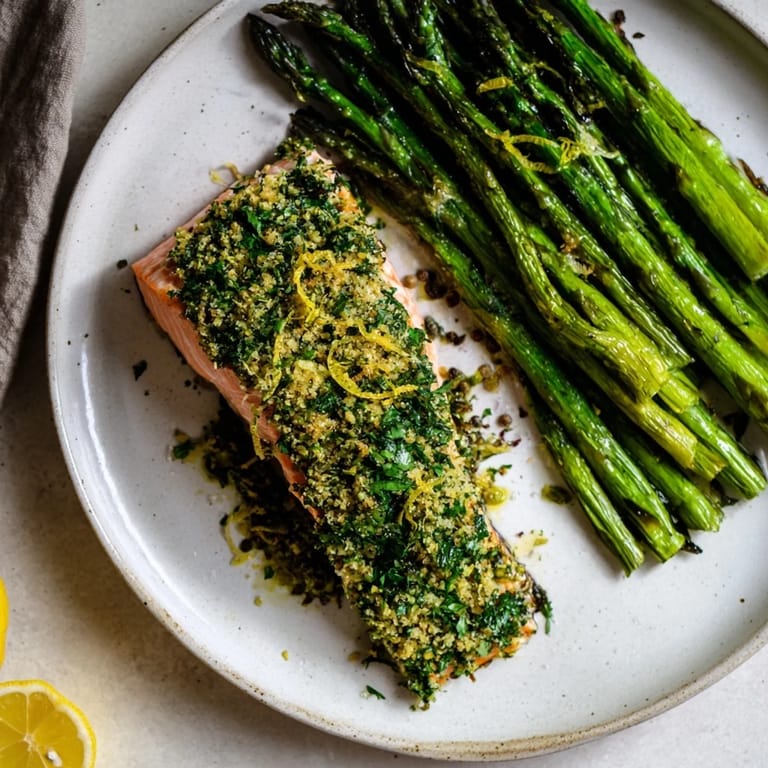
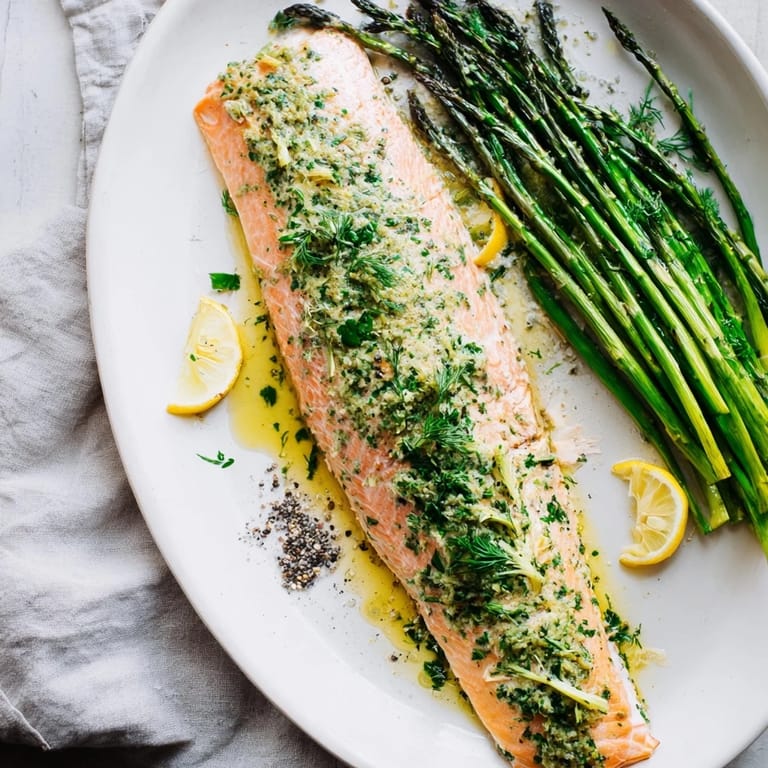
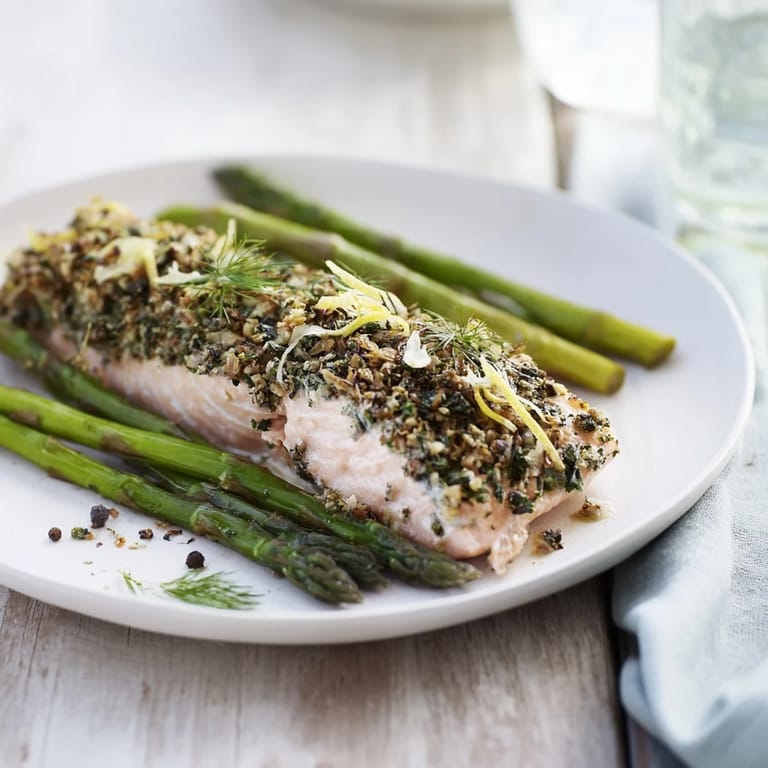
- Divide the herb mixture evenly and press it gently onto each fillet, creating a thick green cap. Do not be shy, pack it on so it stays put.
- Season the asparagus:
- Arrange the spears beside the salmon, drizzle with olive oil, and sprinkle with salt and pepper. Toss them lightly so every spear glistens.
- Bake until perfect:
- Slide the pan into the oven and set a timer for 15 minutes, then check. The salmon should flake easily with a fork and the asparagus should be tender with lightly browned tips.
- Serve warm:
- Transfer everything to plates and set out lemon wedges. Squeeze the lemon over the salmon just before eating, the acid wakes up every flavor.
 Save to Pinterest
 My friend brought wine to dinner once and said this dish tasted like a restaurant she could not afford. I laughed because I had bought the salmon on sale and the herbs were from a pot on my windowsill. It is funny how something so simple can make people feel cared for.
Swapping Herbs and Flavors
I have made this with tarragon when I had it left over from chicken, and it tasted elegant and faintly licorice. Basil works if you want something sweeter and more summery, and once I used cilantro with lime zest instead of lemon, which turned it vaguely tropical. The formula is forgiving, so use what you have or what you love.
Making It Ahead
You can prep the herb mixture in the morning and keep it covered in the fridge, then brush and press it onto the salmon right before baking. The asparagus can be trimmed and stored in a damp towel. I do not recommend assembling the whole thing ahead because the mustard will soak into the herbs and the crust will not stick as well.
What to Serve Alongside
This pairs beautifully with roasted baby potatoes, a simple arugula salad, or even a scoop of creamy mashed cauliflower. I have also served it over a bed of couscous tossed with olive oil and lemon, which soaks up any juices from the salmon.
- A crisp white wine like Sauvignon Blanc or Pinot Grigio complements the herbs and cuts through the richness.
- If you want to add a sauce, a dollop of Greek yogurt mixed with lemon juice and dill is perfect.
- Leftovers flake beautifully into a salad the next day, cold salmon with greens and a mustard vinaigrette is a gift to your future self.
 Save to Pinterest
 This is the kind of recipe that makes weeknights feel a little less ordinary, and it never fails to remind me that good food does not have to be complicated. I hope it becomes one of those dishes you reach for without thinking, the way I do now.
Recipe FAQs
- → What herbs are used for the crust?
Parsley, dill, chives, and garlic combine with lemon zest to create the flavorful crust topping the salmon fillets.
- → How do I know when the salmon is done?
The salmon is ready when it flakes easily with a fork and has an opaque, firm texture.
- → Can I substitute the asparagus?
Yes, green beans or broccolini can be roasted similarly as alternatives to asparagus.
- → Is this dish gluten-free?
Yes, provided the Dijon mustard used is certified gluten-free, the dish contains no gluten ingredients.
- → What wine pairs well with this meal?
A crisp Sauvignon Blanc or a light Pinot Grigio wonderfully complement the herbaceous salmon and roasted asparagus.