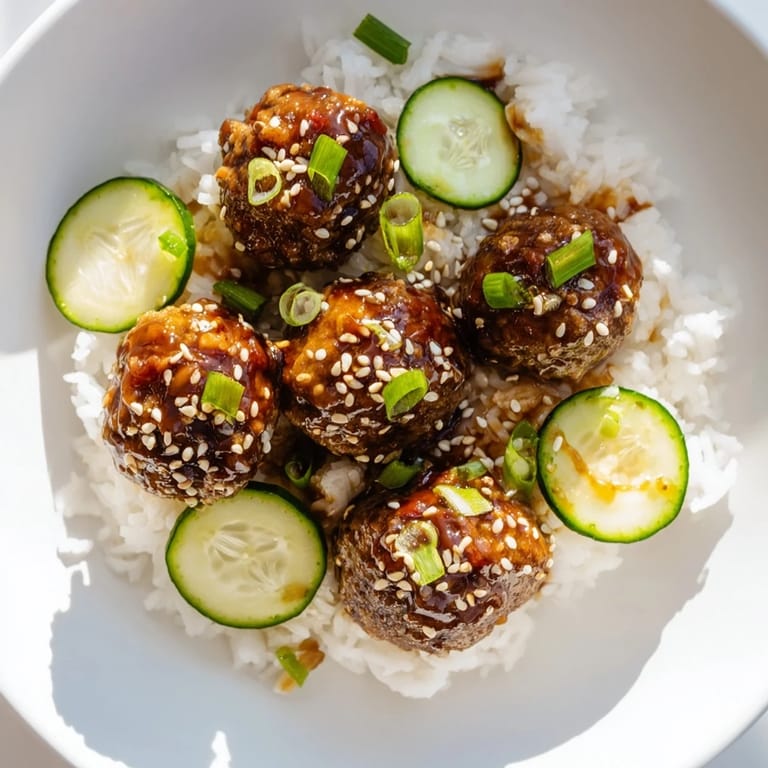
 Save to Pinterest
 There's something about the sizzle of meatballs hitting a hot pan that makes you feel like you're cooking something important. I discovered these teriyaki bowls on a quiet weeknight when I had ground beef, a jar of mirin, and absolutely no plan. An hour later, my kitchen smelled like a Japanese restaurant, and my family was asking for seconds before I'd even finished plating. That's when I knew this recipe was a keeper—it's restaurant-quality but honest enough for a Tuesday.
I made this for my friend's potluck once, and she showed up with store-bought appetizers while I brought these teriyaki bowls. They disappeared in the first ten minutes, and someone actually asked if I catered it. I didn't tell her it was laughably easy to make—let her think I'm that talented.
Ingredients
- Ground beef or chicken (500 g): The base of everything; ground chicken keeps it lighter, but beef gives you richer flavor and juicier results if you don't overmix.
- Egg (1 large): The binder that holds your meatballs together without making them dense or rubbery.
- Panko breadcrumbs (40 g): These stay crispy and light compared to regular breadcrumbs; they're the secret to a tender interior with a slight texture.
- Garlic and ginger (2 cloves and 1 Tbsp): Fresh ginger especially—pre-ground loses its brightness, and these two are what make people taste Japanese flavors instead of just 'meatballs.'
- Spring onions (2, finely chopped): They soften into the meatball mixture and add a gentle onion note that doesn't overpower.
- Soy sauce (2 Tbsp for meatballs): Use the regular kind here, not tamari; the flavor is more robust for building the filling.
- Sesame oil (1 Tbsp): Don't skip this—it's what makes the meatball mixture smell authentic and taste complex.
- Soy sauce (120 ml for sauce): The foundation of your glaze; cheaper brands work fine here since the other ingredients balance it out.
- Mirin (60 ml): This sweet rice wine is non-negotiable; it creates that glossy, restaurant-quality shine and sweetness you can't fake.
- Brown sugar and honey (2 Tbsp and 1 Tbsp): Sugar builds the glaze's stickiness, honey rounds out the sweetness with depth.
- Rice vinegar (1 Tbsp): A small amount cuts through the sweetness and brightens the whole sauce at the end.
- Cornstarch slurry (2 tsp each): This thickens your sauce without making it cloudy or gloppy; it's the difference between a glaze and a soup.
- Jasmine or sushi rice (240 g uncooked): Jasmine rice is softer and more delicate; use what you like, but measure by weight for consistency.
- Cucumber (1 medium, thinly sliced): The crispness and cool freshness balance the rich meatballs and sweet sauce perfectly.
- Toasted sesame seeds (2 Tbsp) and spring onion garnish: These final touches add crunch and visual appeal that make the bowl feel complete.
Tired of Takeout? 🥡
Get 10 meals you can make faster than delivery arrives. Seriously.
One email. No spam. Unsubscribe anytime.
Instructions
- Start your rice first:
- Get your rice cooking according to package directions—it'll be ready when everything else is, which feels like magic timing but is actually just planning ahead. Keep it warm while you work on the meatballs.
- Prep your oven and pan:
- Preheat to 200°C (400°F) and line a baking sheet with parchment paper so your meatballs won't stick and cleanup stays simple.
- Mix the meatball filling gently:
- Combine ground meat, egg, breadcrumbs, garlic, ginger, spring onions, soy sauce, sesame oil, salt, and pepper in a large bowl. The key is stopping as soon as everything is just combined—overworking the mixture makes dense, tough meatballs instead of tender ones. If you're unsure, you're probably good.
- Shape and arrange:
- Roll the mixture into 20–24 small meatballs and place them on your prepared baking sheet. They don't need to be perfect; rustic-looking is more honest anyway.
- Bake until golden:
- Bake for 15–18 minutes, until the meatballs are cooked through and the outsides are golden. You can poke one open to check; it should be firm and no longer pink inside.
- Build your teriyaki sauce while meatballs bake:
- In a small saucepan over medium heat, combine soy sauce, mirin, water, brown sugar, honey, and rice vinegar. Stir occasionally until the sugar dissolves completely and everything looks glossy.
- Thicken with the slurry:
- Once the sauce is simmering, stir in your cornstarch mixture slowly—it'll thicken almost immediately. Simmer for 1–2 minutes more, then remove from heat. The sauce should coat a spoon and fall off in a sheet, not drip like water.
- Coat the meatballs:
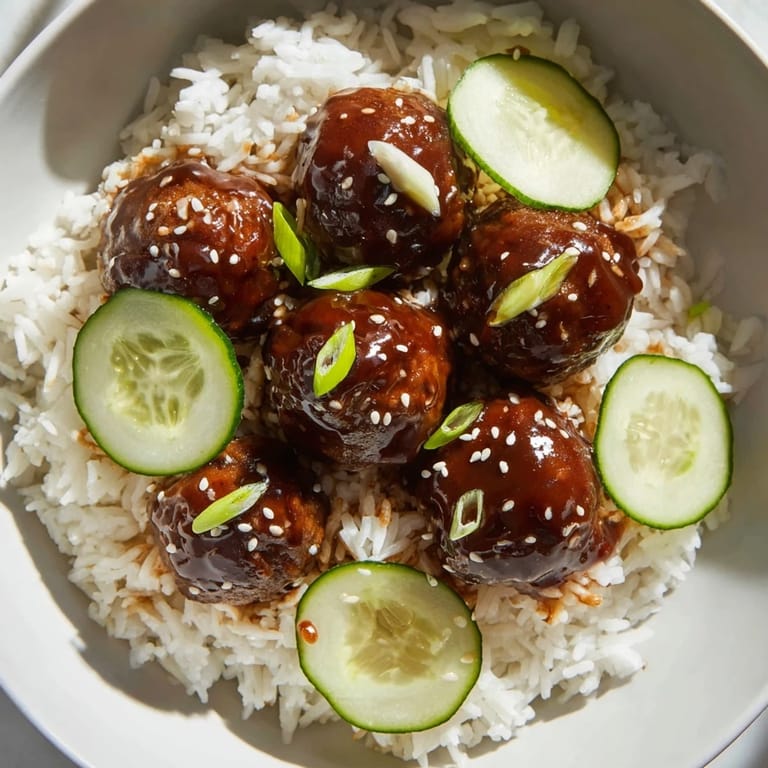
- Toss the hot meatballs in the teriyaki sauce until they're completely glazed. Some sauce will cling to them; some will pool at the bottom of the bowl—both are perfect.
- Assemble your bowls:
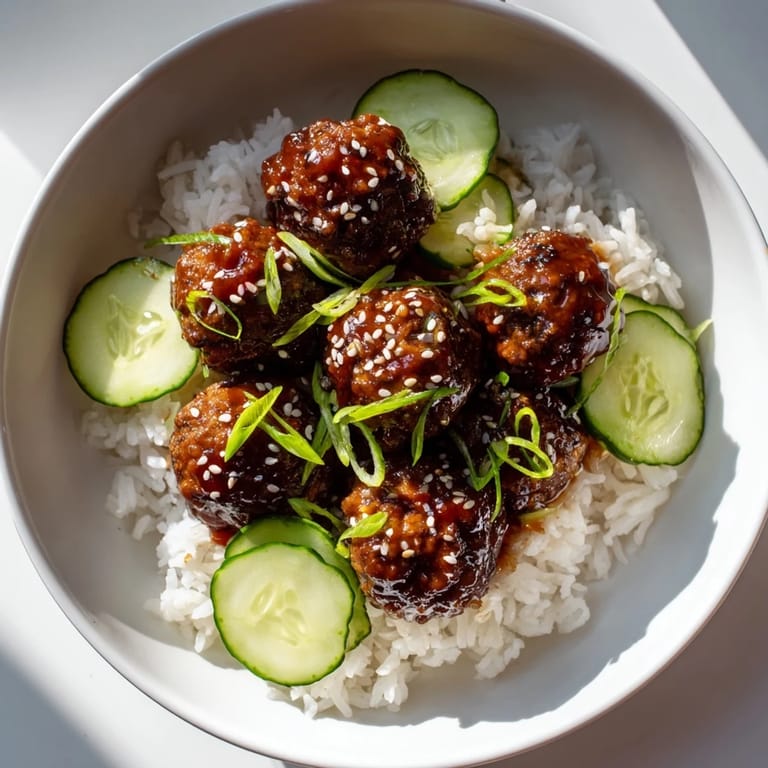
- Divide the warm rice among four bowls. Top each with glazed meatballs, sliced cucumber, a pinch of toasted sesame seeds, and a sprinkle of fresh spring onion slices.
- Serve immediately:
- Eat while the meatballs are warm and the rice is still steaming—this is when everything tastes its best.
 Save to Pinterest
 I remember plating this for my partner one evening and watching him take that first bite—the way his eyes lit up when the meatball broke open and the sauce coated his tongue. He said it tasted like something from the restaurant we used to go to before we got too busy to make reservations. That's when it hit me that food like this isn't just dinner; it's a small moment of care wrapped up on a plate.
Variations That Work
Ground turkey keeps the dish lighter and leaner if that's what you have or prefer. Pork brings a slightly richer flavor that plays beautifully with the teriyaki glaze. Even a mix of ground beef and mushrooms works if you want to stretch the recipe or add earthiness to the filling. The sauce doesn't change no matter what protein you choose, so don't second-guess yourself—the glaze is forgiving and always tastes right.
Sides and Additions That Elevate
While the meatballs and rice form the heart of the bowl, a handful of steamed broccoli or edamame adds color and nutrition without competing for attention. Pickled ginger brings a bright, sharp note that cuts through the sweetness of the glaze. A soft-boiled egg on top turns this from a simple weeknight dinner into something that feels more intentional and complete. Even a small pile of shredded carrots or a drizzle of extra sesame oil at the end transforms the dish subtly.
Storage and Reheating Wisdom
The meatballs and sauce keep well in the refrigerator for three days, and they actually taste better the next day when the flavors have settled together. Reheat gently in a saucepan over medium-low heat, stirring occasionally so the sauce doesn't stick or scorch. The rice is best fresh, but leftover rice works fine for lunch bowls the next day—just add a splash of water when you reheat it so it doesn't dry out.
- Store meatballs and sauce together in an airtight container; separating them makes reheating awkward.
- Assemble the cucumber and garnishes fresh right before eating so they stay crisp and bright.
- If you're meal-prepping, make the components separately and assemble just before eating for the best texture and taste.
 Save to Pinterest
 This recipe lives in that perfect space between easy enough for a weeknight and impressive enough to make you feel like you've accomplished something. Make it once and you'll find yourself coming back to it again and again.
Recipe FAQs
- → What type of meat works best for the meatballs?
Ground beef or chicken works well, but ground turkey or pork can also be used for variety.
- → How do I make the teriyaki sauce glossy and thick?
Simmer soy sauce, mirin, honey, and rice vinegar, then add a cornstarch slurry to thicken until shiny.
- → Can I make this dish gluten-free?
Yes, substitute tamari for soy sauce and use gluten-free breadcrumbs to keep it gluten-free.
- → What are good garnishes to add extra flavor?
Sliced cucumber adds freshness, and toasted sesame seeds give a subtle nutty crunch. You can also add extra scallions.
- → How should I cook the rice for the bowls?
Cook jasmine or sushi rice according to package instructions, then keep warm until serving.