 Save to Pinterest
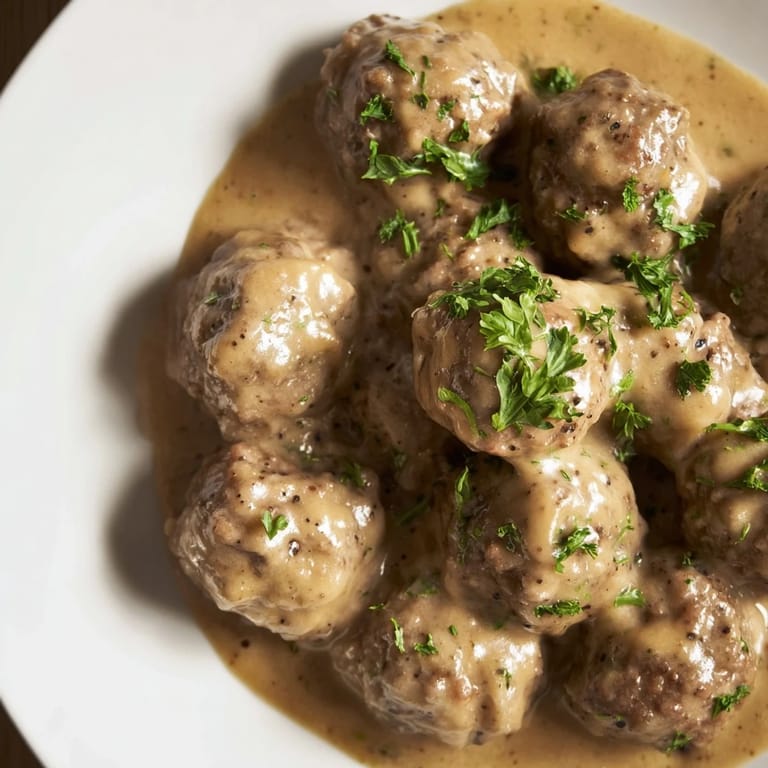
 My grandmother's Swedish meatballs taught me that comfort food doesn't need to be complicated—just honest. She'd stand at her stove on gray Stockholm afternoons, rolling each ball with the precision of someone who'd made them a thousand times, and I'd watch the butter foam around them in the pan. The house would fill with this warm, spiced aroma that still takes me back to her kitchen. Now when I make them, I'm chasing that same feeling: tender meat, a sauce so creamy it coats every bite, and the kind of dish that makes people sit down for real. It's become my go-to when I need something that feels like an embrace.
I made these for my Swedish friend Karin's birthday dinner, and she went quiet for a moment after the first bite—the kind of quiet that means you've gotten it right. She told me they reminded her of her mother's, which was the highest compliment I could ask for. That night, watching everyone around the table slow down and actually taste what they were eating, I understood why this dish has survived centuries: it works. It's not trendy or complicated, just deeply satisfying in a way that sticks with you.
Ingredients
- Ground beef and pork (250 g each): The combination gives you depth—beef brings structure, pork adds juiciness so nothing comes out tough and dense.
- Milk-soaked breadcrumbs: This is the secret to tender meatballs that stay moist, not the dense hockey pucks you get when you skip this step.
- Allspice and nutmeg (1/2 tsp each): These aren't subtle—they're what makes these unmistakably Swedish, that warm spice note that lingers.
- Beef broth and heavy cream: The broth builds the sauce while the cream mellows it into something silky and elegant.
- Worcestershire sauce and Dijon mustard: A teaspoon of each adds umami and tang without announcing itself; you'll taste them as depth, not flavor.
- Lingonberry jam: If you can find it, keep a jar on hand—the tartness against creamy meatballs is magic, and it looks beautiful too.
Tired of Takeout? 🥡
Get 10 meals you can make faster than delivery arrives. Seriously.
One email. No spam. Unsubscribe anytime.
Instructions
- Soak the breadcrumbs:
- Pour milk over breadcrumbs in a small bowl and let them sit for five minutes—they'll soften into a paste that binds everything together without toughening it up. This step is easy to skip and regret.
- Mix gently:
- Combine both meats with the soaked breadcrumbs, chopped onion, minced garlic, egg, and spices in a large bowl, stirring just until everything is incorporated. Overmixing activates the proteins and makes dense, bouncy meatballs; you want them tender and yielding, so treat the mixture like you're being gentle.
- Shape and set aside:
- Wet your hands slightly so the mixture doesn't stick, then roll into 1-inch balls—smaller than you think you want them, because they'll cook more evenly. Line them on a plate and let them rest while you heat your pan.
- Brown the meatballs:
- Heat butter in a large skillet over medium heat until foaming, then add meatballs in batches so they have room to brown without steaming. Turn them every couple of minutes for 6 to 8 minutes until deeply golden all over, then transfer to a clean plate; they won't be fully cooked yet, and that's fine.
- Build the sauce base:
- In the same pan (don't wash it), melt more butter and whisk in flour, stirring constantly for a minute or two until it smells toasted and slightly darker. This roux will thicken your sauce and taste richer than just dumping in cream.
- Add the broth:
- Slowly pour in beef broth while whisking constantly to avoid lumps, then scrape up all those browned bits from the bottom of the pan—that's flavor you paid for. Let it simmer for 3 to 4 minutes until it thickens slightly, tasting as it goes.
- Finish with cream:
- Stir in heavy cream, Worcestershire sauce, and Dijon mustard, then taste and season with salt and pepper. The sauce should taste savory and slightly tangy, not flat.
- Simmer together:
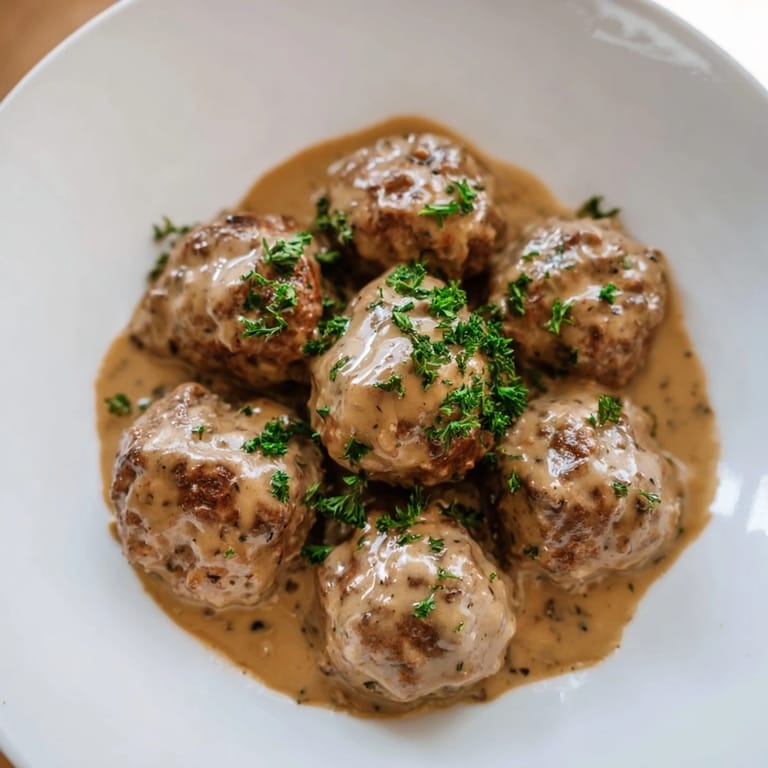
- Return the meatballs to the pan and let everything simmer gently for 8 to 10 minutes—the meatballs finish cooking through while soaking up the sauce. Don't let it boil hard or the cream can break; you want a gentle, steady bubble.
 Save to Pinterest
 I served these to a dinner party once where everyone was stressed and scattered, and by the end of the meal, the conversation had softened into something real. There's something about a good, creamy meatball that makes people breathe easier. It became the dish I make when I want to say, without words, that I care enough to spend time in the kitchen for you.
What Makes Swedish Meatballs Different
Swedish meatballs aren't just meat rolled into balls—the spices, the milk-soaked breadcrumbs, and the creamy brown sauce distinguish them from Italian or Spanish versions. The combination of allspice and nutmeg is distinctly Scandinavian, warming and almost sweet against the savory depth of the meat. I've learned that these details matter because they're not arbitrary; they're the result of generations cooking the same dish and refining it. When you understand why each ingredient is there, you can make it confidently and even adjust it with respect for what came before.
Serving and Pairing
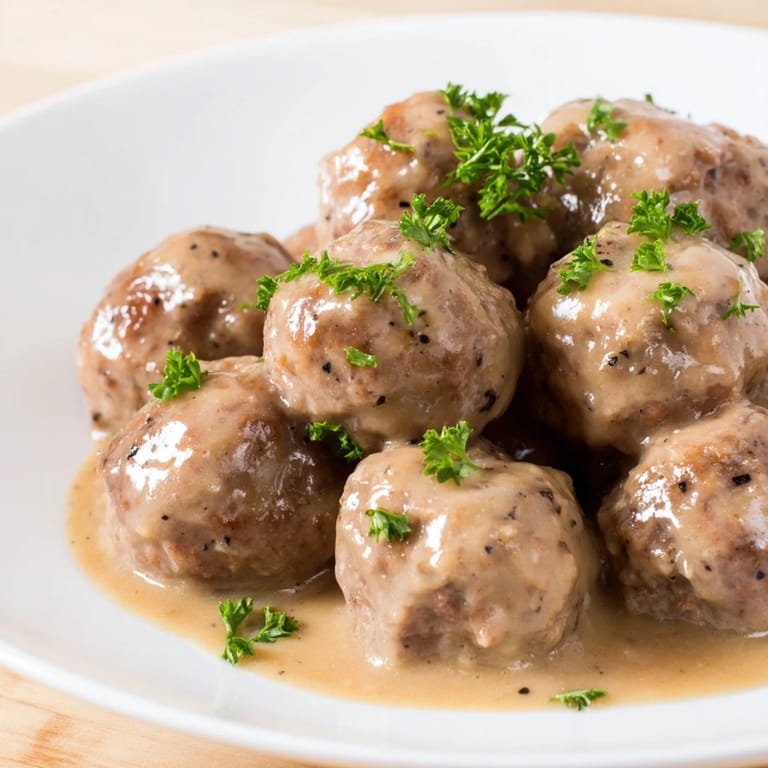
The traditional way to serve Swedish meatballs is over creamy mashed potatoes, with lingonberry jam spooned alongside and fresh parsley scattered on top. The potatoes catch all the sauce, the jam cuts the richness with brightness, and the parsley adds a small moment of freshness. If lingonberry jam isn't available, cranberry sauce or even a tart jam works—the goal is that sweet-tart contrast. A light red wine like Pinot Noir pairs beautifully, something that won't overpower the delicate spices but complements the cream.
Tips for Success
The biggest lesson I've learned is that timing and temperature matter more than you'd expect. Let the meatballs brown properly before adding the sauce—this develops flavor that pure simmering can't create. Keep the heat moderate while the sauce simmers so the cream stays silky and doesn't separate or break. If you're making these ahead, they actually improve when reheated gently the next day, as the flavors settle and deepen.
- Make double and freeze the uncooked meatballs on a tray before adding them to a freezer bag—they'll keep for three months and cook from frozen without much extra time.
- If your sauce looks too thin after simmering, mix a teaspoon of cornstarch with cold water and whisk it in, or just let it simmer a bit longer; rushing it wastes the care you've already invested.
- Taste the sauce before adding salt—the broth and Worcestershire already have sodium, so taste first to avoid oversalting.
 Save to Pinterest
 These meatballs have become my answer to the question: what's comfort food that also feels intentional and real? They're worth the care, and every time you make them, you're part of a long tradition of people feeding the people they love.
Recipe FAQs
- → What spices are used in the meatballs?
Ground allspice and nutmeg add warm, aromatic notes typical of Scandinavian flavors in the meatballs.
- → How is the creamy brown sauce made?
The sauce combines butter, flour, beef broth, heavy cream, Worcestershire sauce, and Dijon mustard, simmered until smooth and rich.
- → Can I substitute other meats?
Yes, ground turkey or chicken can be used for a lighter variation while maintaining tenderness.
- → What are traditional side servings?
Mashed potatoes, lingonberry jam, and fresh parsley are classic accompaniments that enhance the dish's flavors.
- → How do I keep meatballs tender?
Avoid overmixing the meatball mixture and soak breadcrumbs in milk to ensure a soft, tender texture.