 Save to Pinterest
 I discovered this salad entirely by accident on a cold Tuesday when my fruit bowl was looking sad and my pantry was calling for attention. Something about the jewel-toned pomegranate seeds caught my eye, and I started tossing things together without much of a plan, honestly hoping for the best. That first bite—the burst of tartness from the pomegranate, the crunch of walnuts, the gentle sweetness of pear—felt like I'd accidentally cracked some kind of culinary code. Now it's my go-to when I need to feel like I have my life together in about fifteen minutes.
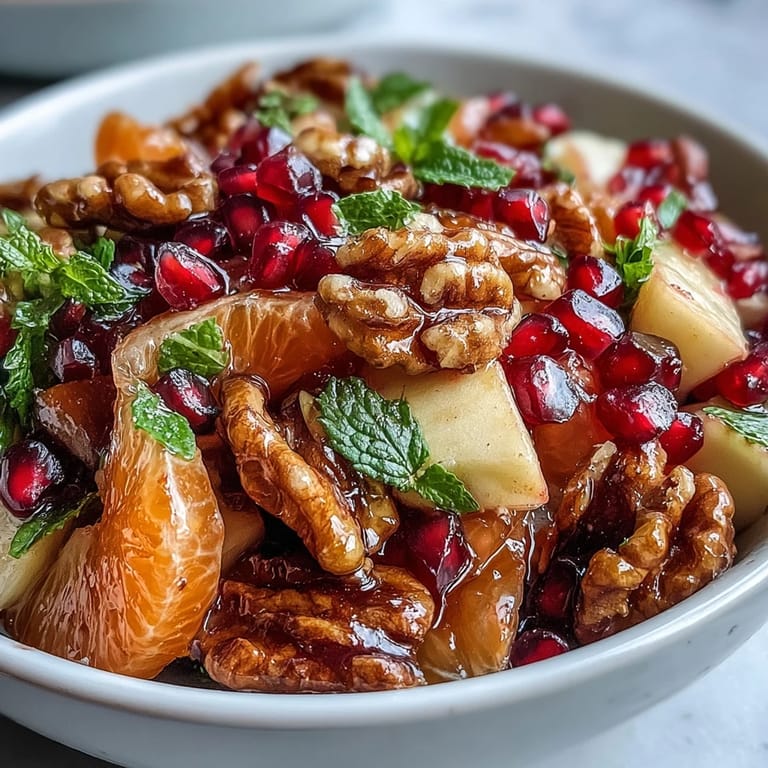
I made this for my sister's book club last February when everyone showed up bundled in scarves and complaining about the gray weather outside. I set down this bowl of deep reds and bright oranges, and something shifted in the room—people actually smiled before tasting it. Turns out, sometimes what we need most is color and brightness on a plate, not just sustenance.
Ingredients
- Pomegranate, 1 large, seeds only: This is the star—those ruby-red seeds bring tartness and visual drama that no other ingredient can touch.
- Orange, 1 large, peeled and segmented: The sweetness here balances the pomegranate's bite and adds a citrus brightness that ties everything together.
- Apple, 1 crisp, cored and diced: Choose something tart like a Granny Smith; the acidity keeps the salad from feeling heavy or one-dimensional.
- Pear, 1 ripe, cored and diced: This brings a subtle creaminess that mellows out the sharper flavors and adds gentle sweetness without being obvious about it.
- Walnuts, 1/2 cup, roughly chopped: Toast these lightly if you want them to really sing—the oils release and suddenly the entire salad feels more intentional.
- Pumpkin seeds, 2 tbsp: These add earthy depth and a satisfying crunch that keeps your teeth engaged through every bite.
- Sunflower seeds, 2 tbsp: They're quieter than pumpkin seeds but bring their own nuttiness and help distribute crunch throughout.
- Extra-virgin olive oil, 2 tbsp: Quality matters here since it's not cooking—use something you actually taste and enjoy.
- Lemon juice, 1 tbsp, freshly squeezed: Bottled will do in a pinch, but fresh juice prevents oxidation and keeps the fruit looking vibrant longer.
- Honey or maple syrup, 1 tsp: Just enough to make the dressing glossy and add a whisper of sweetness that enhances rather than overpowers.
- Ground cinnamon, 1/4 tsp: This spice feels unexpected but somehow feels like it was always meant to be there—it warms up the whole experience.
- Sea salt, pinch: Don't skip this; it magnifies every other flavor and makes the fruit taste more like itself.
- Fresh mint, 2 tbsp, chopped (optional): The finishing touch that makes people think you spent more time than you actually did.
Tired of Takeout? 🥡
Get 10 meals you can make faster than delivery arrives. Seriously.
One email. No spam. Unsubscribe anytime.
Instructions
- Gather your fruit like you're building something beautiful:
- Combine the pomegranate seeds, orange segments, diced apple, and diced pear in a large salad bowl. Don't stress about perfect cuts—this salad is actually more forgiving than it looks, and rustic pieces catch the dressing better anyway.
- Invite the crunch to the party:
- Add the chopped walnuts, pumpkin seeds, and sunflower seeds to the bowl with the fruit. Stir everything together gently, just enough to distribute the nuts and seeds so every forkful feels complete.
- Create the golden dressing:
- In a small bowl, whisk together the olive oil, lemon juice, honey, cinnamon, and sea salt until the mixture emulsifies slightly and looks cohesive. This takes maybe two minutes of actual whisking—don't overthink it.
- Bring it all together:
- Pour the dressing over the fruit and nut mixture, then toss everything gently with your hands or a wooden spoon until every piece is kissed with the golden liquid. You want the fruits to glisten, not swim.
- Add your finishing touch:
- Scatter the fresh mint over the top if you have it—it adds a cool brightness that contrasts beautifully with the warm spices in the dressing.
- Time it right:
- Serve immediately if you like everything crisp and distinct, or refrigerate for up to two hours if you want the flavors to soften and meld into something more intimate. Both versions are exactly right.
 Save to Pinterest
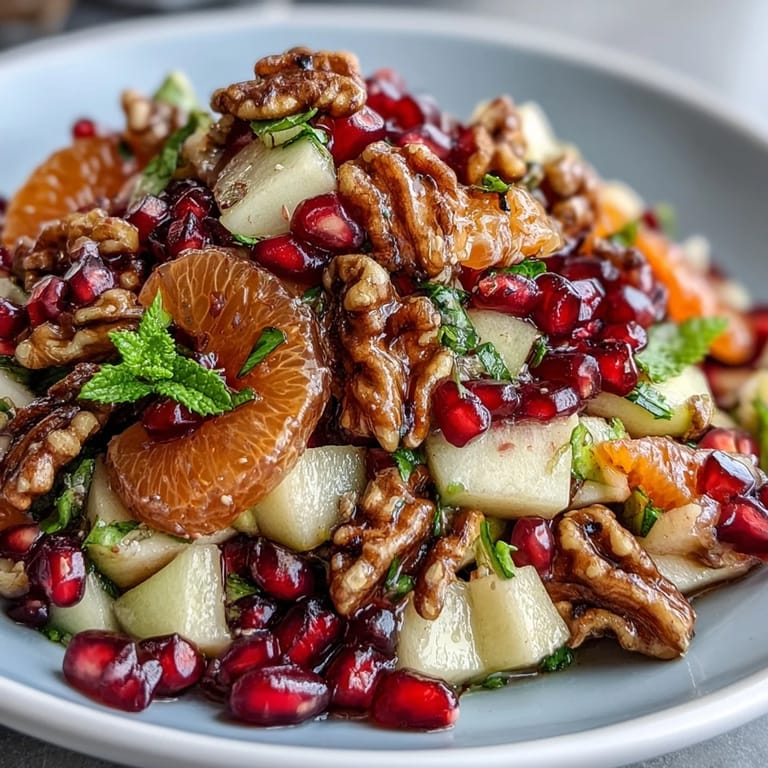
 My neighbor mentioned she'd been eating the leftovers of this salad for three days straight and that it had become her favorite lunch break moment—something about how it made her feel like someone cared about her afternoon. I didn't expect a bowl of fruit to carry that kind of weight, but maybe that's what happens when you put real attention into something, even something simple.
The Art of Pomegranate Seeding
Getting those pomegranate seeds out can feel like defusing a fruit bomb if you're not careful, but there's actually a lovely method I learned that keeps you from wearing pomegranate juice like a badge of honor. Cut the pomegranate into quarters over a bowl of water, then use your fingers to coax the seeds into the water where they naturally separate from the white pith. The pith floats while the seeds sink, making separation effortless and your hands only slightly stained instead of completely compromised.
Flavor Layering Without Heaviness
What makes this salad feel sophisticated is how many flavors show up without any single one drowning out the others—the cinnamon doesn't overpower, the honey doesn't cloy, the lemon juice doesn't dominate. This happens because each element is measured and because the variety of fruits and nuts means there's no single dense ingredient that could take over. It's a lesson in restraint that somehow ends up being more generous than if you'd just thrown in everything.
Seasonal Flexibility and Beyond
While this salad feels very much like a winter celebration, it adapts beautifully to what you have on hand and what the season offers. In warmer months, trade the pear for peaches or apricots; if pomegranates aren't in season, persimmons or blood oranges bring similar jewel tones and tartness. The framework stays the same—fruit, nuts, seeds, and that cinnamon-laced dressing—but the star ingredient changes with the calendar.
- Swap pears with persimmons or figs for a different sweetness profile that still feels wintery.
- Consider toasting nuts and seeds lightly beforehand to deepen their flavor and make them the real stars instead of supporting players.
- Make extra dressing and save it separately—it's delicious drizzled over yogurt, grain bowls, or even eaten as a sauce for grilled vegetables.
 Save to Pinterest
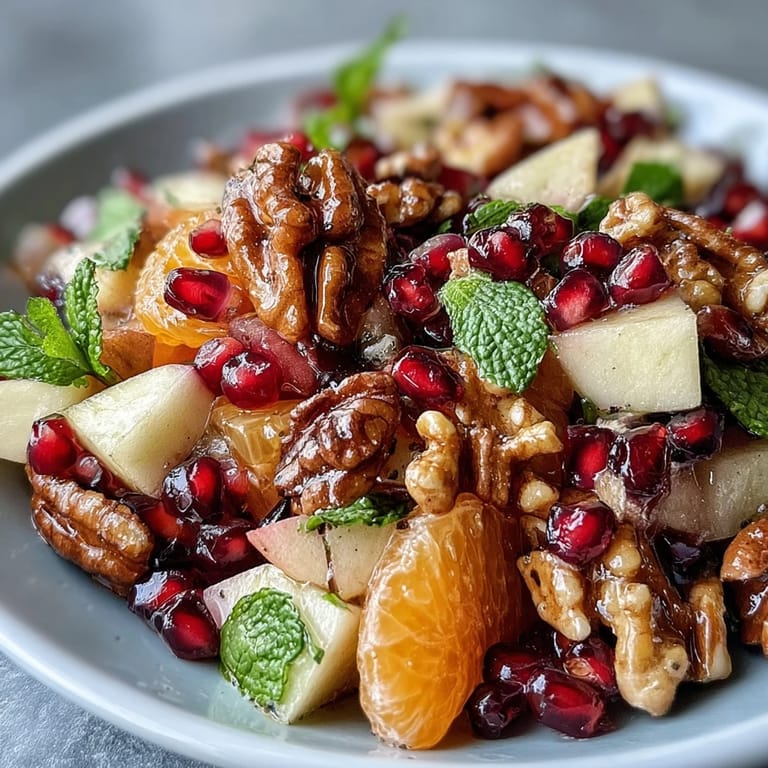
 This salad has become my answer to the question of what to bring when I want to show up meaningfully but don't have hours to spend in the kitchen. There's something honest about it—it tastes like genuine care without pretense.
Recipe FAQs
- → Can I prepare this ahead of time?
You can prepare the fruits and dressing up to 2 hours before serving. Store them separately in the refrigerator and toss together just before serving to maintain the fresh texture and prevent sogginess.
- → What other fruits work well in this bowl?
Persimmons make an excellent substitute for pears, while kiwi can replace apples for different texture. Fresh grapes or chopped figs also complement the pomegranate and walnut combination beautifully.
- → How do I easily remove pomegranate seeds?
Cut the pomegranate in half, hold each half cut-side down over a bowl, and tap firmly with a wooden spoon. The seeds will fall out naturally while the white membrane stays intact.
- → Can I make this vegan?
Simply substitute the honey with pure maple syrup to make this completely plant-based. The dressing will still have the perfect balance of sweetness and tangy citrus flavor.
- → What protein can I add to make it a complete meal?
Cubed feta cheese, crumbled goat cheese, or grilled chicken breast work wonderfully. For plant-based protein, try adding quinoa, chickpeas, or toasted pecans alongside the walnuts.
- → How long will leftovers keep?
Best enjoyed immediately, but leftovers can be refrigerated for up to 24 hours. The fruits may release some liquid and soften slightly, but the flavors will continue to develop beautifully.