 Save to Pinterest
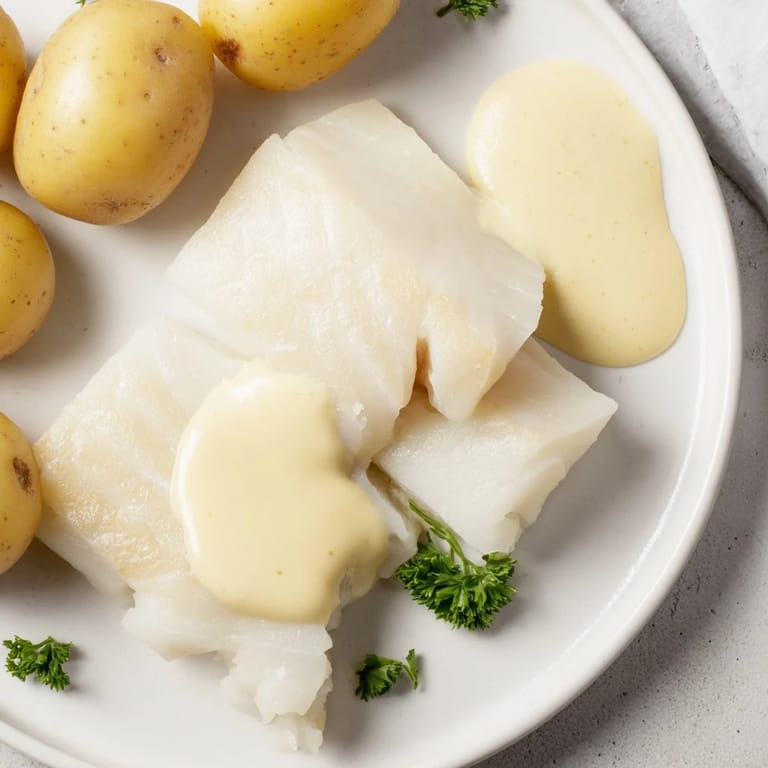
 My grandmother kept a wooden crate of dried cod in her pantry for months before Christmas, waiting for that week when the whole house would transform into something ancient and ritual. The first time she let me help with lutefisk, I was skeptical—dried fish soaking for nearly a week seemed like something that belonged in a preservation museum, not on a dinner plate. But then came that moment when the pale, transformed fish emerged from the oven, steaming and tender, and she poured that golden mustard sauce over it while I watched from the kitchen stool. Suddenly, I understood why this dish had survived centuries of winters in Norway.
I remember serving this to my Norwegian friend Anders after years of him jokingly threatening to make it himself if I didn't step up. When he took that first bite, his whole face softened in a way I'd never seen before—like I'd handed him a piece of home he hadn't realized he was missing. He didn't say much, just nodded and ate slowly, and I realized that good food isn't always about impressing people; sometimes it's about honoring where they come from.
Ingredients
- 1 kg dried cod (lutefisk): This is the heart of the dish—buy it from a Nordic grocer or online supplier around November or December when it's in season. The quality varies, so don't hesitate to ask the shopkeeper for their recommendation.
- Cold water: You'll need enough to keep the fish completely submerged throughout its 5–6 day transformation, and daily changes are non-negotiable if you want it to taste right.
- 1 tbsp coarse salt: This draws out remaining moisture from the fish and firms up the texture before baking.
- 2 tbsp unsalted butter and 2 tbsp flour: These form the base of your roux, the foundation that turns milk into something creamy and luxurious without any effort.
- 300 ml whole milk: Don't skimp here—whole milk gives the sauce body and richness that skim milk simply cannot match.
- 2 tbsp Dijon mustard and 1 tbsp whole-grain mustard: The combination of smooth and grainy creates depth; the Dijon brings sophistication while the whole-grain adds texture and character.
- 1 tsp sugar: A small but crucial addition that balances the mustard's sharpness and brings all the flavors into harmony.
- Salt and white pepper: Taste and adjust constantly—these are your final instruments for tuning the sauce to perfection.
- 4 small boiled potatoes, 4 slices crispbread or flatbread, fresh parsley: These aren't afterthoughts; they're the supporting players that make every bite feel complete and grounded.
Tired of Takeout? 🥡
Get 10 meals you can make faster than delivery arrives. Seriously.
One email. No spam. Unsubscribe anytime.
Instructions
- Soak the fish in cold water:
- Rinse the dried cod under cold water until it feels less like a plank, then place it in a large container and cover it completely with cold water. For the next 5–6 days, change that water daily—it seems like a lot of effort, but you're essentially watching the fish remember how to be fish again, and the daily refresh is what makes that magic happen. By day four or five, you'll notice the fish has tripled in size and turned pale and pliable; that's when you know you're on the right track.
- Salt and rest the fish:
- After your final rinse, sprinkle the fish with coarse salt and let it sit undisturbed for 30 minutes while the salt draws out the last bit of moisture and sets the texture. Rinse it off gently, pat it dry with paper towels, and you'll feel the fish become almost silky to the touch.
- Bake until flaky and opaque:
- Preheat your oven to 200°C (390°F), arrange the fish in a baking dish, cover it loosely with foil to trap just enough steam, and bake for 25–30 minutes until the flesh turns opaque and breaks apart easily under a fork. The smell that fills your kitchen is unmistakable—mild, clean, slightly oceanic—and that's when you know it's almost time.
- Build the mustard sauce:
- Melt butter over medium heat, whisk in flour smoothly (this takes just a minute and should never brown), then slowly add milk while whisking constantly to keep lumps from forming—patience here pays off. After 3–4 minutes of gentle simmering, the sauce will thicken slightly and coat the back of your spoon; that's when you stir in both mustards, the sugar, and a pinch each of salt and white pepper, tasting and adjusting until it feels balanced and right to you.
- Plate and serve with generosity:
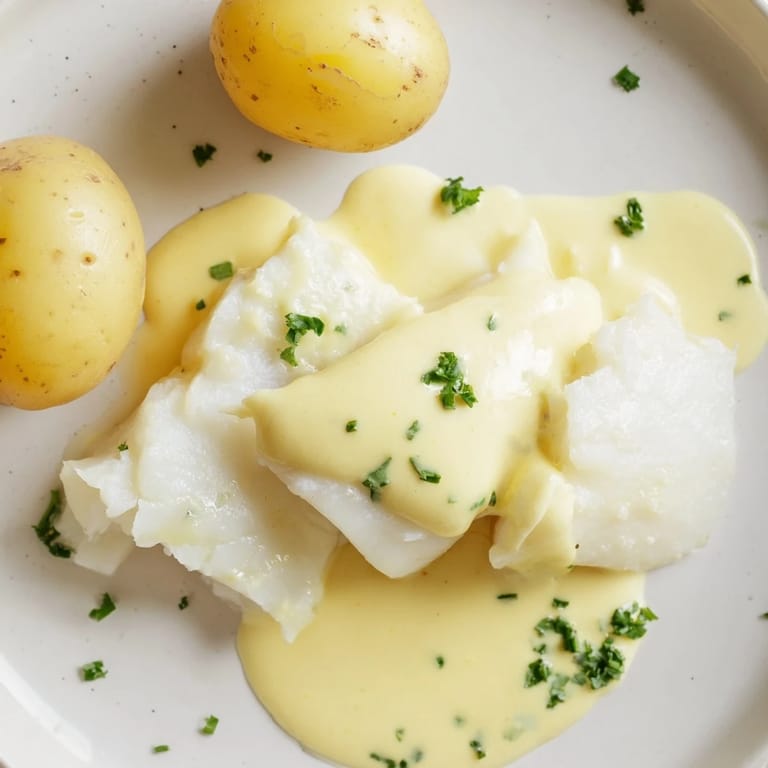
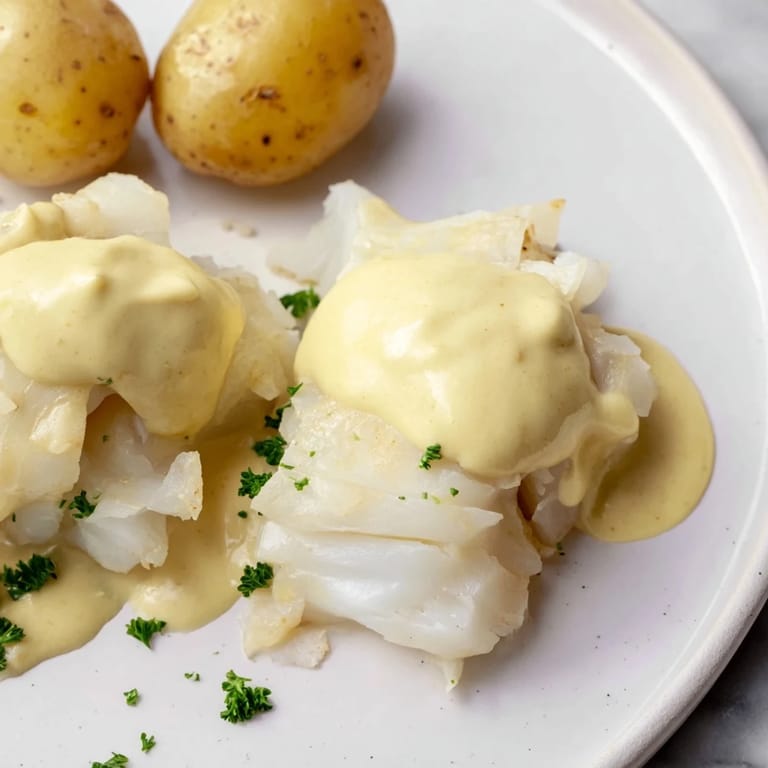
- Place hot lutefisk on a warm plate alongside boiled potatoes and crispbread, then spoon that golden mustard sauce generously over everything, letting it pool slightly around the fish. A shower of fresh chopped parsley is optional but turns a traditional meal into something you've made your own.
 Save to Pinterest
 What strikes me most about lutefisk now is that it's never just dinner—it's a conversation starter, a challenge accepted, a bridge to someone's heritage. I've watched skeptics become converts, and I've seen people's eyes go soft the way Anders's did, remembering a grandmother's kitchen or a winter holiday from childhood.
The Soaking Stage: Your Secret Weapon
The five to six days of soaking feel long, but they're actually where the magic happens. I learned to plan ahead and start my soaking on a Monday so I could serve it on the following weekend, which meant the waiting felt intentional rather than frustrating. The transformation is real—each day the fish plumps up slightly, gets softer, lighter in color, and by the final days it looks almost nothing like the stiff plank you started with. Some people get impatient and skip a day of water changes, thinking it won't matter much, but those are the batches that end up smelling too fishy and tasting slightly off.
Why the Mustard Sauce Is Everything
Without the sauce, lutefisk is naked and austere—respectable, maybe, but forgettable. The sauce is what elevates it, turning a humble Norwegian staple into something you actually crave. I once made the mistake of using low-fat milk thinking it wouldn't matter, and the sauce came out thin and weak, refusing to coat the fish the way it should. That taught me that whole milk isn't a luxury here; it's a necessity that makes the difference between a meal that tastes like obligation and one that tastes like love.
Making It Your Own
The beauty of lutefisk is that while it's traditional and specific, there's still room to make it yours. Some families add a little horseradish to the sauce, others finish it with crispy bacon bits, and I've even seen versions with dill or tarragon. The potatoes don't have to be plain—they can be dressed with butter and fresh herbs, and the crispbread is just a vehicle for soaking up sauce, so choose one you actually enjoy eating. Respect the tradition, but don't be afraid to add your own voice to it.
- Taste and adjust the mustard sauce aggressively at the end—it's your chance to make it perfect for your palate.
- If you can't find crispbread, crusty sourdough or rye bread works beautifully and might even feel more natural in your kitchen.
- Serve everything hot, because cold lutefisk is where this dish loses its charm and becomes something unforgiving.
 Save to Pinterest
 Lutefisk has taught me that the best dishes aren't always the easiest, but the ones worth doing are the ones that connect us to something larger than ourselves. Serve it with pride and generosity, and watch what happens.
Recipe FAQs
- → How long should lutefisk be soaked before cooking?
Lutefisk requires soaking in cold water for 5 to 6 days, with daily water changes, to properly rehydrate and remove lye traces.
- → What is the best way to bake lutefisk?
Preheat the oven to 200°C (390°F), place lutefisk in a foil-covered dish, and bake for 25–30 minutes until it becomes opaque and flakes easily.
- → How is the mustard sauce prepared for the dish?
The sauce is made by melting butter, whisking in flour, gradually adding milk, then stirring in Dijon and whole-grain mustard along with sugar, salt, and white pepper to taste.
- → What sides traditionally accompany lutefisk?
Boiled potatoes and crispbread or flatbread are customary, often garnished with fresh parsley for added color and flavor.
- → Can this dish be adapted for gluten-free diets?
Yes, substituting all-purpose flour with gluten-free flour in the mustard sauce accommodates gluten-free dietary needs without compromising taste.
- → Are there any common allergens to be aware of?
This dish contains fish, milk, mustard, and may include gluten unless gluten-free flour is used, so checking ingredient sources is recommended.