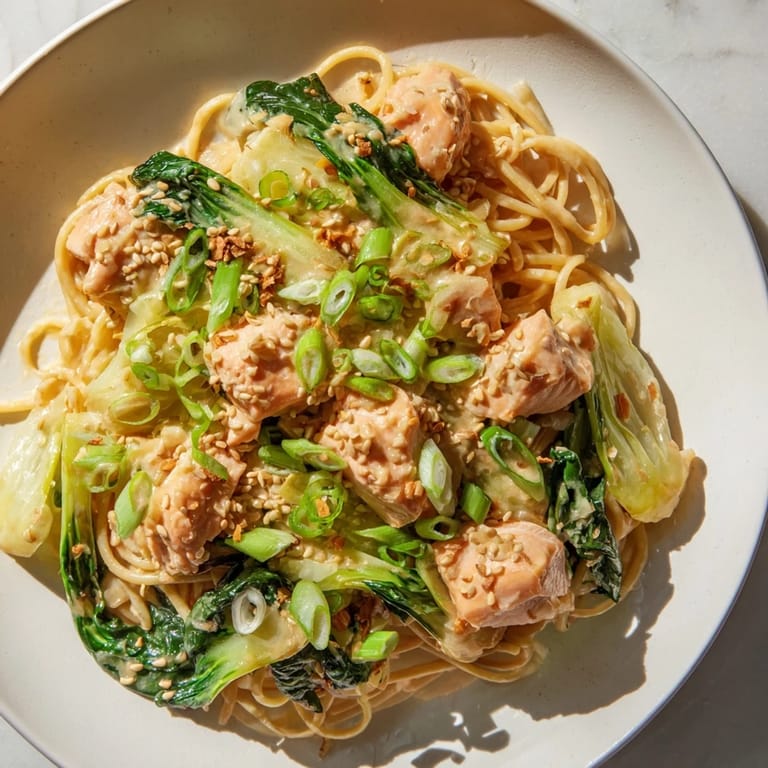
 Save to Pinterest
 There's something about the way miso transforms into butter that made me pause one weeknight—a moment of pure kitchen alchemy. I'd been craving the umami depth of Japanese flavors but couldn't shake the desire for pasta, so I stopped overthinking and let both desires meet in a single skillet. The first time the sauce came together, silky and golden, I tasted it and realized I'd stumbled onto something that felt both comforting and unexpectedly elegant. Now it's the dish I reach for when I want to feel like I'm doing something special without actually fussing.
I made this for my partner one evening when we were both tired but hungry for something that felt intentional, and watching their face when they took that first bite told me everything—the kind of quiet nod that means you got it right. That's the power of this dish: it doesn't demand applause, but it quietly impresses.
Ingredients
- Salmon fillets, 400 g: Use skinless pieces cut bite-sized so they cook gently and stay tender; they'll continue cooking slightly when you return them to the sauce, so don't overcook them in the first pass.
- Linguine or spaghetti, 300 g: Al dente is non-negotiable here because the pasta continues absorbing sauce even after you plate it.
- Baby bok choy, 2 heads: Chop them roughly so the leafy parts wilt into the sauce while the stems stay slightly crisp for texture.
- Garlic, 2 cloves: Mince it fine so it distributes evenly and flavors the sesame oil from the very first moment.
- Scallions, 2: Save these entirely for the end as a fresh, sharp counterpoint to all that rich sauce.
- Unsalted butter, 60 g: Room temperature butter whisks more smoothly into the miso paste without breaking the sauce.
- White miso paste, 2 tbsp: This is gentler and more delicate than red miso; it lets the other flavors breathe instead of overpowering them.
- Soy sauce, 2 tbsp: Check the label to make sure it's naturally brewed, which has more complexity than the thin stuff.
- Mirin, 2 tbsp: The slight sweetness balances the umami and keeps the sauce from becoming one-note and heavy.
- Heavy cream, 100 ml: This is what transforms the sauce from thin to silky; don't skip it or substitute with lighter cream.
- Sesame oil, 1 tsp: Toast your own sesame seeds separately if you can—the aroma makes everything feel more intentional.
- Black pepper, ½ tsp: Grind it fresh right before cooking so it still has its sharp edge.
Tired of Takeout? 🥡
Get 10 meals you can make faster than delivery arrives. Seriously.
One email. No spam. Unsubscribe anytime.
Instructions
- Get the pasta going:
- Fill a large pot with salted water and bring it to a rolling boil while you prep everything else. The pasta takes about 9–11 minutes depending on thickness, so you're timing this to finish right when the sauce is ready.
- Build the aromatics:
- Heat a tablespoon of butter and the sesame oil together in your skillet over medium heat. When the butter foams slightly, add the minced garlic and let it turn fragrant—you're listening for a gentle sizzle, not a harsh crackle.
- Cook the salmon gently:
- Place each salmon piece into the hot skillet and resist the urge to move it around. After 2–3 minutes, flip carefully and give it another 2–3 minutes. The centers should still have a faint blush of opacity; they'll firm up as the residual heat works.
- Make the magic sauce:
- Remove the salmon and set it aside, then add the remaining butter to the skillet. Once it's melted, whisk in the miso paste, soy sauce, and mirin together until smooth and no lumps remain. This whisking moment matters—you're breaking down the miso so it integrates seamlessly.
- Cream and vegetables:
- Pour in the heavy cream and black pepper, stir to combine, then add the bok choy. Give it 2–3 minutes so the leaves soften and the stems stay tender-firm.
- Bring it all together:
- Return the salmon to the skillet and gently toss it in the sauce, then add your drained pasta. Toss everything together, and if the sauce feels too thick, add a splash or two of that reserved pasta water until it coats the strands silkily.
- Finish and serve:
- Divide into bowls immediately while everything is hot, then scatter the scallions and toasted sesame seeds over the top. A wedge of lemon sits beside each bowl, waiting for whoever wants to squeeze brightness into their bite.
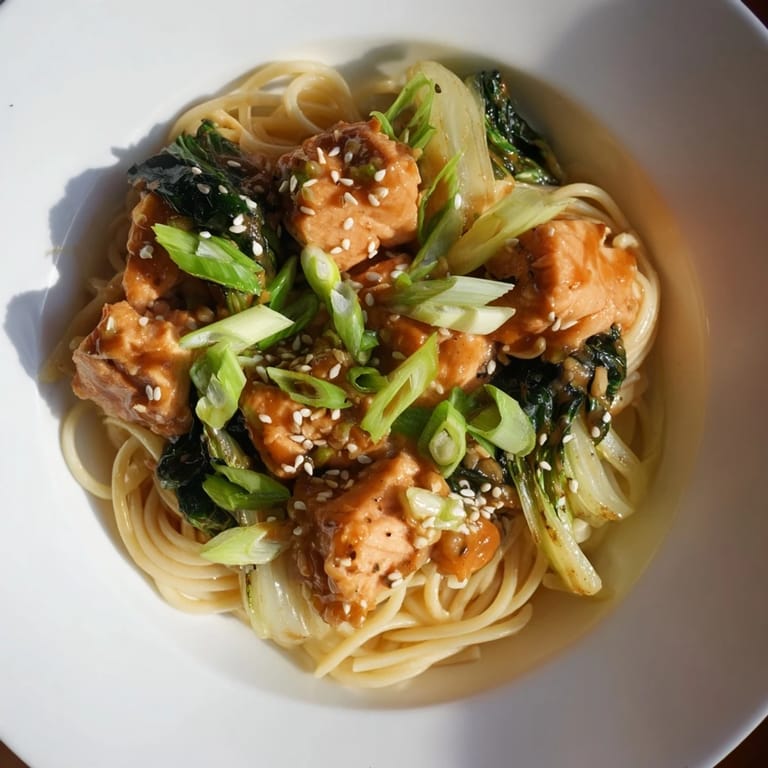 Save to Pinterest
 The first time I served this, someone asked if the restaurant was within walking distance, and I realized that's when food stops being just sustenance and becomes something you want to remember sharing. That's what this dish does—it makes an ordinary evening feel like a small celebration.
The Miso-Butter Balance
The genius of miso in a butter sauce isn't just the umami, though that's certainly part of it. Miso paste carries fermented depth that soy sauce alone never reaches, and when you whisk it into warm butter, something almost emulsified happens—the sauce becomes glossy and clings to the pasta differently than cream alone ever could. White miso specifically stays subtle enough that it doesn't announce itself like a red miso would; instead, it hums underneath everything, making your palate want another bite before you can quite identify what you're tasting. That's the moment you know you've got it right.
Why Salmon and Pasta Work Here
Most pasta with fish can feel tentative, like two cuisines awkwardly introduced at a party. But salmon's richness and the sauce's depth give the dish gravity, and the pasta becomes a vehicle for that sauce rather than an afterthought. The bok choy adds a textural moment that keeps things from feeling too heavy, and the sesame oil ties everything back to its Asian roots while still letting the pasta be itself. It's fusion that doesn't feel fragmented because every element is pulling in the same direction.
Small Moments That Matter
Cooking this dish teaches you that the smallest details—the quality of the miso paste, the precise timing on the salmon, the decision to reserve pasta water—are what separate a meal from a memory. There's no complicated technique here, just presence and attention, and honestly that's where most good cooking lives.
- Toast your own sesame seeds in a dry skillet for 3 minutes if you have them raw; they taste exponentially better than pre-toasted.
- If you're cooking for someone who loves heat, add a pinch of chili flakes when you're building the sauce—it won't overpower the miso, just sharpen the edges.
- This pasta tastes incredible the next day if you have leftovers, though I've rarely known that to happen.
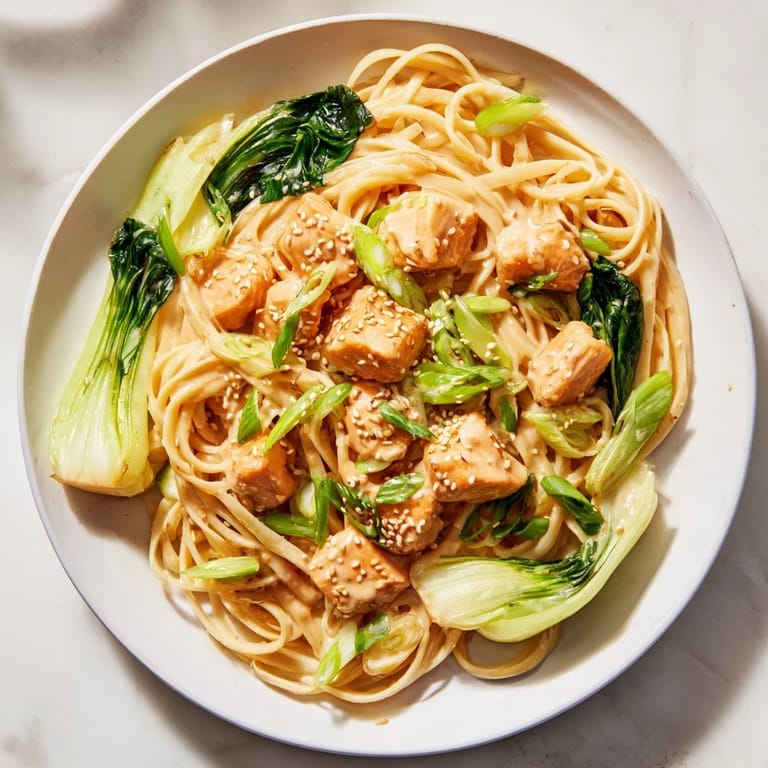 Save to Pinterest
 This dish proved to me that you don't need a long ingredient list or hours of time to make something that tastes like you care. It's the kind of meal that disappears from plates and leaves people asking when you'll make it again.
Recipe FAQs
- → How do I prevent the salmon from overcooking?
Cook salmon gently over medium heat for 2–3 minutes per side until just opaque. Avoid high heat to keep it tender.
- → Can I substitute bok choy with another vegetable?
Spinach or baby spinach works well as a substitute, wilting quickly while adding fresh green notes.
- → What pasta types work best for this dish?
Linguine or spaghetti are ideal to soak up the creamy miso butter sauce while maintaining al dente texture.
- → How is the sauce thickened without flour or starch?
The sauce gains creaminess from heavy cream and butter combined with miso paste, creating a naturally silky texture.
- → Can this dish be made gluten-free?
Use gluten-free pasta and substitute tamari for soy sauce to accommodate gluten-free diets without altering flavor.
- → What garnishes enhance flavor and presentation?
Scallions, toasted sesame seeds, and lemon wedges add freshness, crunch, and bright citrus notes to the plate.