 Save to Pinterest
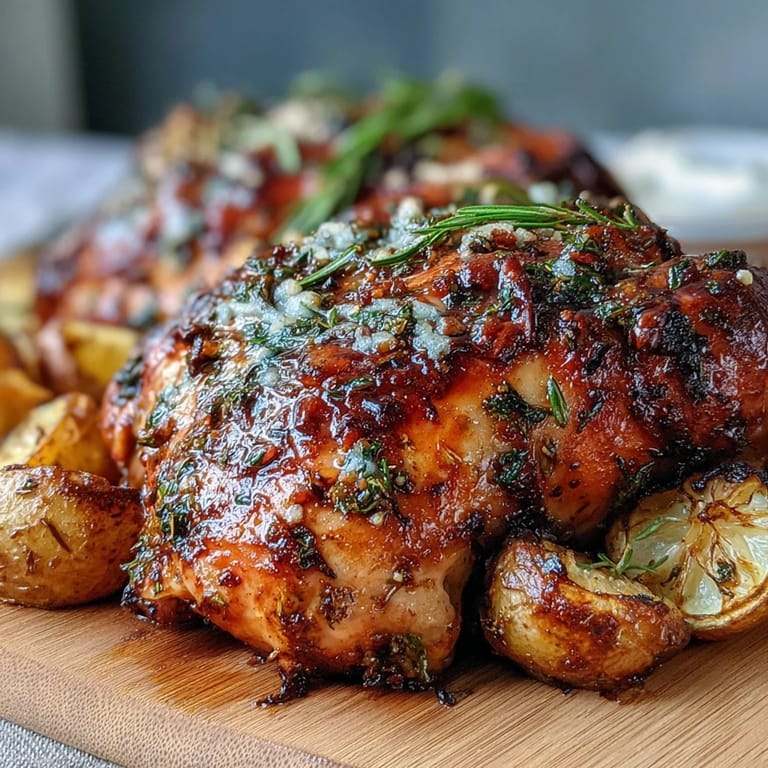
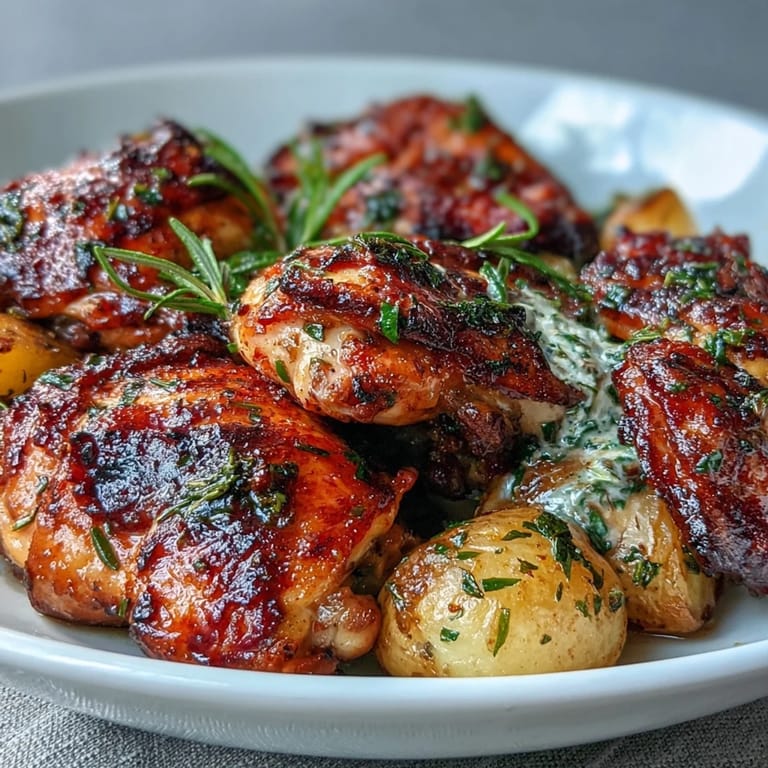
 There's something about the smell of lemon and rosemary hitting hot chicken skin that makes you feel like you've stepped into someone else's Sunday dinner. My neighbor brought this dish to a spring potluck years ago, and I watched people actually pause mid-conversation to eat it—real, genuine pauses. Since then, it's become my go-to when I want to impress without spending the entire day in the kitchen. The golden skin, the tender potatoes catching all those herb juices, the way the whole thing comes together in just over an hour—it feels restaurant-quality but genuinely simple to pull off.
I made this for the first time on a Wednesday when my sister called to say she was coming by that evening. I had the chicken, I had the herbs growing on my windowsill, and suddenly this dinner materialized without any stress. She arrived right as the kitchen smelled like it does in those really good moments—warm lemon, green herbs, roasting chicken. We sat there eating at my small table, and she asked for the recipe before she even finished her plate. Those unexpected evenings sometimes become the best ones.
Ingredients
- Whole chicken (about 4 lbs): A good-quality bird makes all the difference—the skin gets crispier and the meat stays more forgiving, so don't skip on this if you can help it.
- Olive oil: Use a decent one here since it's not being heated to extremes and you'll actually taste it in the marinade.
- Lemons (2 total): One zest and juice for the herb mixture, the other sliced for inside the cavity where it perfumes the meat as it cooks.
- Garlic (4 cloves, minced): Mince it fine so it distributes through the marinade evenly and doesn't turn bitter in the high heat.
- Fresh rosemary and thyme (2 tbsp each): Fresh herbs are non-negotiable here—dried versions taste dull by comparison and the whole point is that bright, garden-fresh flavor.
- Fresh parsley (1 tbsp for marinade, 2 tbsp for garnish): It adds freshness without overpowering, and the garnish portion makes the finished dish look intentional and alive.
- Sea salt and black pepper: Taste as you go because the seasoning needs to be bold enough to flavor both the chicken and potatoes.
- Baby potatoes (2 lbs, halved): Halving them ensures they cook through in the same time as the chicken and have more surface area to catch that golden color.
Tired of Takeout? 🥡
Get 10 meals you can make faster than delivery arrives. Seriously.
One email. No spam. Unsubscribe anytime.
Instructions
- Start with a dry bird:
- Pat your chicken completely dry with paper towels—this sounds small, but damp skin won't crisp properly no matter what temperature you're roasting at. Place it in your largest roasting pan, cavity side up, and take a breath knowing most of the work is already done.
- Mix your marinade into something fragrant:
- Combine the olive oil, lemon zest, fresh lemon juice, minced garlic, and all those fresh herbs in a small bowl. The mixture should smell like a Mediterranean garden, and you'll know it's right when the aroma alone makes you excited to cook.
- Massage the chicken generously:
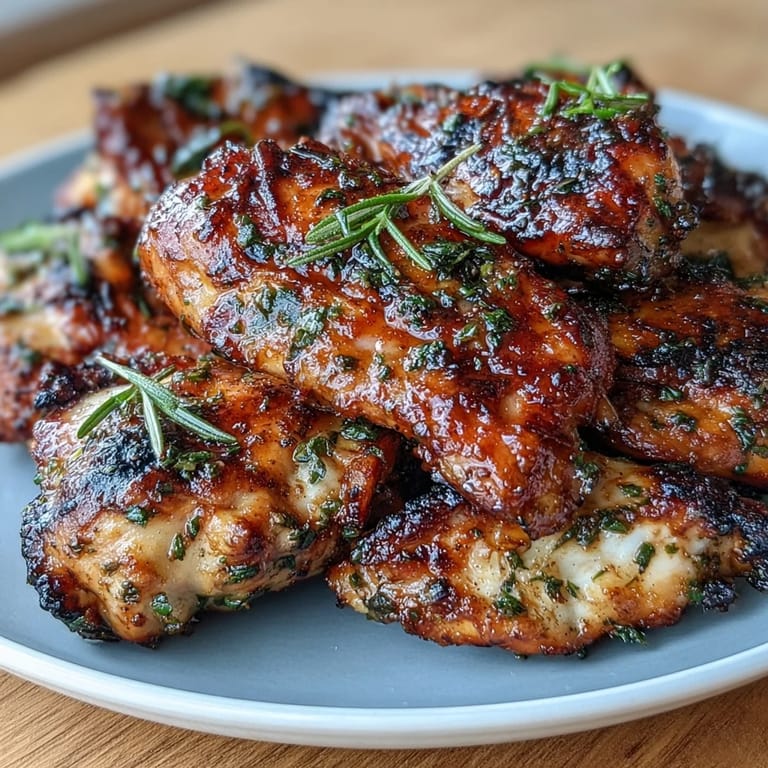
- Rub that herb mixture all over the outside of the chicken, but don't forget the crucial part—lift the skin gently and work some of it underneath where it can season the meat directly. Stuff the lemon slices into the cavity and let them work their magic from the inside.
- Arrange your potatoes strategically:
- Scatter the halved baby potatoes around the chicken in the pan, toss them with olive oil and seasoning, and nestle them close enough to catch the dripping juices. They'll turn golden and creamy inside while the chicken roasts, creating this perfect dynamic where everything cooks in harmony.
- Roast until the chicken is cooked through:
- At 425°F, your chicken needs roughly 1 hour and 10 to 15 minutes—the thigh thermometer should hit 165°F and the juices should run clear when you pierce the thickest part. If your potatoes still look pale when the chicken is done, remove the bird and broil the potatoes for another 5 to 7 minutes until they get genuinely golden.
- Let it rest before carving:
- This 10-minute rest isn't optional—it lets the juices redistribute so every bite stays moist rather than running all over the plate. Use this time to set the table, pour a glass of wine, and mentally prepare for how good this is about to taste.
 Save to Pinterest
 There was a moment last spring when my nephew, who's eight and claims he only eats chicken nuggets, looked at this roasted bird and asked for actual seconds. His mom and I locked eyes across the table in that way that means we both understood something had shifted. Food does that sometimes—it becomes the reason people gather, the thing they remember, the meal they ask about months later.
Why This Works as a Spring Dinner
Lemon and fresh herbs scream spring in the best way—bright without being heavy, elegant without pretending to be something it's not. The potatoes ground the dish and make it satisfying, while the lemon keeps everything feeling fresh and light. It's the kind of meal that works whether you're eating outside on a warm evening or inside watching the rain, because the flavors themselves feel like the season changing.
Making It Your Own
This recipe has a skeleton you can dress up or down depending on what's in your kitchen or garden right now. Some evenings I add a handful of asparagus or toss in fingerling potatoes instead of baby ones, and the fundamental magic stays the same. The herb ratio can shift too—if you love thyme more than rosemary, go ahead and swap the balance around because you know your own taste better than anyone.
The Small Decisions That Matter
Getting this dish right isn't about following steps perfectly—it's about paying attention to a few small moments that compound into something special. The quality of your chicken, the freshness of your herbs, the dryness of your bird before roasting, and that sacred 10-minute rest period are where the real cooking happens. Everything else follows naturally once you honor those details.
- Taste your marinade before you apply it and adjust the salt if needed, since you can't get it back once it's on the chicken.
- If your oven runs hot, check the chicken thermometer at the 60-minute mark rather than waiting the full time.
- Save those roasting pan drippings for a quick sauce—just add a splash of white wine or chicken stock and you've got something incredible.
 Save to Pinterest
 This dish has a way of turning an ordinary evening into something worth remembering. Make it with people you want to linger at the table with.
Recipe FAQs
- → How do the herbs affect the chicken's flavor?
Fresh rosemary, thyme, and parsley infuse the chicken with an earthy, aromatic profile that complements the bright citrus notes from lemon zest and juice.
- → What is the best way to prepare the potatoes?
Halving baby potatoes and tossing them with olive oil, salt, and pepper before roasting ensures they become tender inside and slightly crisp outside when broiled.
- → Why rest the chicken after roasting?
Resting allows the juices to redistribute within the meat, resulting in juicier and more flavorful slices when carved.
- → Can the chicken be marinated ahead of time?
Yes, marinating up to 24 hours before cooking deepens the infusion of lemon and herb flavors, enhancing overall taste.
- → What temperature ensures perfectly cooked chicken?
Roast until the internal temperature reaches 165°F (74°C) in the thickest part of the thigh for safe and juicy results.