 Save to Pinterest
 I discovered schnitzel on a crisp autumn afternoon in Vienna, where I watched a cook at a tiny corner restaurant pound meat so thin it was nearly translucent, then send it into golden, crackling oil with the confidence of someone who'd done this a thousand times. The sound it made—that immediate, violent sizzle—told me everything about why this dish endured for centuries. When it arrived at my table, still steaming, I understood: schnitzel isn't fancy or complicated, but it demands respect and attention.
My sister made this for dinner the first time I came home after moving away, and I realized halfway through eating that she'd nailed the whole technique without ever telling me she was practicing. We sat there cracking jokes about my failed attempts to make it earlier that year, and somehow the schnitzel tasted even better knowing she'd been quietly perfecting it while I was gone.
Ingredients
- Pork chops or chicken breasts (4 pieces, about 150 g each): Boneless works best; pound them yourself to ensure even, thin cutlets that cook through without drying out.
- All-purpose flour (100 g): The first layer catches moisture and gives the egg mixture something to grip.
- Eggs (2 large) and milk (2 tbsp): The binder that holds everything together; don't skip the milk, it makes the mixture coat more evenly.
- Fine dry breadcrumbs (150 g): Use panko or very fine crumbs for maximum crunch; stale breadcrumbs work better than fresh.
- Vegetable oil or clarified butter (120 ml): Butterschmalz is traditional and lends an authentic, slightly nutty flavor that elevates the whole dish.
- Salt, pepper, and lemon wedges: Salt the meat just before frying so it doesn't draw out moisture; lemon is non-negotiable for brightness.
Tired of Takeout? 🥡
Get 10 meals you can make faster than delivery arrives. Seriously.
One email. No spam. Unsubscribe anytime.
Instructions
- Pound your cutlets thin and even:
- Place meat between plastic wrap and pound with a meat mallet or rolling pin until it's about 1/4 inch thick, working from the center outward. This matters more than you'd think—even thickness means even cooking and the tender, delicate texture schnitzel is famous for.
- Season with confidence:
- Sprinkle both sides generously with salt and freshly ground pepper right before you start the breading station. Fresh pepper makes a difference; stale pepper tastes like nothing.
- Set up your breading station:
- Arrange three shallow plates or bowls in a line: flour in the first, beaten eggs mixed with milk in the second, breadcrumbs in the third. Having everything ready means you can work quickly and keep the meat from getting soggy.
- Bread each cutlet with intention:
- Dredge the meat in flour, tap off the excess, dip into egg mixture until fully coated, then press gently into breadcrumbs. Don't over-press or you'll crush the crumbs and seal them to the meat; you want them to stay a little loose so they'll shatter when fried.
- Heat your oil until it's ready:
- Use medium-high heat and let the oil get hot enough that a small piece of bread sizzles immediately when it hits the pan. If it's not hot enough, you'll get greasy schnitzels instead of crispy ones.
- Fry until golden and just cooked through:
- Add cutlets to the hot oil and don't move them for the first 2–3 minutes; this is how you get that shattering crust. Flip once and fry another 2–3 minutes until golden brown all over and the meat is cooked through. Work in batches if your pan is crowded.
- Drain and serve immediately:
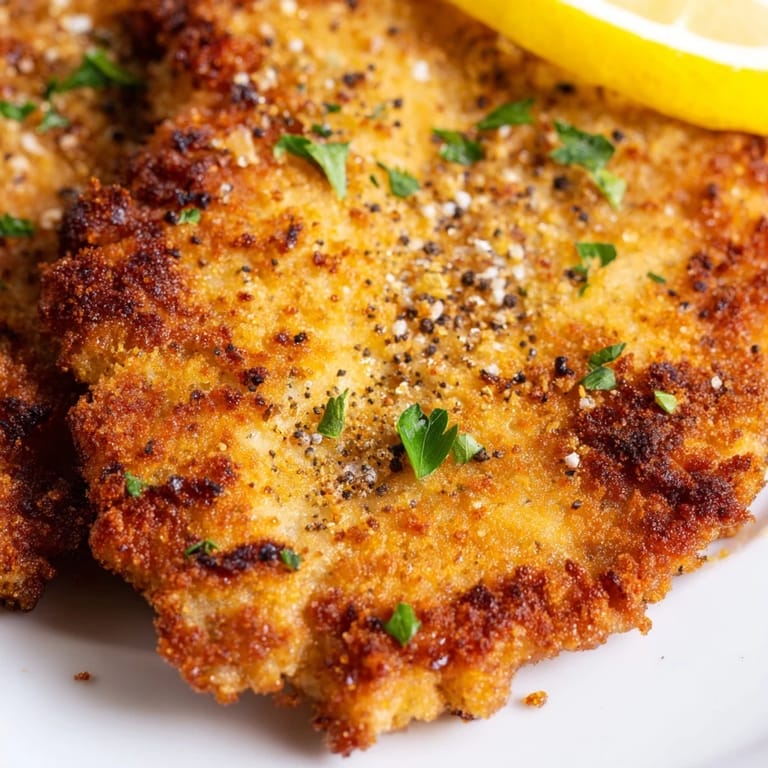
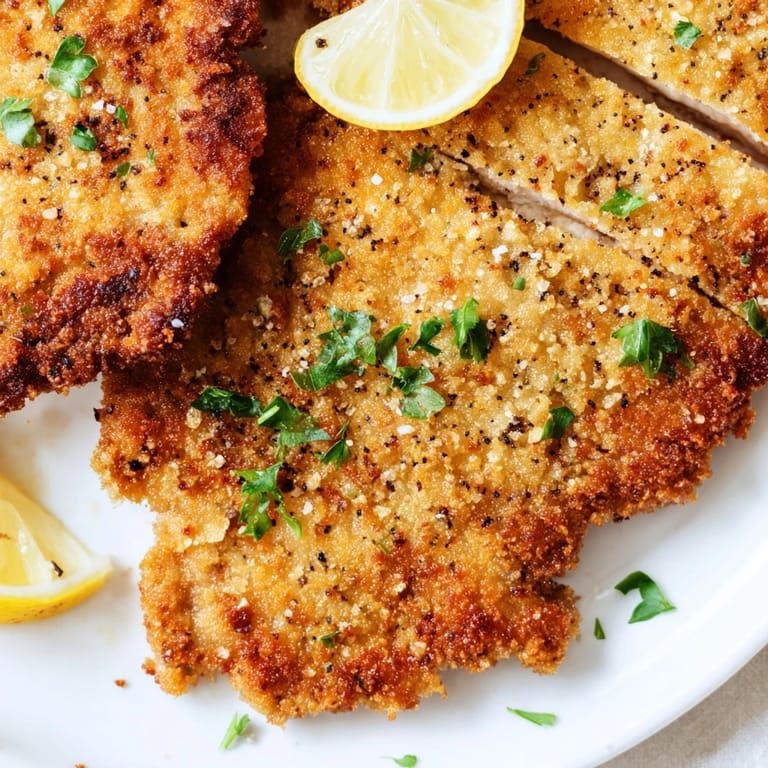
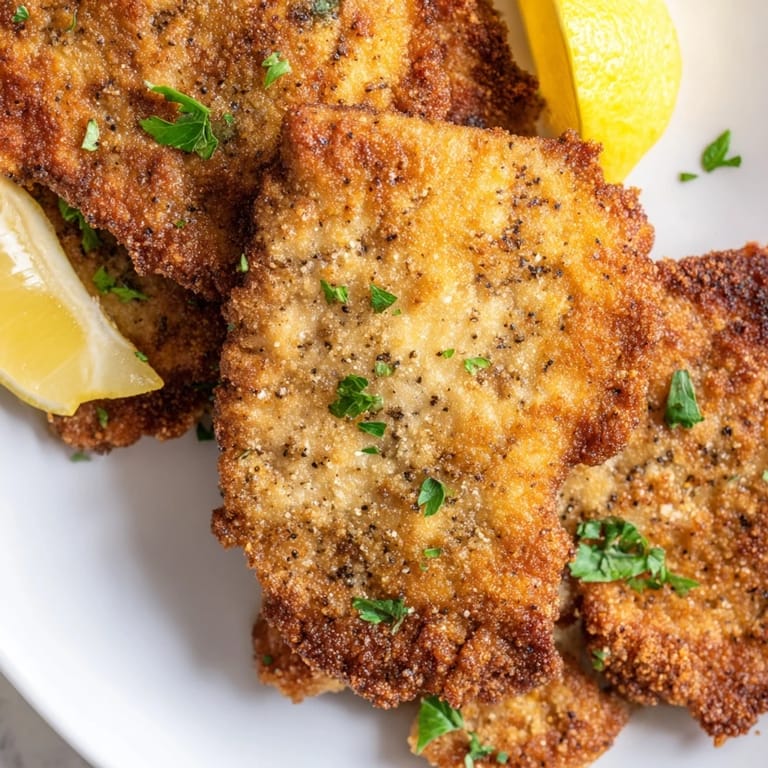
- Transfer to paper towels for just a minute to blot excess oil, then plate while still hot and steam is rising. Serve with lemon wedges and a pinch of fresh parsley if you have it.
 Save to Pinterest
 I remember the first time my neighbor smelled this cooking from three houses down and appeared at my door with a hopeful expression I couldn't refuse. We ended up sharing dinner on the back porch that evening, and she's requested it every time since, which is how I learned that schnitzel has a way of turning a quiet meal into an event.
The Art of the Pound
Pounding meat is meditative if you let it be. You're not trying to pulverize it; you're gently, methodically breaking down the muscle fibers so they relax and spread thin. The motion is rhythmic, and somehow the result is always better when you've paid attention to each stroke rather than rushing through it. I've found that people who are skeptical about homemade schnitzel are usually people who've been given undersized, thick cutlets by a restaurant that doesn't want to do the work.
Why Breadcrumbs Matter More Than You Think
The breadcrumb coating is where schnitzel lives or dies, and most home cooks underestimate how much texture and flavor it brings. Fresh breadcrumbs from a loaf will compress into a tough shell; panko or finely grated dried breadcrumbs stay crisp and shatter with a sound that makes the whole dish worthwhile. I learned this after my third attempt, when I finally asked someone who actually knew what they were doing, and everything changed after that.
Serving Sides and Moments
In Germany, schnitzel arrives with potato salad (warm or cold, depending on the region), cucumber salad, or a pile of fries alongside a cold beer and a slice of lemon for squeezing. The combination feels almost ceremonial, like each element has earned its place on the plate. There's also something about the simplicity of the sides that respects the schnitzel itself, letting the crispy, golden meat be the star it deserves to be.
- A dry Riesling or crisp pilsner beer is the traditional pairing, and it's worth trying at least once to understand why these combinations have lasted so long.
- Serve immediately after frying; schnitzel doesn't wait, and neither should you.
- Leftovers make surprisingly good sandwiches the next day if you have them, though honestly, that rarely happens.
 Save to Pinterest
 This is the kind of recipe that rewards your attention and repays it with reliability, each time tasting like you've been making it for years even if you haven't. Make it for someone you want to impress, or just for yourself on a day when you need the kitchen to smell golden and alive.
Recipe FAQs
- → What type of meat works best for schnitzel cutlets?
Thinly pounded pork chops or chicken breasts are ideal for schnitzel, ensuring quick, even cooking and a tender texture.
- → How do I achieve a crispy coating on the cutlets?
Coat the meat evenly with flour, then dip in beaten eggs mixed with milk, and finally press breadcrumbs lightly to adhere without compacting.
- → Which fats are recommended for frying schnitzel?
Vegetable oil or clarified butter (Butterschmalz) are preferred for a golden, crispy exterior and rich flavor.
- → How thick should the cutlets be pounded?
About 1/4 inch (6 mm) thick to ensure even cooking and optimal tenderness.
- → What sides pair well with schnitzel cutlets?
Potato salad, cucumber salad, or fries complement the crispy cutlets perfectly; lemon wedges add a refreshing zest.