 Save to Pinterest
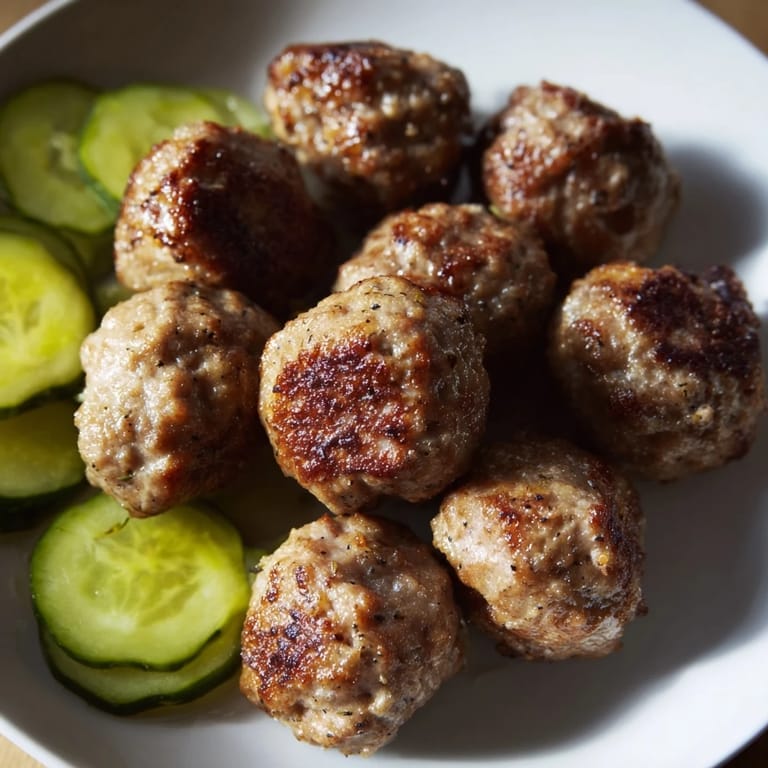
 My first encounter with frikadeller happened on a rainy Copenhagen afternoon when a Danish friend's mother pulled a skillet off the stove and slid these golden-brown, slightly flattened meatballs onto a plate with the kind of quiet confidence that comes from making the same dish a hundred times. The kitchen smelled like butter and something warm and savory that I couldn't quite place until she explained the allspice—a spice I'd never considered for meatballs. She served them with pickles that gleamed in their jar, sharp and vinegary, and I understood immediately why this simple dish had survived generations.
Years later, I made these for a weeknight dinner when time felt scarce and ingredients were basic—pork from the market, an onion from the pantry, bread that needed using up. My partner came home to the smell and sat down before I'd even finished plating, and there was something wordless and grateful in that moment that made me realize these aren't fancy food, they're honest food, the kind that says I'm thinking about feeding you well.
Ingredients
- Ground pork (500 g): The foundation—use pork alone for authentic flavor, or mix in ground veal for a lighter, more delicate texture that some swear by.
- Finely grated onion (1 small): Don't skip the grating; it dissolves into the mixture and adds moisture and sweetness that mincing alone can't achieve.
- Egg (1): Your binder, keeping everything from falling apart in the pan.
- Whole milk (100 ml): This is the secret to juiciness—it hydrates the breadcrumbs so they act like tiny moisture-holding sponges inside the meatball.
- Breadcrumbs (60 g): Use panko or crushed stale bread; they soften the mixture and keep the meatballs tender rather than dense.
- Salt (1 tsp) and black pepper (½ tsp): Season generously; the mixture tastes less seasoned than it should until it's cooked.
- Ground allspice (½ tsp, optional): This is what tastes Danish—warm, slightly sweet, almost like a whisper of Christmas spice.
- Unsalted butter (2 tbsp) and neutral oil (1 tbsp): Butter alone would burn; the oil keeps the heat stable and lets the butter add its golden flavor without turning bitter.
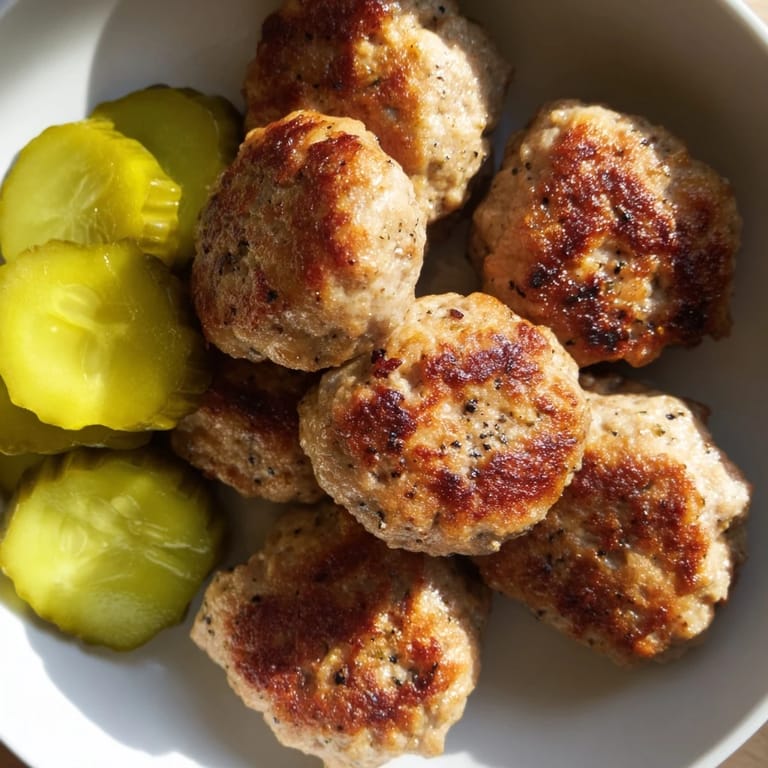
- Danish pickles: The sharp, vinegary contrast is non-negotiable; it cuts through the richness and makes you want another bite.
Tired of Takeout? 🥡
Get 10 meals you can make faster than delivery arrives. Seriously.
One email. No spam. Unsubscribe anytime.
Instructions
- Bring everything together:
- Combine the pork, grated onion, egg, milk, breadcrumbs, salt, pepper, and allspice in a large bowl. Mix with your hands until the mixture feels cohesive and slightly sticky—not overworked, but unified.
- Let it breathe:
- Rest the mixture for 10 minutes so the breadcrumbs fully absorb the milk. This patience pays off with texture.
- Shape with wet hands:
- Wet your hands to prevent sticking, then gently form the mixture into oval or round meatballs about the size of a golf ball—you should have roughly 12 to 14 pieces.
- Heat the pan properly:
- Add butter and oil to a large skillet and let them warm over medium heat until the butter foams and the oil shimmers. The pan must be hot enough to sear but not so hot that the outside burns before the inside cooks.
- Fry in batches with intention:
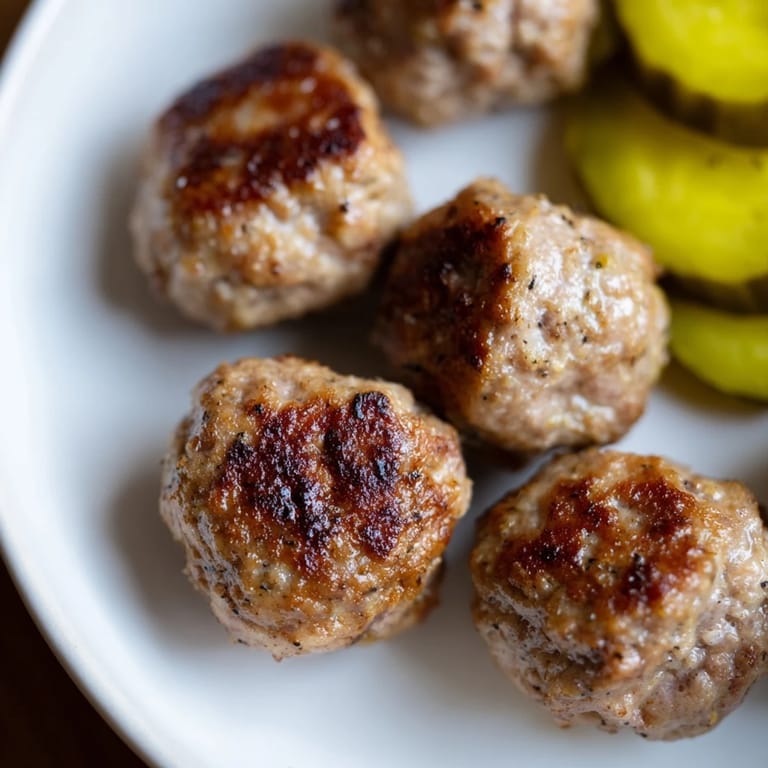
- Working in batches to avoid crowding, lay the meatballs in the pan and immediately flatten them slightly with a spatula—this increases the surface area for browning and helps them cook evenly. Fry for 4 to 5 minutes per side until golden brown and cooked through, then transfer to a paper towel-lined plate.
- Serve while warm:
- Plate the frikadeller hot with sharp pickles on the side and rye bread or boiled potatoes if you want to make it a fuller meal.
 Save to Pinterest
 There's a moment in cooking when something stops being a recipe and becomes a ritual—when you know the feel of the mixture in your hands, when you can hear the sizzle and know without looking that it's time to flip. That's what happened with frikadeller for me, and now when I make them, it's less about following steps and more about moving through something familiar and right.
The Texture Secret
What separates a great frikadeller from a rubbery, dense meatball is understanding the role of milk. Most people treat meatballs like they're one solid thing, but really they're a delicate balance—the milk hydrates the breadcrumbs, the breadcrumbs absorb the liquid, and together they create a matrix that holds moisture through the cooking process. When you take a bite, it should feel creamy inside, not mealy. This is why resting matters: it's not arbitrary, it's structural.
Serving and Accompaniments
Frikadeller are simple enough to serve on their own with just pickles, but the Danes have been serving them with boiled potatoes or rye bread for generations, and there's wisdom in that. A creamy potato salad cuts through the richness with cool creaminess, while sharp red cabbage adds acidity and crunch. The pickles are non-negotiable though—they're not a garnish, they're a palate cleanser baked into the meal, a reminder that sweetness and savory need contrast to shine.
Variations and Learning
I've made these with half veal when I wanted something lighter and more delicate—the veal adds a subtlety that pure pork doesn't have. I've also skipped the allspice when I was cooking for someone unfamiliar with it, and the meatballs were still good, just less distinctly Danish. The recipe is forgiving because the foundation is solid, but it rewards small explorations and tweaks.
- Try a mix of pork and veal (250 g each) for a texture that's less dense and more refined.
- If you can't find Danish pickles, any sharp pickled vegetable—cornichons, pickled red onions, or tangy kimchi—creates the same cutting effect.
- A small dollop of spicy mustard on the side is a quiet but powerful addition that some versions include without fanfare.
 Save to Pinterest
 These meatballs have taught me that sometimes the most memorable meals come from the simplest dishes made with attention and care. There's something generous about setting a plate of golden frikadeller on a table and watching people reach for seconds.
Recipe FAQs
- → What is the best way to shape the meatballs?
Use wet hands to form oval or round shapes about the size of a golf ball, ensuring even cooking and a tender texture.
- → Can I substitute pork with other meats?
Yes, mixing ground veal with pork can create a lighter texture while maintaining authentic flavors.
- → What frying fats are recommended?
A combination of unsalted butter and neutral oil provides a rich flavor and prevents burning when pan-frying.
- → How important is resting the meat mixture?
Resting for 10 minutes allows breadcrumbs to absorb moisture, resulting in juicier and more cohesive meatballs.
- → What traditional sides complement this dish?
Danish pickles are classic, but rye bread, boiled potatoes, creamy potato salad, or red cabbage also pair well.