 Save to Pinterest
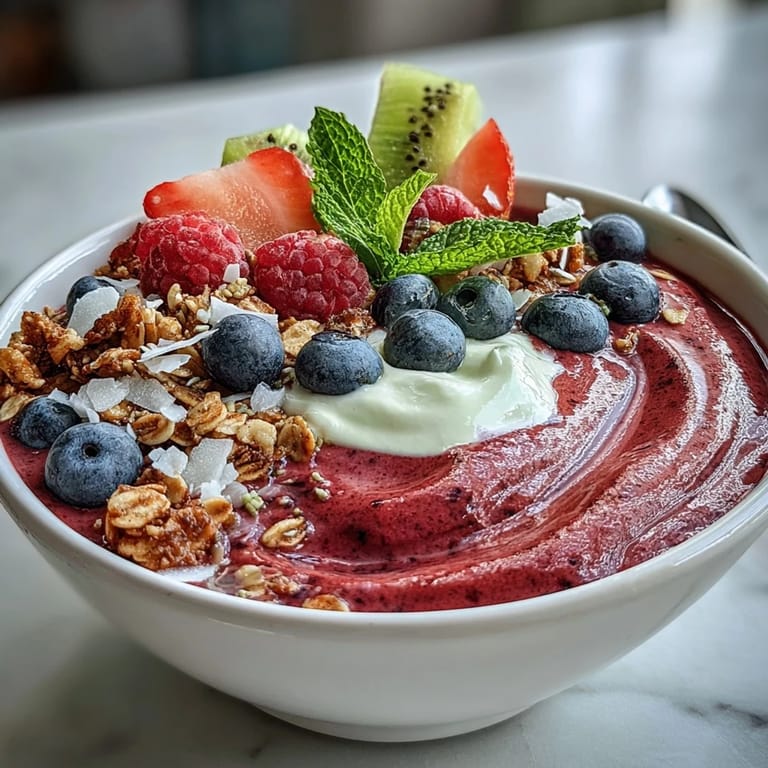
 I discovered this bowl on a grey morning when my fridge held nothing but frozen berries, a forgotten beetroot, and the vague guilt of an unmade breakfast. What emerged was unexpectedly stunning—that deep magenta swirl that made me pause before eating, suddenly aware I was about to consume something that looked like it belonged in an art gallery. My partner walked in mid-blend, caught by the smell of sweet berries and earthiness, and asked if I was making dessert for breakfast. I wasn't, but it felt close enough.
I made this for my sister's unannounced visit last summer, needing something impressive yet quick. She photographed it before touching it, then ate it while standing by my kitchen window, watching the garden. That bowl became the reason she now makes them every other week at home, texting me photos of her own variations. It's funny how the right breakfast at the right moment can become someone's new ritual.
Ingredients
- Cooked beetroot: The earthy backbone that turns everything this gorgeous magenta shade while adding subtle sweetness and natural nutrients that play beautifully against the berries.
- Frozen mixed berries: These are better than fresh here because they're already prepped and their icy texture creates that luxurious creamy blend without needing ice.
- Ripe banana: Your texture secret—it makes the whole thing silky and naturally sweet, letting you skip added sugar if that matters to you.
- Unsweetened almond milk: Keeps things light and lets the actual fruit flavors shine; swap freely for oat or soy if that's your preference.
- Greek yogurt or coconut yogurt: This adds creaminess and protein so you're not hungry ninety minutes later; the choice determines whether this stays vegan or not.
- Chia seeds: They add a subtle texture and stay mostly invisible, which is exactly how they sneak nutrition into something this lovely.
- Maple syrup or honey: Optional, but I've learned that frozen berries sometimes need just a touch more sweetness to really sing.
- Granola: The textural counterpoint that makes eating a bowl feel intentional rather than rushed; choose one you actually enjoy because you'll taste every bite.
- Fresh berries, kiwi, pumpkin seeds, coconut, mint: These aren't just decoration—they're the reason you slow down and actually experience what you're eating instead of drinking breakfast from a cup.
Tired of Takeout? 🥡
Get 10 meals you can make faster than delivery arrives. Seriously.
One email. No spam. Unsubscribe anytime.
Instructions
- Gather and measure your base:
- Pull out your blender and arrange the beetroot, frozen berries, banana, almond milk, yogurt, chia seeds, and maple syrup where you can see them. This small act of preparation makes the whole process feel intentional rather than chaotic.
- Blend until silky:
- Start on low speed and gradually increase, stopping to scrape down the sides once or twice—you're looking for something thick enough to eat with a spoon but smooth enough that each bite melts slightly. If you've gone too thick, add a splash more milk and pulse gently.
- Divide between bowls:
- Pour the mixture evenly into two bowls, which usually means it comes about three-quarters of the way up. The empty space is crucial for what comes next.
- Build your toppings:
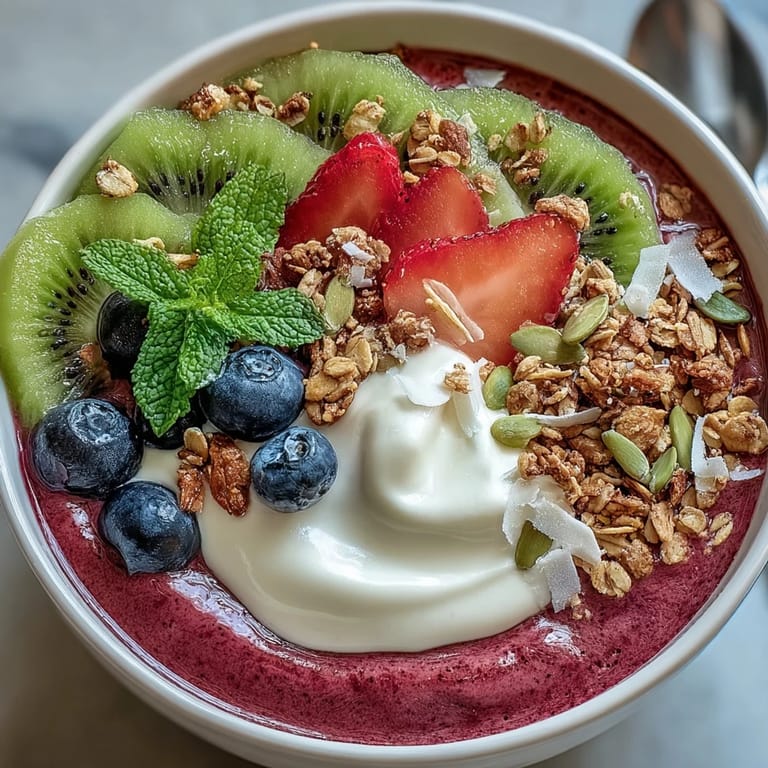
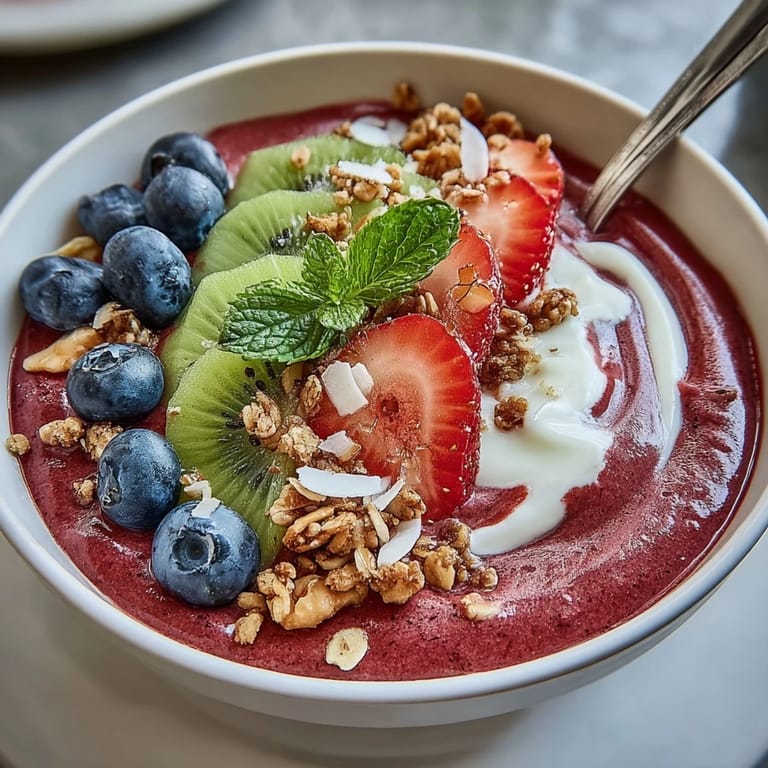
- This is where the bowl becomes yours—scatter granola first so it doesn't sink, then arrange berries, kiwi, pumpkin seeds, coconut, and mint in whatever pattern feels right. There's no wrong way, only the way that makes you happiest to eat it.
- Serve immediately:
- Eat this right away while the granola still has texture and the toppings sit proudly on top rather than sinking into the base. Set a timer if you have to—fifteen minutes is about the grace period before things soften.
 Save to Pinterest
 My neighbor tasted this when I brought a portion over during a conversation about her upcoming surgery, and she later told me she made it every morning during her recovery because it felt like someone was taking care of her. That's when I understood this isn't really about breakfast—it's about choosing to give yourself something beautiful and nourishing on days when you might not otherwise bother.
Why Texture Matters in This Bowl
The magic happens at the intersection of creamy and crunchy—that moment when your spoon hits granola and the contrast wakes up your mouth. I used to eat smoothie bowls too quickly, treating them like drinks, until I learned to slow down. Now I layer my bites strategically, making sure each spoonful carries at least three different textures, which somehow makes the whole thing feel like more than the sum of its parts.
Building Flavor Through Color
Deep purple from beets, red from strawberries, golden granola, bright green kiwi—when you arrange these intentionally, you're not just feeding yourself, you're creating something that tells your brain this is special before you've even tasted it. I started paying attention to color contrast after reading that we eat with our eyes first, and it changed how I approach breakfast bowls entirely. Now the visual composition matters as much as the flavor profile, which sounds precious until you realize you're actually more likely to sit down and eat mindfully when something looks this good.
Customizing Without Losing the Heart
This bowl has a spine made of beetroot, berries, banana, and something creamy—keep those, and you can build anything around them. I've made versions with pomegranate instead of kiwi, swapped granola for toasted nuts when I was out of the former, and used whatever milk I had on hand without apology. The framework is flexible, which is exactly when recipes stop feeling restrictive and start feeling like tools you actually use.
- Seasonal swaps work beautifully here—summer calls for peaches and berries, fall welcomes apple slices and pumpkin seeds, and winter appreciates pomegranate's jewel tones.
- Protein powder can live in the blender, but add it after the liquid so it doesn't clump up and refuse to play nice with the rest.
- Make the smoothie base the night before and store it in the fridge, but add toppings only when you're ready to eat so they don't absorb moisture and turn sad.
 Save to Pinterest
 This bowl has become my answer to mornings when I need to feel like I'm taking care of myself before anything else demands my attention. It's ten minutes and three hundred calories of choosing something vibrant, and somehow that choice shapes the rest of the day.
Recipe FAQs
- → Can I use raw beetroot instead of cooked?
Cooked beetroot works best as it's sweeter and blends more smoothly. Raw beetroot can have a stronger earthy taste and tougher texture. If using raw, peel and grate it first, or steam lightly for 15 minutes to soften before blending.
- → How do I adjust the consistency?
Add more almond milk 1 tablespoon at a time for a thinner consistency. For a thicker bowl, reduce liquid or add frozen banana slices. The base should be thick enough to hold toppings without sinking.
- → Can I meal prep this smoothie bowl?
Blend the base the night before and store in an airtight container in the refrigerator. Give it a quick stir or thin with a splash of milk before serving. Keep toppings separate and add just before eating to maintain crunch.
- → What other toppings work well?
Try sliced almonds, hemp hearts, cacao nibs, nut butter drizzle, or sliced seasonal fruits like peaches, mango, or pomegranate seeds. Edible flowers and bee pollen add beautiful garnish.
- → Is this bowl freezer-friendly?
Pour blended base into freezer-safe containers and freeze for up to 1 month. Thaw overnight in the refrigerator, then blend again briefly to restore creaminess. Add fresh toppings when serving.
- → How can I make it higher in protein?
Add a scoop of vanilla or unflavored protein powder to the base, use Greek yogurt instead of coconut yogurt, or top with additional nuts, seeds, or a tablespoon of nut butter.